
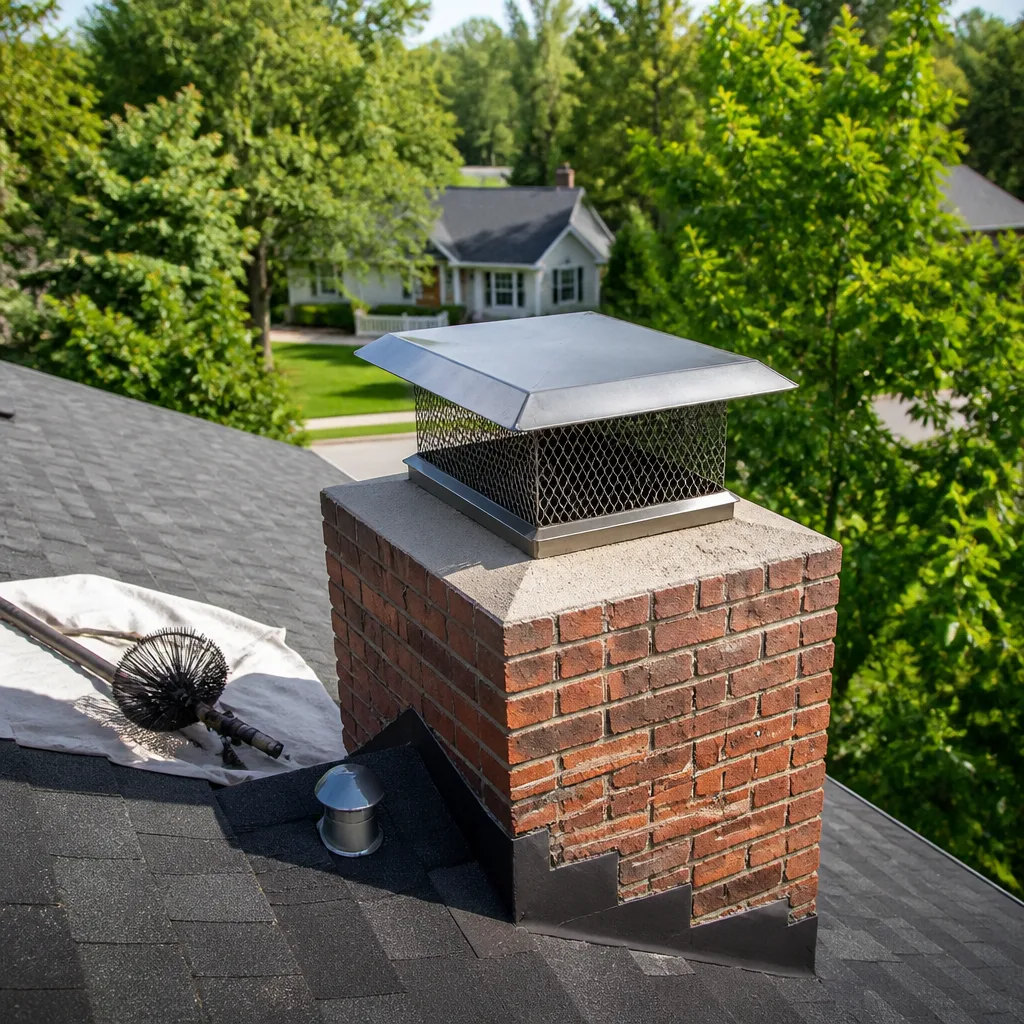
 Sweep & inspection
 Caps & crowns
 Flue relining
 Masonry repair
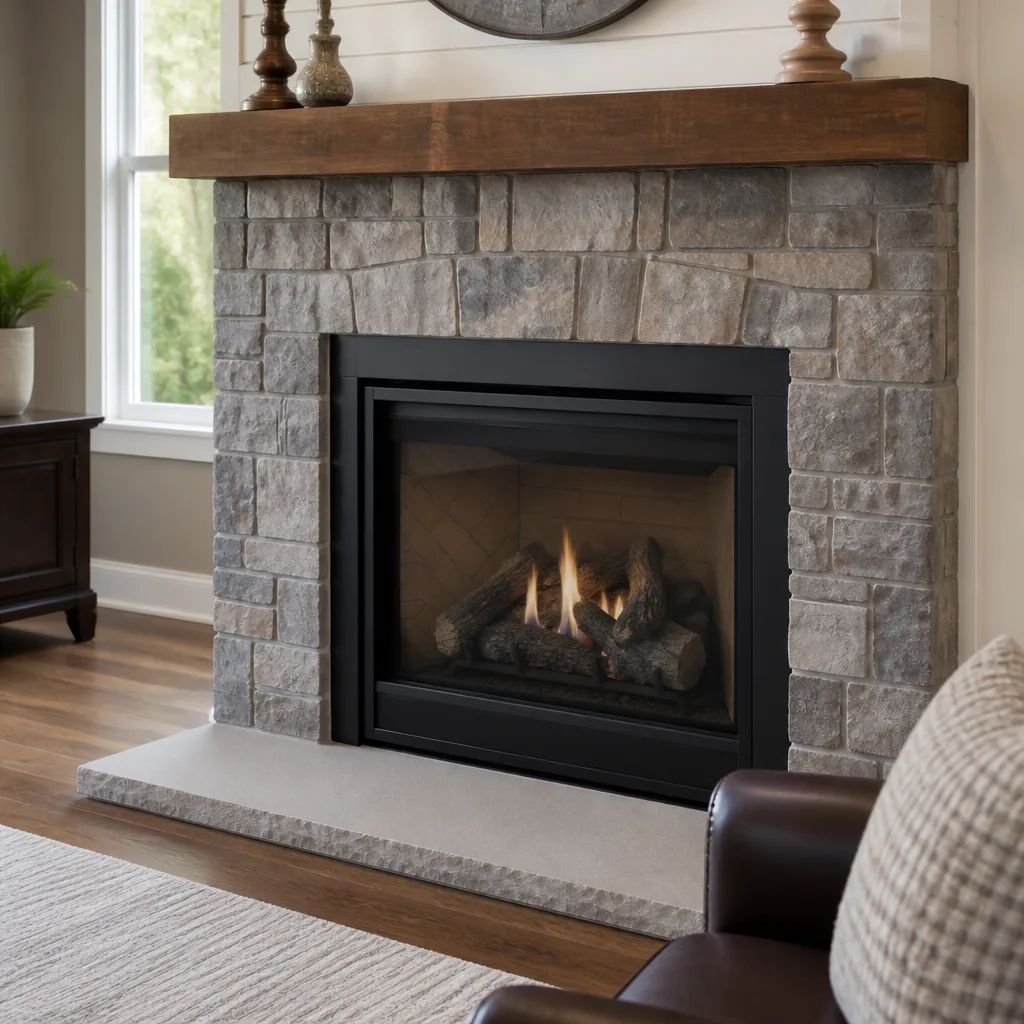 Gas fireplace service
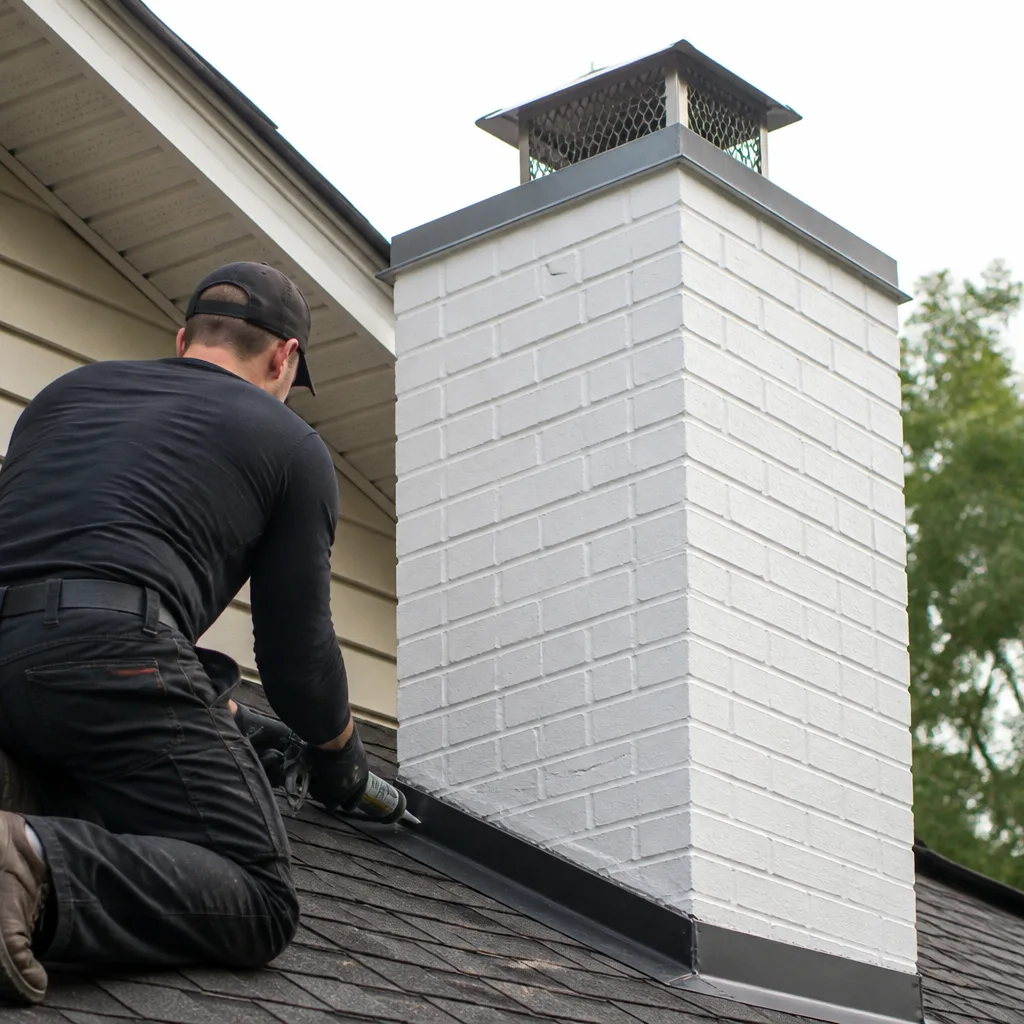
Level 1 sweep and inspection to the NFPA 211 annual standard - flue, crown, cap, and flashing checked and photographed
Chimney sweep logs do not sweep chimneys. They loosen some creosote - which then falls where a brush and vacuum still have to collect it.
Styles & brands we work with
See the difference
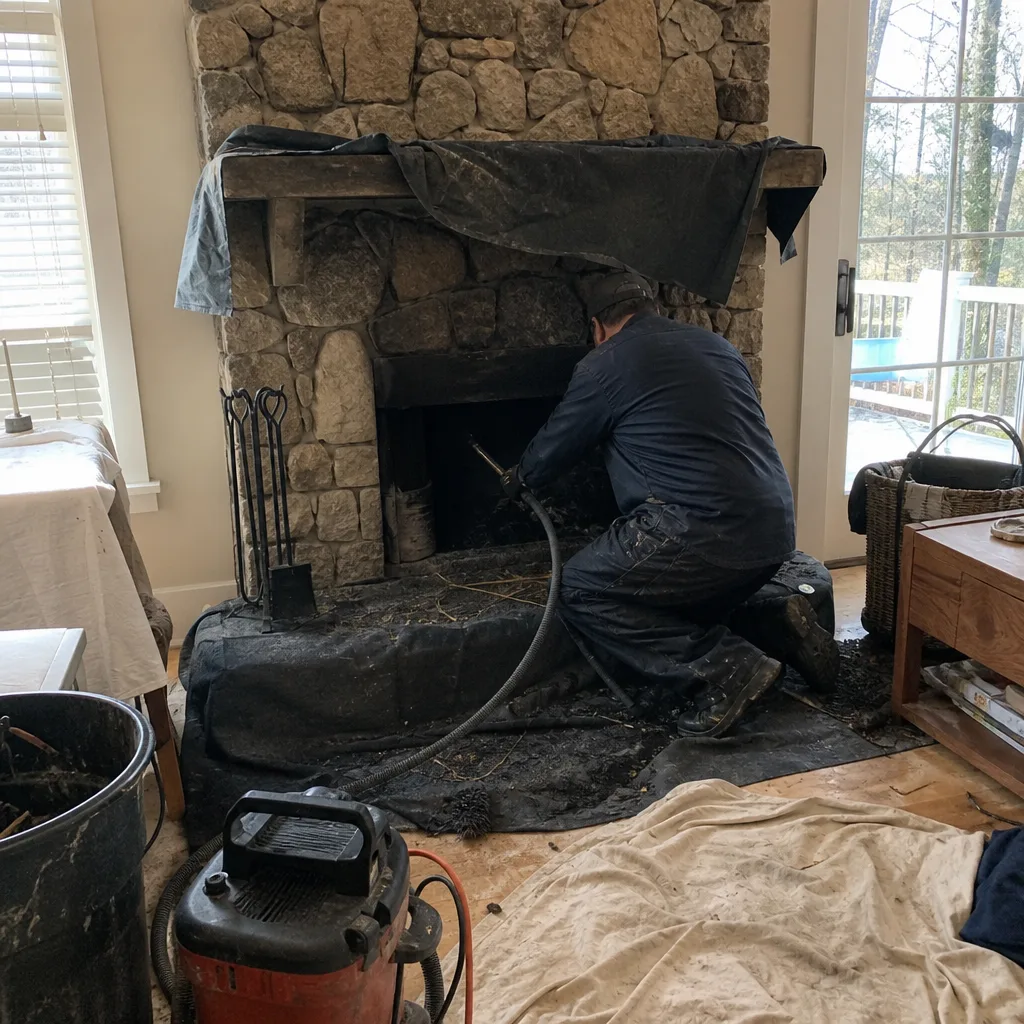 Before
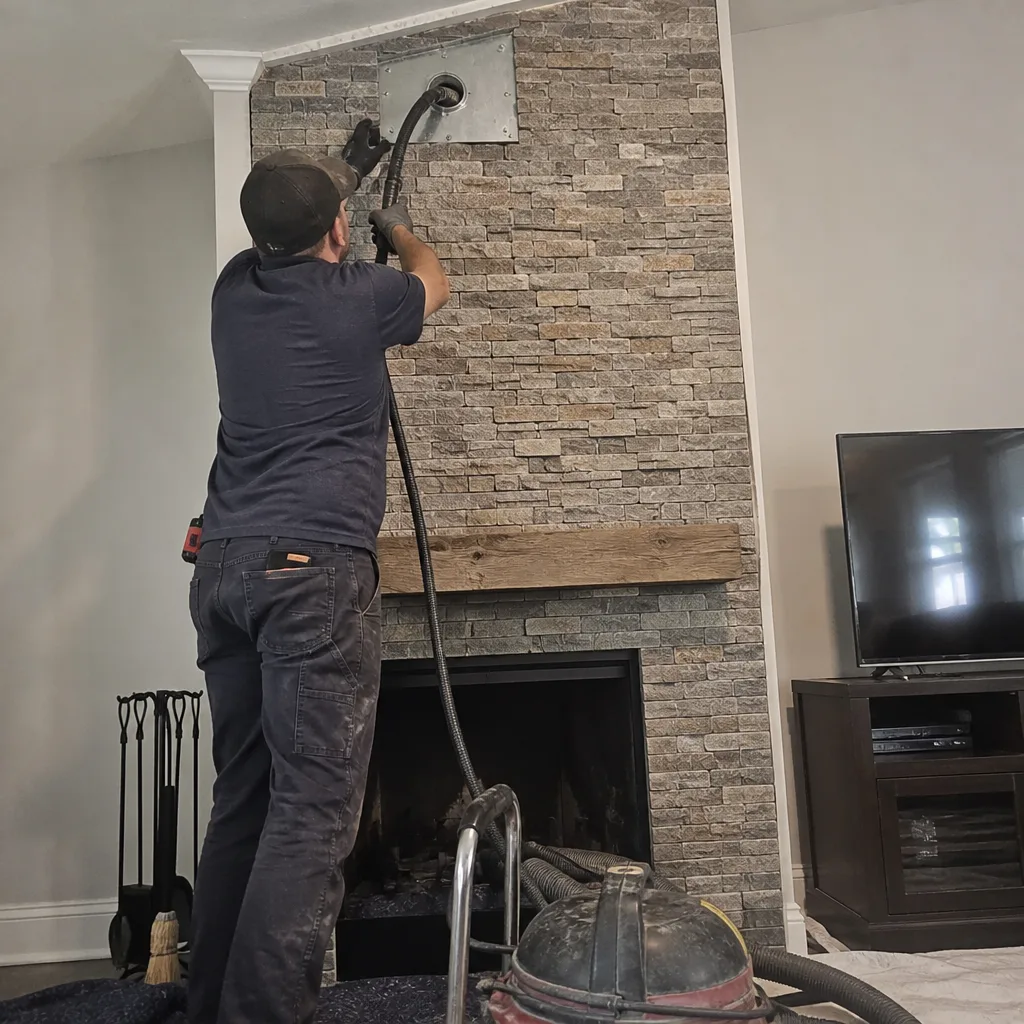 After
After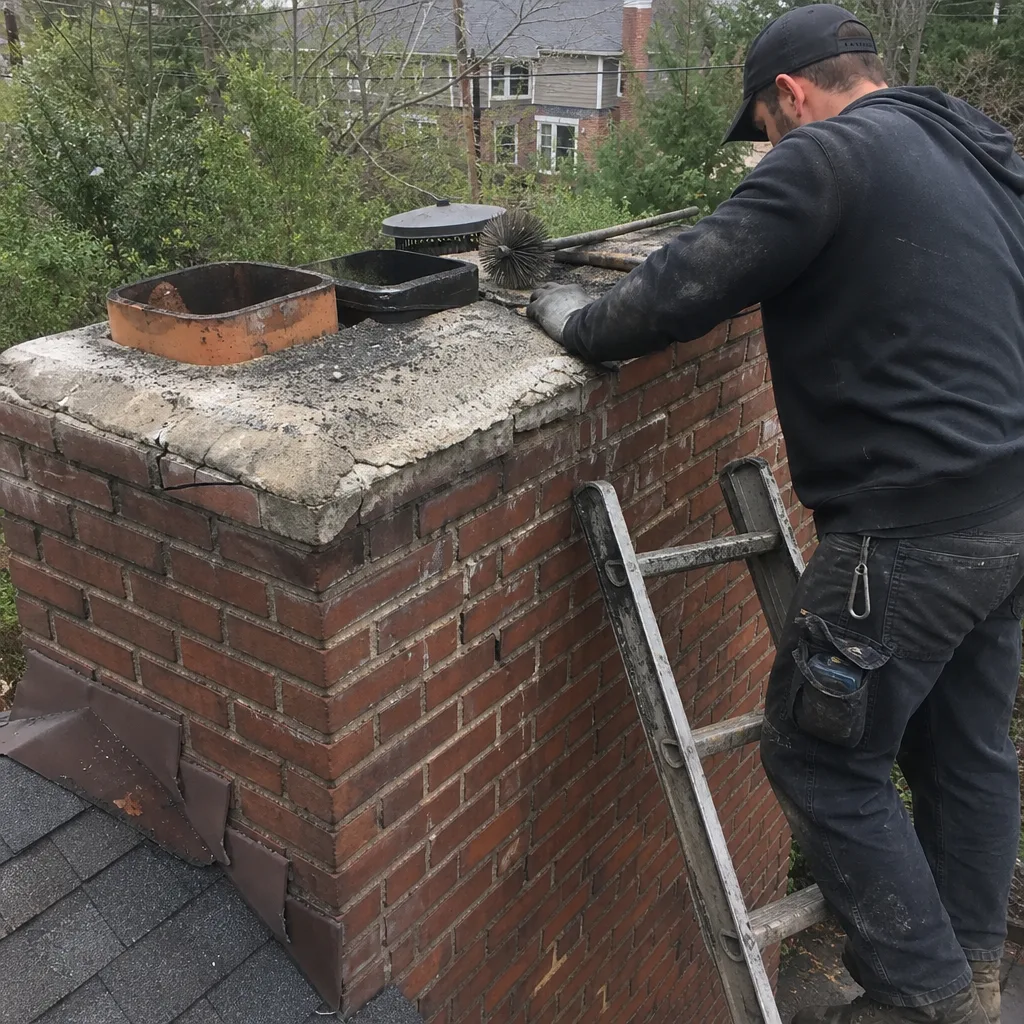 Before
 After
After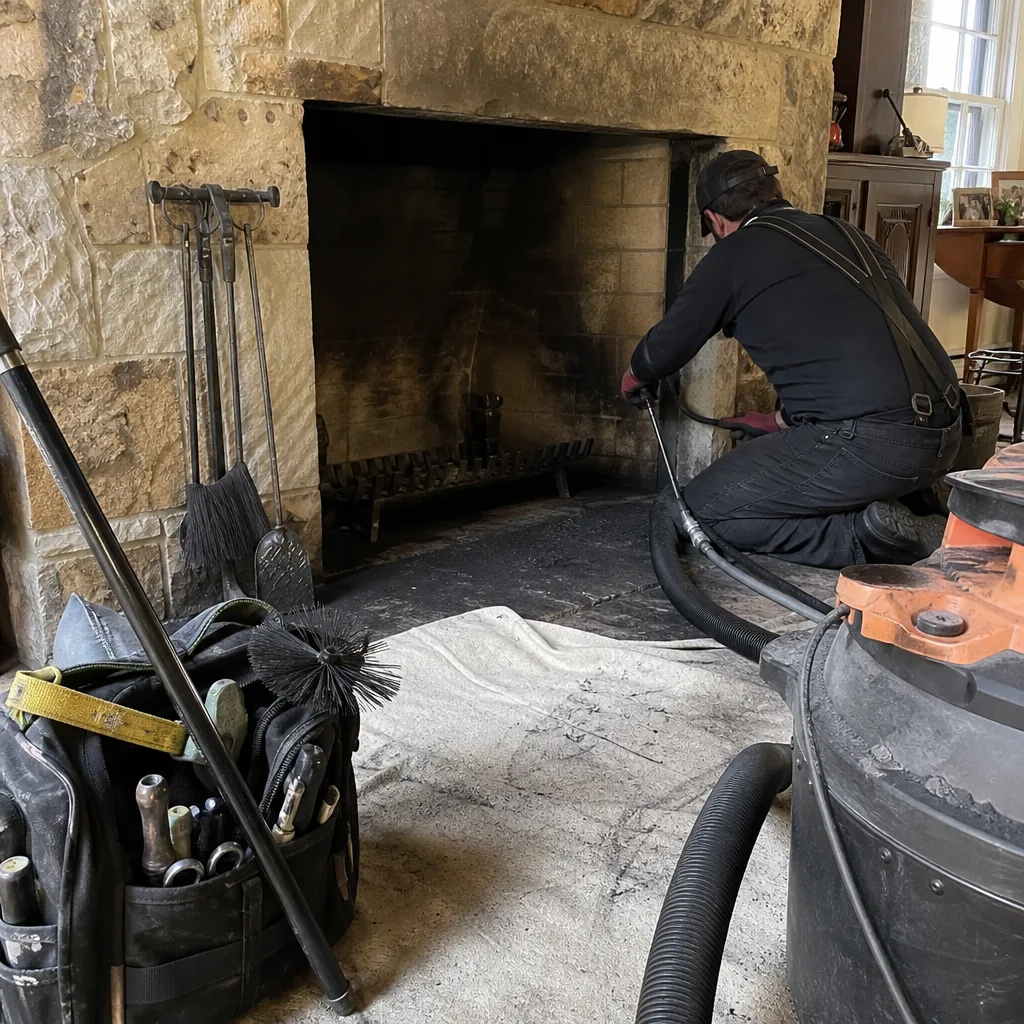 Before
 After
AfterCreosote Removal in Atlanta, GA
Creosote removal in Atlanta typically costs between $200 and $450 for a standard fireplace and flue, and most jobs are finished in 90 minutes to two hours. That’s the number most homeowners want first, so there it is. Creosote is the tar-like residue that condenses inside your chimney when wood smoke cools before it exits the flue, and left alone it becomes the primary cause of chimney fires. At Ashby Chimney Atlanta, we’ve been removing it since 2002, and we’re glad to walk you through exactly what we do, what it costs, and what you should watch for between cleanings. If you’d rather just talk it through, call (678) 263-7908 and a live person picks up, day or night.
This page covers the creosote removal side of our Chimney Cleaning & Sweep in Atlanta work. If you’re not sure whether what’s in your flue is creosote or just soot, this should clear it up.
When You Need Creosote Removal
Not every fireplace needs creosote removal every season. A wood-burning fireplace that gets used a dozen times a winter in Buckhead builds creosote at a very different rate than a gas log set in Decatur that barely sees a match. Here’s what tells us creosote has reached the point where removal isn’t optional.
- You burn wood regularly and haven’t had a sweep in over a year. In Atlanta’s humid climate, creosote absorbs moisture from the air and gets stickier and harder to remove the longer it sits. If your last chimney sweep was more than 12 months ago, you’re overdue.
- You see shiny, tar-like buildup on the damper or firebox walls. That black, glossy coating is third-degree creosote, the most concentrated and flammable form. It doesn’t brush off like soot. It has to be chemically treated or mechanically removed with rotary tools.
- Your fires smell different than they used to, especially on humid days or right after it rains. Creosote has a distinct acrid, campfire-gone-wrong odor, and Atlanta’s summer humidity makes it noticeably stronger inside the house.
- Smoke hangs in the room longer than it should. Creosote buildup narrows the flue passage, which weakens your draft. Homes in older Atlanta neighborhoods like Virginia-Highland and Grant Park have chimneys built in the 1920s and 1930s, and their flues were sized tighter than modern ones to begin with. Creosote compounds that problem quickly.
- You’ve had a chimney fire, even a small one. A chimney fire changes the structure of creosote inside the flue. It can puff up and expand, blocking the passage entirely. After any chimney fire, you need a full inspection and creosote removal before you light another fire.
- You just bought a house and don’t know the chimney’s history. In Atlanta’s competitive market, many buyers close without ever having the chimney inspected. We regularly find creosote an inch thick in newly purchased homes in Kirkwood, East Atlanta, and Sandy Springs.
If any of those descriptions hit home, call (678) 263-7908. We’ll ask a few questions, give you an honest sense of what you’re dealing with, and schedule a visit at a real arrival window, not a four-hour guess.
Our Creosote Removal Process
We follow the same sequence on every creosote removal job because it works and because it keeps your house clean. Here’s what happens when we arrive.
- We protect the work area before we touch anything. Drop cloths go down around the hearth, and we cover nearby furniture when the fireplace is in a furnished room. Atlanta homes with older heart pine floors, which is most of them in Candler Park and Inman Park, get extra care so no soot works into the grain.
- We inspect the flue and identify what stage of creosote we’re dealing with. First-stage creosote is flaky and brushes off. Second-stage is thicker and granular. Third-stage is that hard, shiny glaze. Each stage requires a different removal method, and we determine that before we start.
- We sweep the flue with wire brushes sized to your flue liner. For standard first and second-stage buildup, we run brushes from the top of the chimney down, then from the firebox up. We catch everything in a HEPA-filtered vacuum running the entire time, and we sweep the smoke shelf and damper assembly as well. That’s the area most homeowners never see, and it’s where creosote accumulates fastest.
- For third-stage glazed creosote, we use chemical treatment and rotary removal tools. This is the step that separates a real creosote removal from a quick brush-through. Glazed creosote won’t yield to a standard wire brush. We treat it, then use rotary chain or rod systems to break the glaze from the flue walls without damaging the liner itself. Our techs use professional-grade equipment and replacement components from chimney-trade brands like HeatShield, Olympia Chimney, and Gelco when a liner repair is needed after removal.
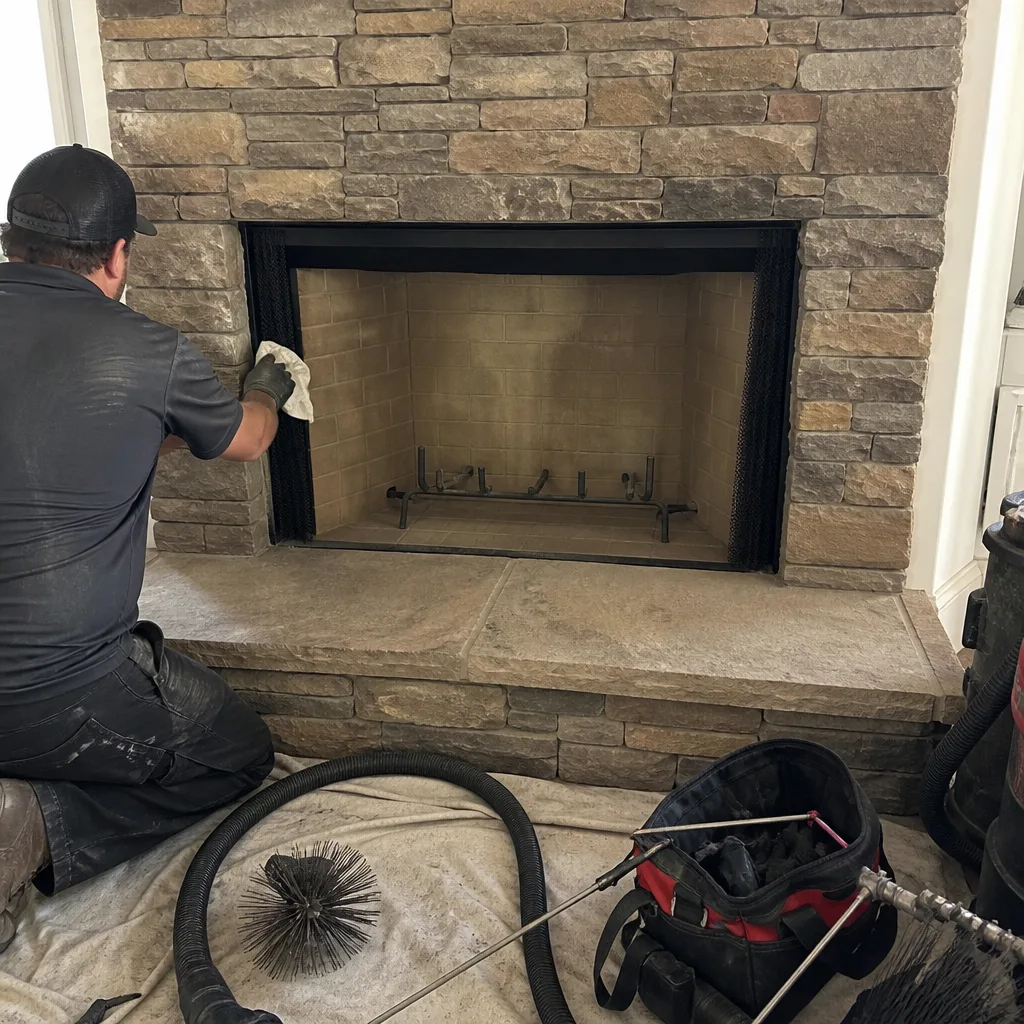
- We clean the firebox, damper, smoke shelf, and the visible cap area. The goal is not just to remove what’s dangerous, but to leave the whole system working the way it should. Ashby carries ash right in the name, and we don’t leave any behind.
- We do a final inspection and give you a written summary. You’ll know exactly what we removed, what stage creosote you had, and whether we found anything else worth knowing, like cracked flue tiles, a rusted damper, or a missing cap. You get the same written price we quoted at the door, and the same written guarantee we give on every job. That’s the Kingswell Way: say the price, show up in the window, leave it cleaner, put the guarantee in writing, and come back if it fails.
Creosote Removal Pricing in Atlanta
Here’s our honest range so you arrive informed, not surprised. Most creosote removal jobs in Atlanta fall between $200 and $450, and the main variables are the stage of creosote, the height and accessibility of your chimney, and whether your fireplace has any components that complicate access.
| Service Level | Typical Atlanta Price Range | What’s Included |
|---|---|---|
| Standard creosote removal (Stage 1-2) | $200 – $300 | Full flue sweep, firebox and damper cleaning, smoke shelf cleaning, written report, written guarantee |
| Heavy creosote removal (Stage 3 glaze) | $350 – $450 | Everything in standard, plus chemical treatment and rotary mechanical removal, extended time on site |
| Creosote removal with minor liner repair | $450 – $900 | Everything above, plus targeted repair using chimney-trade materials from HeatShield, Gelco, or Olympia Chimney |
| Creosote removal with full liner replacement | $2,500 – $6,000 | Full removal and new stainless steel liner installation, typically using DuraFlex or similar professional-grade components |
The things that move your price within those ranges are straightforward. A single-story ranch in Smyrna with a standard masonry chimney is faster to sweep than a three-story Victorian in Midtown where the tech has to work from a steep roof pitch. Third-stage glazed creosote takes longer and uses more material than light flaky buildup. And if we find that the creosote has been hiding cracked flue tiles or a failing liner, that repair gets quoted separately and clearly before we touch it. You always get the written price before any work starts, and the number on the invoice matches the number we quoted. Every time.
Call (678) 263-7908 for a free estimate. We’ll talk through what you’re seeing and give you a real number before we ever park the truck.
Why Creosote Buildup Happens Faster in Atlanta
Atlanta’s climate does specific things to creosote, and it’s worth understanding because it affects how often you’ll need removal. Summer humidity, which runs 70 to 90 percent from June through September, gets absorbed into any creosote already in your flue. That moisture makes the creosote heavier and stickier, and it intensifies the smell inside your home even when the fireplace hasn’t been used in months. We hear this constantly from homeowners in Morningside and Ansley Park: “We haven’t had a fire since March, but the fireplace smells like a campfire.” That’s humidity-saturated creosote, and it won’t go away on its own.
Atlanta’s mild winters also cause a specific pattern we see a lot. Homeowners burn fires in November and December, then stop when the weather turns, then start again in late February and March. That stop-start cycle lets thin layers of creosote cool and harden, then get coated again. Layered creosote like that bonds more firmly to the flue walls than creosote that builds from consistent burning. Homes in Dunwoody and Roswell that don’t burn at all between January and March often have more stubborn creosote than homes that keep a fire going all winter.
The third factor is wood type. A lot of Atlanta area homeowners burn whatever they can get from tree work, and much of it is hardwood that has not been seasoned long enough. Green oak and hickory, which are everywhere in Georgia, produce cooler, smokier fires. Cooler smoke means faster creosote condensation. If you’re burning wood you had split less than six months ago, you’re building creosote faster than someone burning properly seasoned wood in a hotter fire.
What the Written Guarantee Covers
We put the promise in writing on every creosote removal because that’s the only guarantee that means anything. The 365-Day Done Right Promise covers our creosote removal work for a full year. If the creosote removal we performed wasn’t done right, we come back and make it right at no charge. That includes a free second visit if a covered issue recurs inside the guarantee period.
There’s no fine print trick here. If we remove creosote from your flue and you find within the year that we missed a section or the problem has returned because of something we should have caught, you call us, we schedule the return visit, and you don’t pay for that trip. The same applies to any repair we complete during a creosote removal visit. We use materials from established chimney-trade brands like Gelco and Olympia Chimney because they hold up, and because when you install quality materials correctly, you rarely need to come back. But if something fails inside the guarantee period, we do come back, and we fix it at no charge. That’s the entire point of the Kingswell Guarantee.
Each Ashby Chimney location is independently owned and operated under the standards of the Kingswell Guarantee. We answer to the homeowners we serve, and we’re accountable to the guarantee we put in writing.
Creosote Removal vs. Standard Chimney Sweep
People ask this in Atlanta all the time: “I got a chimney sweep last year. Why do I need creosote removal now?” Here’s the straight answer. A standard chimney sweep removes loose soot and light creosote buildup using brushes. That’s the right service for a chimney with first-stage buildup that gets used a few times per season. Creosote removal is what’s needed when the buildup has progressed to second or third stage, when it’s thick, granular, sticky, or glazed. The equipment and the time on site are different, and so is the price.
A standard sweep is typically part of annual maintenance. Creosote removal is a correction for a chimney that has been neglected, heavily used, or run with unseasoned wood. If you’re not sure which one you need, call (678) 263-7908. We’ll ask what you’re seeing and smelling, and then we’ll give you an honest recommendation, including the price for whichever service is actually required. We never upsell a creosote removal when a standard sweep is all the flue needs.
FAQs – Creosote Removal
How much does creosote removal cost in Atlanta?
Creosote removal in Atlanta typically costs $200 to $450, depending on the stage of creosote, chimney height, and accessibility. Heavy glazed creosote runs toward the top of that range because it requires chemical treatment and rotary tools. Call (678) 263-7908 for an exact quote, estimates are free and the number we give you is the number you pay.
Can you remove creosote the same day?
Yes, in most cases we can schedule creosote removal within 24 to 48 hours, and we offer emergency scheduling when a chimney fire or severe blockage makes same-day service necessary. Call (678) 263-7908 and a live person will tell you exactly when we can be there. We answer the phone around the clock, every day.
Is creosote removal safe for my chimney liner?
Yes, when done correctly, creosote removal is safe for clay tile and stainless steel liners. The key is matching the removal method to the liner material, which is why we inspect before we sweep and why we use rotary systems calibrated to your specific flue. If we find liner damage during removal, we’ll show it to you and quote the repair separately using materials from HeatShield, Gelco, or Olympia Chimney before any repair work begins.
Do I really need creosote removal if I only burn a few fires a year?
Even occasional wood burning creates creosote, and in Atlanta’s humid climate that creosote absorbs moisture and gets stickier and more odorous over time. If it’s been more than a year since your last sweep, you at minimum need an inspection, and likely at least a partial creosote removal. Call (678) 263-7908 and we’ll help you figure out what’s actually needed without selling you something you don’t need.
How often should I have creosote removed in Atlanta?
Most wood-burning fireplaces in Atlanta should have creosote removal every year, and homes that burn heavily or use unseasoned wood should be on a six-month schedule. The Chimney Safety Institute of America recommends sweeping once creosote reaches 1/8 inch of buildup, but since most homeowners can’t measure that, an annual appointment with a visual inspection is the practical standard.
What’s the difference between creosote and soot?
Soot is loose, powdery carbon that brushes away easily. Creosote is a tarlike residue that forms when wood smoke condenses before exiting the flue, and it ranges from flaky and granular to hard and glazed. Soot is a nuisance; creosote is a fire hazard. If what you’re seeing is shiny, sticky, or can’t be wiped off with a paper towel, it’s creosote.
Is creosote removal covered by homeowners insurance?
Routine creosote removal is considered maintenance and is not typically covered by homeowners insurance. However, if you’ve had a chimney fire or storm damage that requires creosote removal as part of the repair, your policy may cover it. We’re glad to provide the documentation your insurer needs. Call (678) 263-7908 and we’ll walk you through what to ask your adjuster.
Who You’ll See at the Door
You should know exactly who is walking into your home, and you will. Every technician who works for Ashby Chimney Atlanta is background-checked and uniformed. We arrive in a marked truck. We show ID when we introduce ourselves. We give you our arrival window before we come, and we’re there inside it, not somewhere in a four-hour orbit. If Atlanta traffic is doing its usual thing on the connector or 285, we call and tell you while we’re still on the road.
Nathan Corliss leads the team at Ashby Chimney Atlanta. He’s been doing this work in the Atlanta metro since 2002, and if there’s a creosote situation he hasn’t handled, it’s not for lack of time on ladders. Our techs work the same way he does: show up when you’re told, explain what you’re paying for, do the work clean, and stand behind it in writing.
Call Ashby Chimney Atlanta for Creosote Removal
If your fireplace smells like a campfire in July, if you haven’t had a sweep since you moved in, or if you just want a name and a number you can count on for creosote removal in Atlanta, call (678) 263-7908. A live person answers, 24/7. You’ll get a free estimate, a real arrival window, a written price before any work starts, and a written guarantee when the job is done. That’s the way we’ve done it since 2002, and it’s the way we’ll do it for you. Visit our home page to learn more about how we work.
Written by Nathan Corliss, Owner at Ashby Chimney Atlanta, serving Atlanta.