
Last updated October 15, 2026
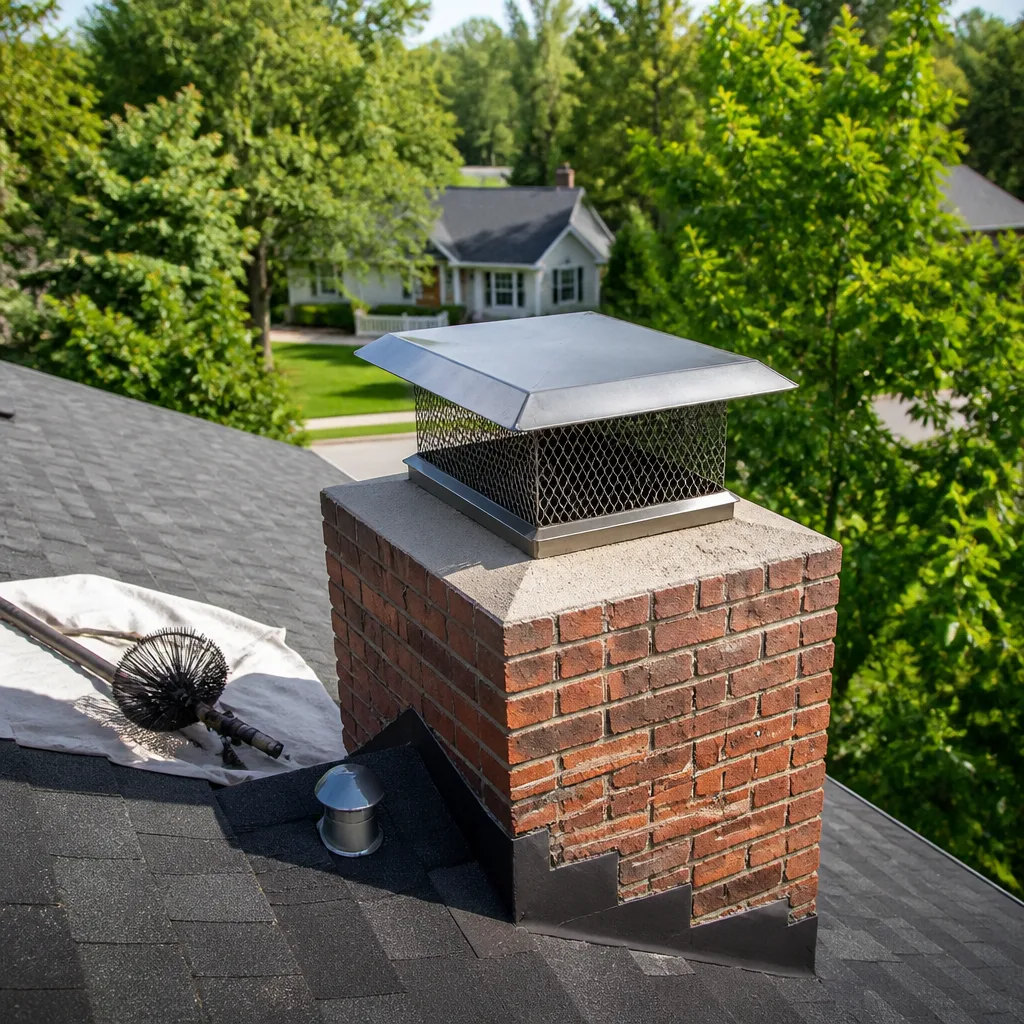 Sweep & inspection
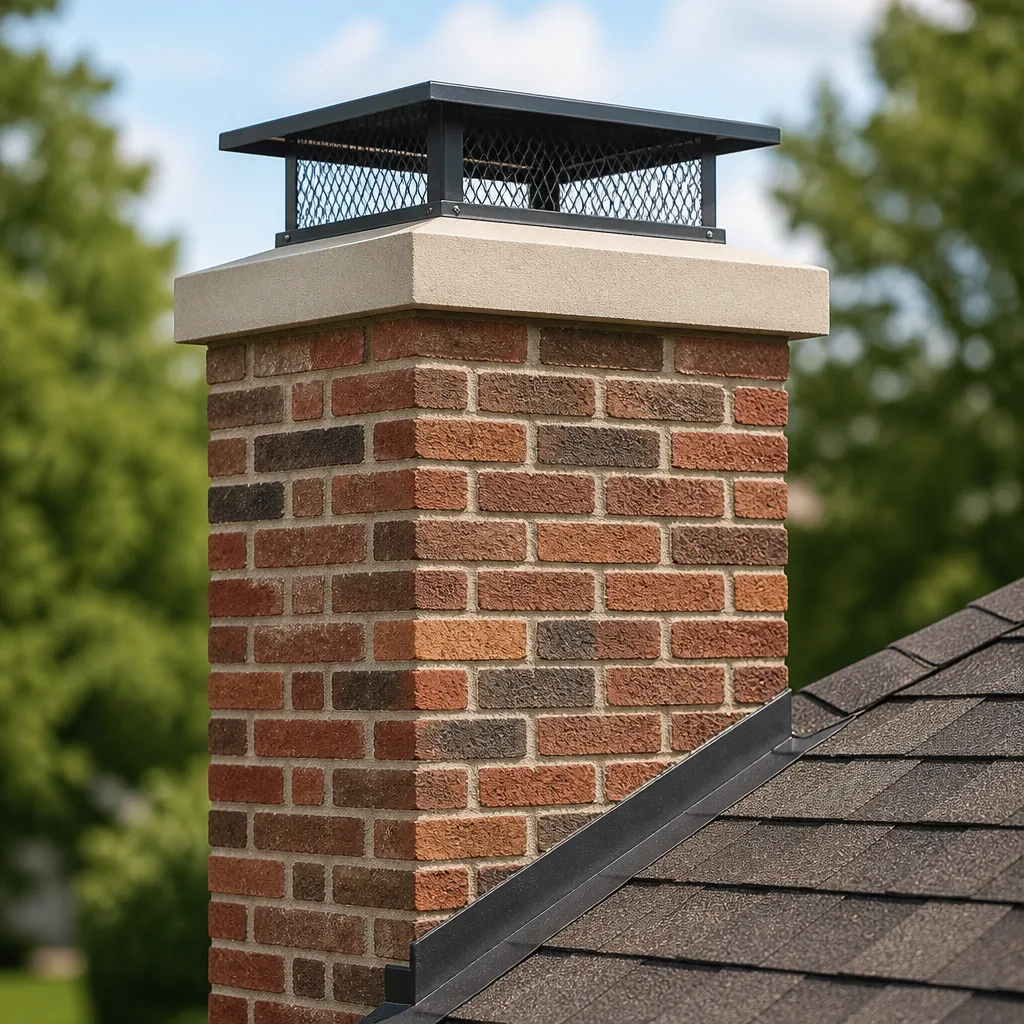 Caps & crowns
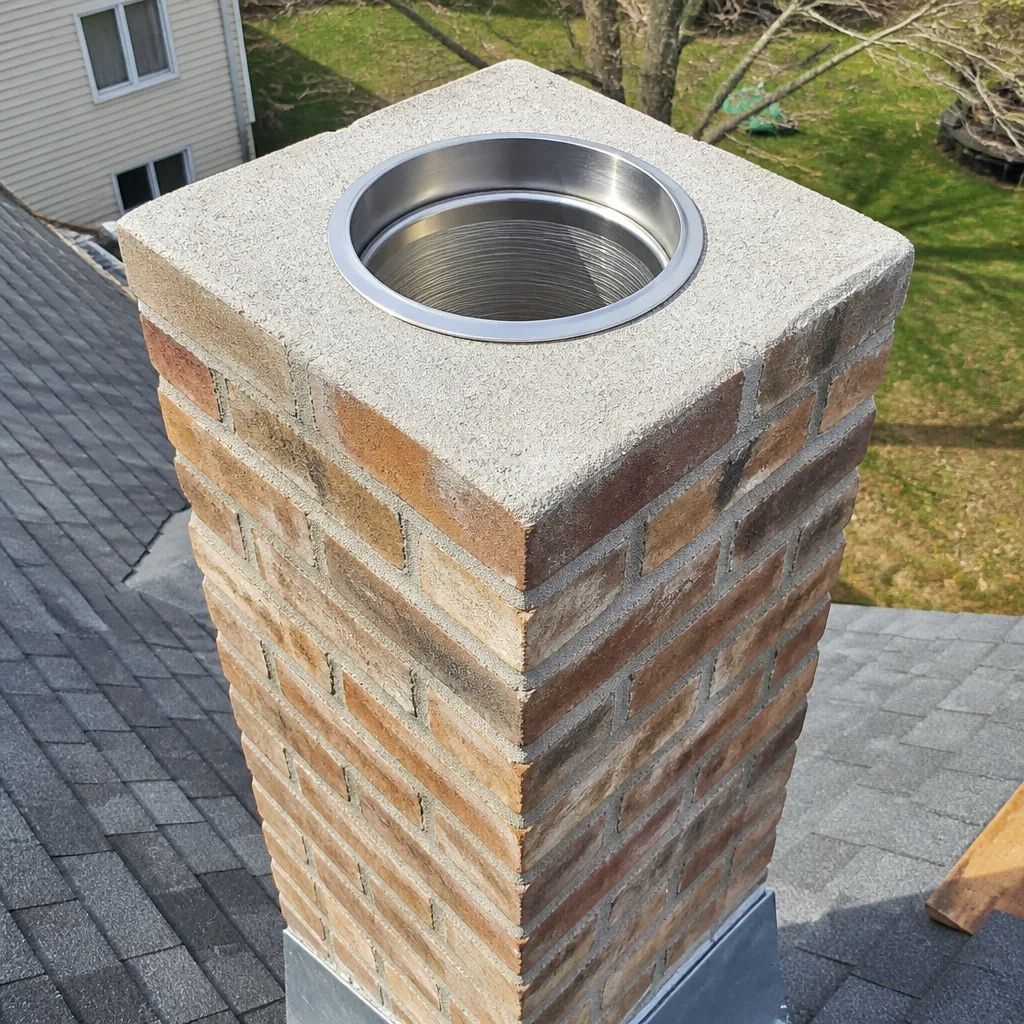 Flue relining
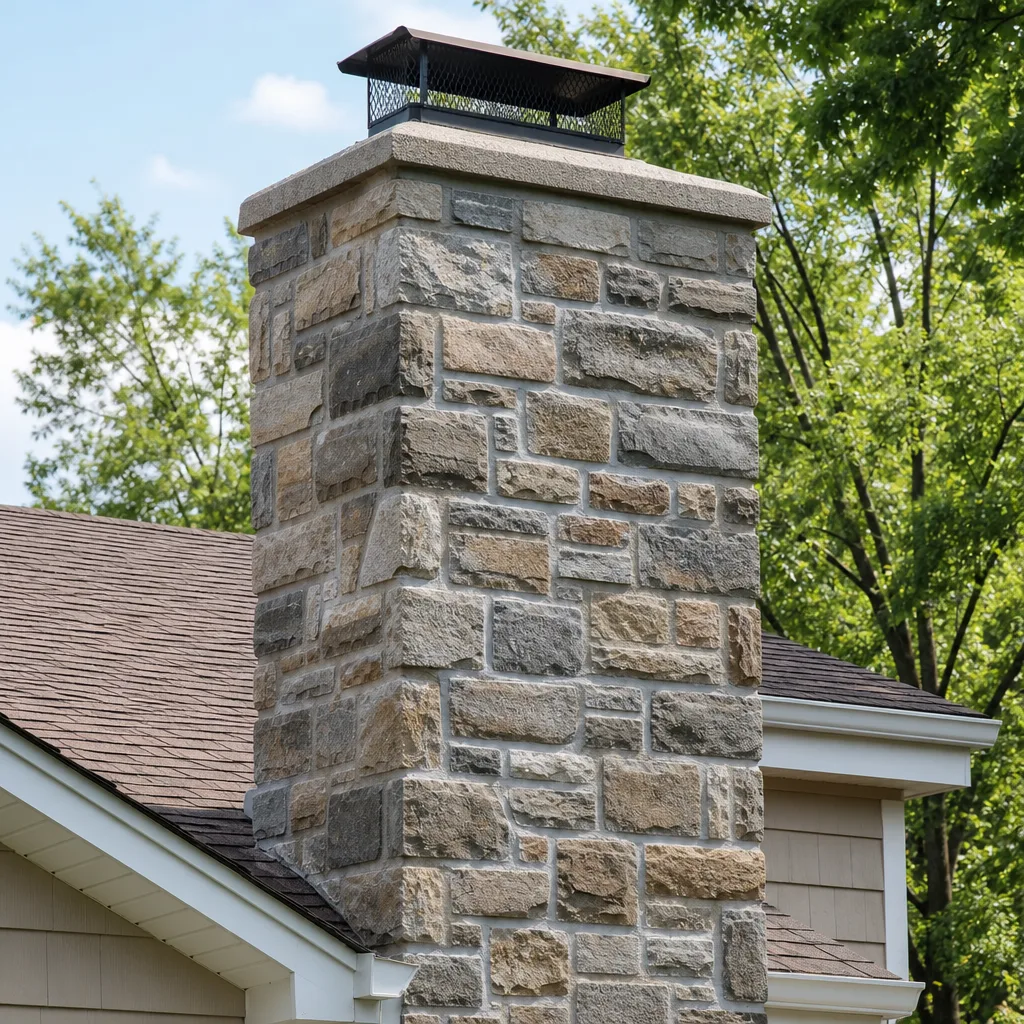 Masonry repair
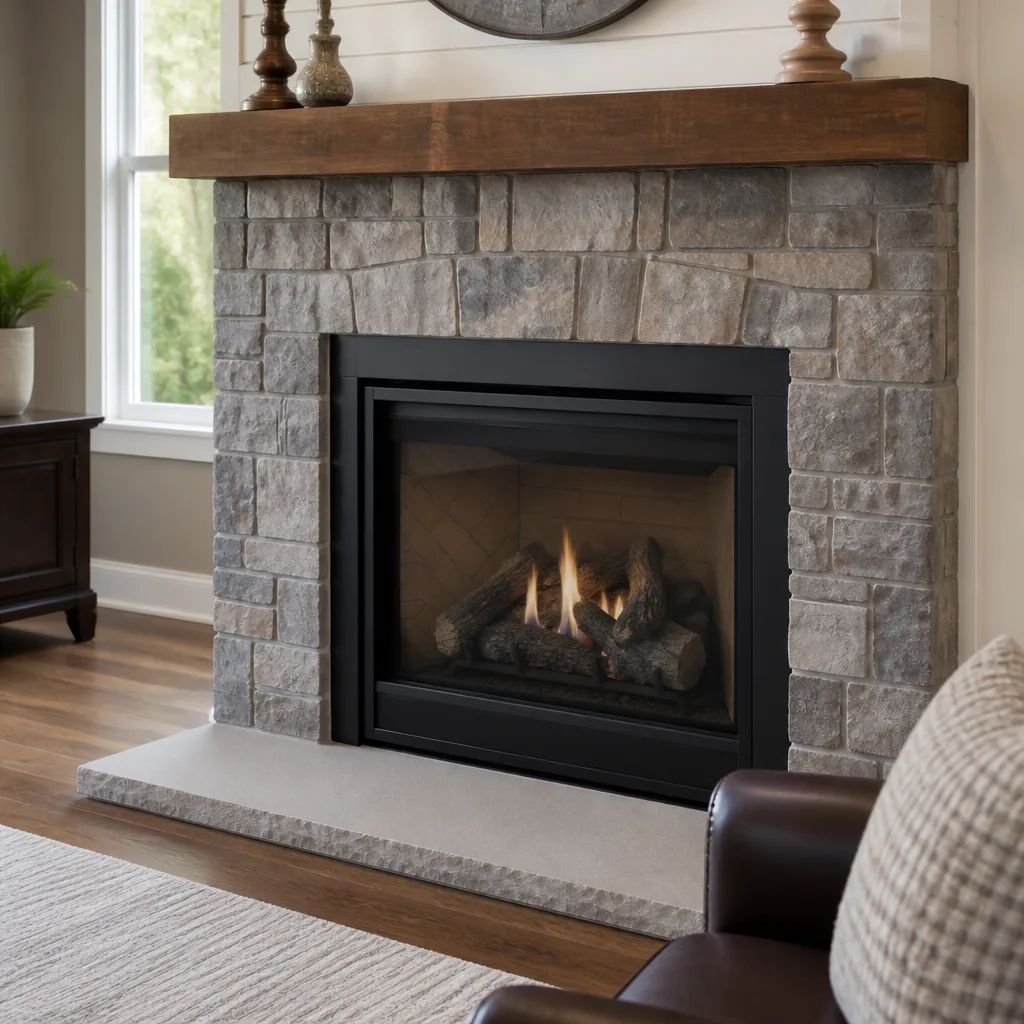 Gas fireplace service
Level 1 sweep and inspection to the NFPA 211 annual standard - flue, crown, cap, and flashing checked and photographed
Chimney sweep logs do not sweep chimneys. They loosen some creosote - which then falls where a brush and vacuum still have to collect it.
DIY vs Professional Chimney Cleaning: The Atlanta Homeowner’s Decision Guide
Most Atlanta homeowners assume the DIY chimney cleaning question is about saving $200. It isn’t. The real question is whether you can spot the things that actually burn houses down. You can brush loose soot out of a firebox with a $40 kit from Home Depot. You cannot, from inside your firebox, assess the condition of your flue liner, identify stage-two creosote that looks like a harmless black film but ignites at 2,000 degrees, or notice the hairline crack in your chimney cap that’s letting rain soak your brickwork. This guide explains what an Atlanta homeowner can safely do themselves, what genuinely requires professional equipment and training, and the specific scenario where DIY cleaning is actually worse than doing nothing. We’ll cover Atlanta’s unique chimney swifts problem, the hybrid maintenance approach that saves real money, and what a professional cleaning should actually include for the price.
Quick Answer
DIY chimney cleaning is appropriate for removing loose ash and light soot from your firebox and inspecting your damper, but it cannot replace a professional sweep, which uses rotary equipment, closed-circuit cameras, and chemical treatments to remove dangerous creosote and assess liner integrity. In Atlanta specifically, DIY chimney work carries an additional risk: chimney swifts are federally protected birds that nest in uncapped flues, and disturbing their nests is a federal violation, not just a nuisance. The smartest approach for most Atlanta homeowners is a professional chimney sweep in Atlanta as a baseline, followed by simple DIY maintenance between visits.
Styles & brands we work with
Table of Contents
- What You Can Legitimately Do Yourself
- What Requires Professional Equipment and Training
- The Scenario Where DIY Is Worse Than Skipping It
- Atlanta’s Chimney Swift Problem: A Federal Protection You Can’t Ignore
- The Honest Hybrid Approach: Professional Baseline, Smart Maintenance
- What a Professional Sweep in Atlanta Should Actually Include
- What Does Chimney Cleaning Cost in Atlanta?
- Common Mistakes to Avoid
- When to Call a Professional
What You Can Legitimately Do Yourself
Let’s be straight about what’s actually within a homeowner’s reach. None of this requires specialized training, and all of it is genuinely useful between professional cleanings.
1. Remove ash from the firebox. Wait at least 24 hours after your last fire, then use a metal ash shovel and a metal bucket with a lid. Atlanta’s humidity means ash clumps and sticks, so don’t use a plastic bucket that could melt if a hidden ember is still live. Keep the bucket outside on brick or concrete until trash day, never on a wooden deck. This is the single most useful DIY task, and it’s completely safe when done with cold ash.
2. Wipe down the damper exterior. The damper is the metal plate just above your firebox that opens and closes the flue. When it’s cool, you can wipe the exterior surface with a dry rag to remove soot buildup that makes it stick. Do not attempt to remove or disassemble the damper. If it’s rusted open or closed, that’s a professional repair.
3. Check the spark arrestor from the ground. A spark arrestor is the mesh screen at the top of your chimney cap that prevents embers from escaping onto your roof or your neighbor’s roof. From your yard, you can visually confirm it’s still there and not visibly bent or clogged with leaves. You cannot safely assess it up close from a ladder, and in Atlanta’s spring and fall, clogged spark arrestors are a common cause of smoking fireplaces.
4. Keep the hearth area clear. Atlanta homes in older neighborhoods like Virginia-Highland, Decatur, and East Point often have original masonry fireplaces with shallow hearths. Keep furniture, rugs, and firewood at least 36 inches away from the firebox opening. This isn’t cleaning, but it prevents the most common fire hazard we see in older Atlanta homes.
That’s the honest list. Notice what’s not on it: no cleaning of the flue itself, no chemical treatments, no cap removal, no liner inspection. Those all require what you can’t get from a ladder and a brush from Ace Hardware.
What Requires Professional Equipment and Training
This is where the DIY versus professional decision actually gets decided. Not by cost, but by capability.
Rotary cleaning systems. A professional sweep doesn’t use a brush on a rod. They use a rotary system with a motorized whip head that spins nylon lines against the flue walls at high speed. This removes glazed creosote that a hand brush simply polishes. The difference matters because glazed creosote, also called stage-three creosote, is the most flammable deposit in your chimney and the most difficult to remove. A hand brush doesn’t touch it. In Atlanta’s burning season, from October through March, we see more glazed creosote than in drier climates because our humid air causes combustion byproducts to condense on flue walls faster.
Closed-circuit camera inspection. After every sweep at Ashby Chimney Atlanta, we run a camera down the flue. This is non-negotiable for a professional job, and it’s the single biggest advantage over DIY. A camera shows you exactly what your liner looks like: cracks, gaps, spalling, missing mortar joints. It also confirms the sweep actually removed the deposits, not just knocked them loose. If a company in Atlanta quotes you a sweep without camera inspection, ask why. You’re paying for cleaning, but you’re also paying for information about whether your chimney is safe to use at all.
Creosote chemical treatments. Some creosote types respond to chemical treatment before mechanical removal. Products like the ones used in professional chimney service, including treatments from suppliers like Gelco and Olympia Chimney, break down glazed creosote chemically so it can be removed without damaging the liner. These products are not sold at Home Depot, and even if they were, the application process requires knowing how long to let them sit, how to ventilate the flue, and when it’s safe to burn afterward. This is not a homeowner job.
Liner assessment and repair. Your flue liner is the clay or steel tube that vents combustion gases out of your home. In Atlanta, many homes built before 1960 have original clay tile liners that are now cracked or spalled from decades of thermal cycling. A crack that would be invisible from your firebox is a direct path for heat and combustion gases to reach the wood framing around your chimney. Professionals assess liners with cameras and repair them with stainless steel systems or HeatShield resurfacing. You cannot do this yourself, and you can’t see the problem without the camera.
The Scenario Where DIY Is Worse Than Skipping It
This is the counterintuitive truth most Atlanta chimney guides skip. There is a specific situation where attempting DIY cleaning creates more danger than doing nothing.
Here’s how it happens. You have stage-two creosote in your flue. Stage-two creosote looks like shiny black flakes or a granular, crunchy deposit. It doesn’t look especially dangerous. You run a brush down the flue from above or below, scrape some of it loose, and then you sweep up what falls into the firebox. The flue looks cleaner because you’ve disturbed the surface. But you haven’t removed the deposit from the flue walls. You’ve just roughed it up, creating a larger surface area for heat to catch during your next fire.
Stage-two creosote ignites at roughly 1,000 to 2,000 degrees Fahrenheit depending on moisture content. A chimney fire is exactly that: creosote burning inside your flue, often sounding like a freight train and reaching temperatures that crack clay liners and warp steel ones. By disturbing stage-two creosote without removing it, you’ve made your chimney more likely to catch, not less. In our experience at Ashby Chimney Atlanta, some of the worst liner damage we find in Atlanta is in chimneys where a homeowner told us they “cleaned it themselves” the year before. The false sense of security is the real hazard. You think you’ve done the task, so you burn with more confidence. The creosote is still there, now more flammable than before.
The same logic applies to stage-three creosote, which is the glazed, tar-like coating that forms when burning unseasoned wood or running fires too cool. Stage-three creosote cannot be removed with a brush at all. It requires chemical treatment and rotary removal. Attempting DIY on stage-three creosote does nothing except give you a dirty afternoon and a false sense that the chimney is clean.
Atlanta’s Chimney Swift Problem: A Federal Protection You Can’t Ignore
Atlanta has a chimney problem that most of the country doesn’t share. Chimney swifts, small migratory birds that look like flying cigars, nest almost exclusively in chimneys. They arrive in Georgia each spring, and they’re protected by the Migratory Bird Treaty Act, a federal law that makes it illegal to disturb active nests.
What does this mean for you? If you have an uncapped chimney in Atlanta, there’s a real chance swifts are nesting in it between April and August. If you attempt a DIY cleaning during nesting season and disturb a nest, you’re committing a federal violation. The fine can reach $15,000 per nest. This isn’t a theoretical risk. Chimney swifts return to the same nesting sites year after year, and Atlanta’s mature tree canopy and older housing stock make the city prime swift habitat.
Professional sweeps in Atlanta know this. We check for swifts before starting any work, and if a nest is active, we stop and reschedule after the birds have fledged, usually by late August or early September. A homeowner with a brush and a YouTube video is not going to know what a swift nest looks like, and even if they do, they’re not equipped to handle the legal and practical problems of an active nest. A professional chimney inspection in Atlanta before you start any cleaning, DIY or professional, is the way to protect yourself from this specific Atlanta liability.
The permanent fix is a chimney cap with a spark arrestor, which keeps swifts out entirely while still allowing proper draft. If you have an uncapped chimney in Atlanta, this is the single most important upgrade you can make, and it’s a professional installation.
The Honest Hybrid Approach: Professional Baseline, Smart Maintenance
Here’s the approach we recommend to homeowners who call us in Atlanta. It’s not all-or-nothing, and it saves real money over the life of your fireplace.
Step 1: Get a professional baseline. Before you do anything yourself, have a certified sweep clean and inspect your chimney with a camera. This gives you three things: a clean flue, a documented record of your liner’s condition, and a professional opinion on what your specific chimney needs. You cannot make intelligent DIY decisions without knowing what you’re working with. A homeowner in Buckhead with a 1970s masonry fireplace and a homeowner in Roswell with a 2005 prefab unit have completely different maintenance needs, and the only way to know yours is to look.
Step 2: Do the simple maintenance between visits. Once you have a clean baseline, the DIY tasks above, ash removal, damper wiping, spark arrestor check from the ground, become genuinely useful. You’re not trying to replace the professional cleaning. You’re extending its effect and keeping an eye on things between visits.
Step 3: Schedule professional cleanings based on use, not the calendar. The standard advice is annual cleaning, but that’s a floor, not a ceiling. In Atlanta, if you burn more than two cords of wood per season, or if you burn pine, which is common in Georgia and produces more creosote than hardwoods, you likely need cleaning every 60 to 80 fires. A professional can tell you at your baseline visit what your actual cadence should be. This is the difference between paying for a service you need and paying for a calendar ritual.
Step 4: Never skip the inspection. A sweep without an inspection is half a job. The camera inspection is what tells you whether your liner is still safe, whether your cap is still doing its job, and whether the swifts are back. In Atlanta’s humid climate, brick chimneys deteriorate faster than in dry climates, so the inspection matters more here, not less. Every fireplace repair in Atlanta starts with knowing what’s actually wrong, and camera inspection is how we find out.
What a Professional Sweep in Atlanta Should Actually Include
If you’re paying for a professional cleaning in Atlanta, you should know what you’re paying for. We list this because many Atlanta homeowners have told us they’ve paid $150 for a sweep that was really just a brush down the flue and a handshake. Here’s what a legitimate professional sweep includes.
- A pre-sweep inspection. Before any cleaning, the technician checks the firebox, damper, smoke chamber, and flue for visible problems. This is when we check for chimney swifts in Atlanta during nesting season.
- Rotary cleaning of the flue. Not a hand brush. A motorized rotary system with nylon whips sized to your flue. This is the only method that removes glazed creosote effectively.
- Smoke chamber cleaning. The smoke chamber is the angled area above the damper where smoke compresses before entering the flue. It’s a common creosote collection point, and it’s invisible from your firebox.
- Firebox cleaning. Removal of ash and debris from the firebox, including the ash dump if your fireplace has one.
- Closed-circuit camera inspection. After cleaning, a camera run down the full length of the flue. You should be shown the footage. This is your proof the cleaning worked and your record of liner condition.
- Written report. A professional sweep should produce a written report of findings, including liner condition, creosote level, cap condition, and any recommendations. At Ashby Chimney Atlanta, every job gets a written price before work starts and a written guarantee on completion, and the camera report is part of that record.
- Cleanup. The work area should be left clean. Drop cloths, HEPA vacuuming, no soot on your floors. If a company leaves a mess, that tells you something about the rest of the job.
If a company in Atlanta quotes you a sweep without most of these items, you’re not comparing apples to apples when you compare prices.
What Does Chimney Cleaning Cost in Atlanta?
Atlanta chimney sweep pricing runs a little higher than the national average because of the city’s humidity, which causes more creosote buildup per fire, and because of the chimney swift checks that add time to every service during nesting season. Here’s what you should expect to pay for a professional sweep and inspection in the Atlanta market.
- Standard sweep with camera inspection: $180 to $340, depending on flue height, creosote level, and accessibility. Most Atlanta homes with one-story chimneys fall in the $200 to $280 range.
- Heavy creosote removal (stage-two or stage-three): $350 to $600. This requires chemical treatment and extended rotary work. If you haven’t cleaned in several years and you burn pine, plan for this range.
- Chimney cap installation (with spark arrestor): $150 to $400 installed, depending on flue size and cap material. This is the permanent fix for Atlanta’s chimney swift problem.
- Liner repair or replacement: $1,500 to $6,000. This is the big one, and it’s why the camera inspection matters. A cracked liner in an Atlanta home is a fire hazard, and the cost of fixing it is far less than the cost of a chimney fire.
These are Atlanta market ranges, not quotes. The only way to get a real price is to have a technician look at your specific chimney. At Ashby Chimney Atlanta, we write the price before any work starts, and the number on the invoice matches the number we quoted at the door. No surprises at the end. If you want a Ashby Chimney Atlanta home estimate, call us at (678) 263-7908 and we’ll schedule a time that works for you.
Common Mistakes to Avoid
- Using a shop vac to clean the firebox without checking for live embers. Atlanta’s mild winters mean people burn fires and then clean the firebox the next day. If any ember is still smoldering, a shop vac will pull it into the filter and can start a fire inside the vacuum. Wait 24 hours, use a metal scoop, and dispose of ash in a metal container.
- Buying a brush kit and assuming the flue is clean because the brush came out black. A hand brush removes loose soot but leaves glazed creosote on the flue walls. The brush coming out black tells you there was something there. It doesn’t tell you it’s gone.
- Cleaning during chimney swift nesting season without checking for birds. This is a federal violation in Atlanta, and it’s also a grisly mess. If you hear chirping or see birds flying into your chimney between April and August, stop and call a professional.
- Burning unseasoned wood and expecting annual cleaning to handle it. Green wood in Atlanta’s humidity creates stage-three creosote faster than any cleaning schedule can keep up with. Burn seasoned hardwood that’s been split and stacked for at least six months, and your flue will stay cleaner longer.
- Treating the chimney as disconnected from the house. In Atlanta’s brick-heavy housing stock, water intrusion through an uncapped or poorly capped chimney soaks into brick and mortar, causing spalling and eventual structural damage. A chimney is part of your house, not a separate structure, and maintenance decisions should account for that.
- Skipping the inspection because the sweep “looks fine.” The most dangerous chimneys in Atlanta are the ones that look fine from the firebox. Cracks, gaps, and damage happen where you can’t see them. The camera inspection is the only way to know.
When to Call a Professional
Call a professional if you see white or black glazed deposits in your flue, if your fireplace smokes into the room, if you smell wood smoke when the fireplace isn’t in use, if you hear birds in your chimney, or if it’s been more than two years since your last cleaning. These are not DIY situations. Ashby Chimney Atlanta offers free estimates in Atlanta, and every job gets a written price before work starts and a written guarantee when it’s done. If a covered repair fails inside the guarantee period, we come back and fix it at no charge. That’s the 365-Day Done Right Promise, and it’s in writing. Call (678) 263-7908.
See the difference
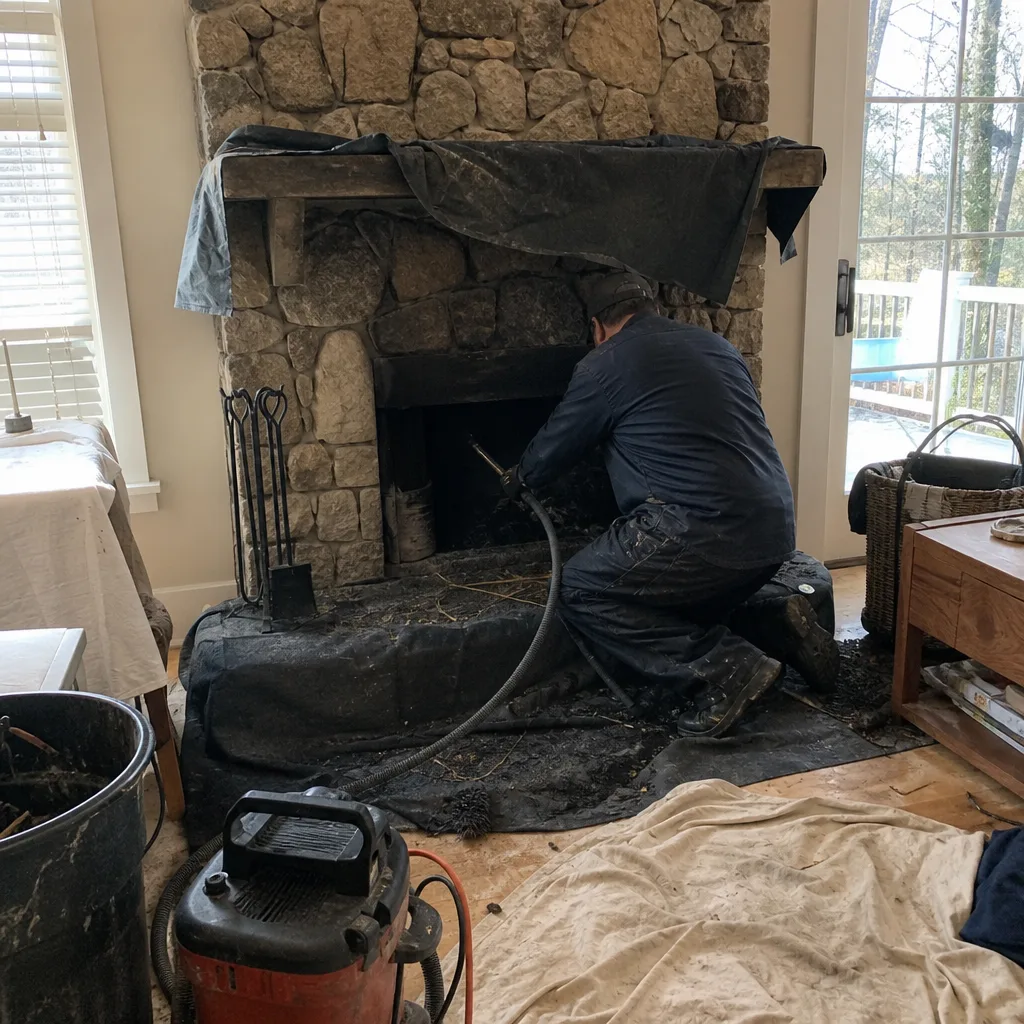 Before
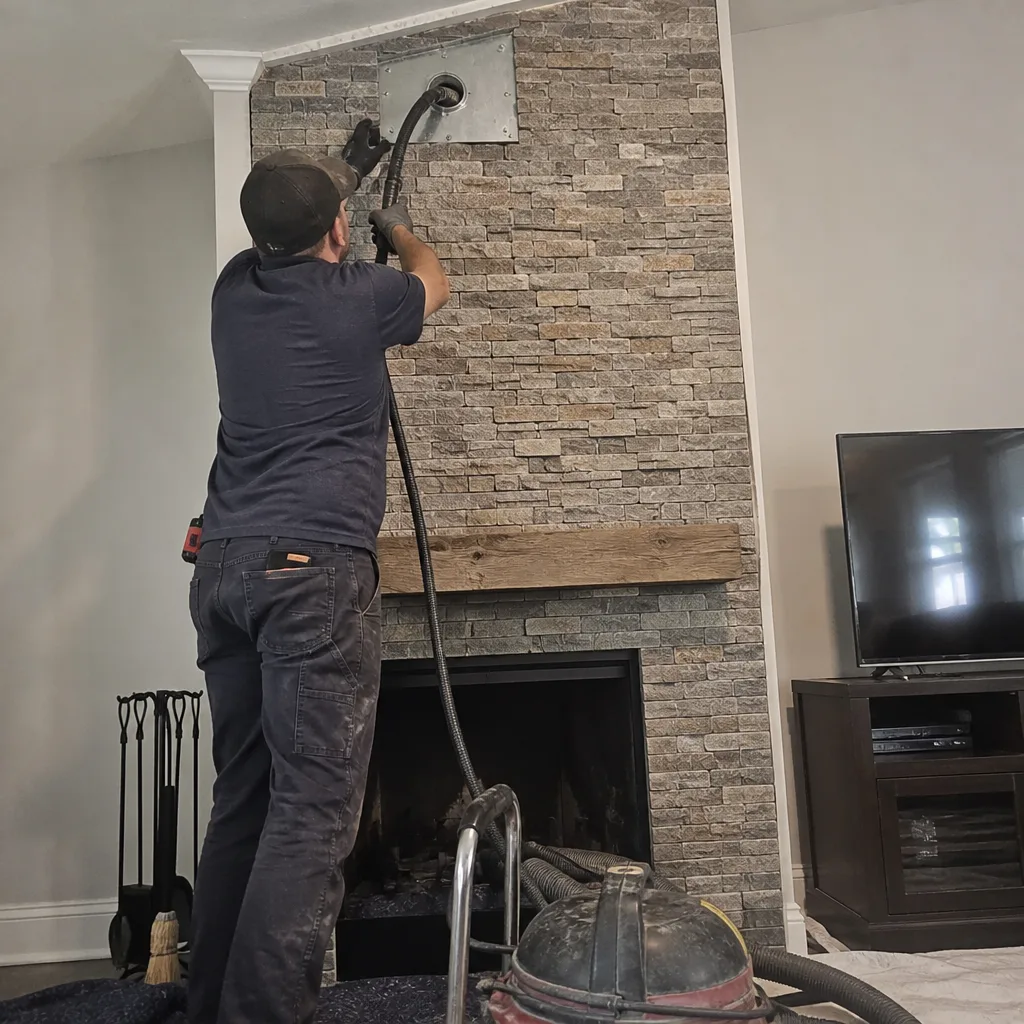 After
After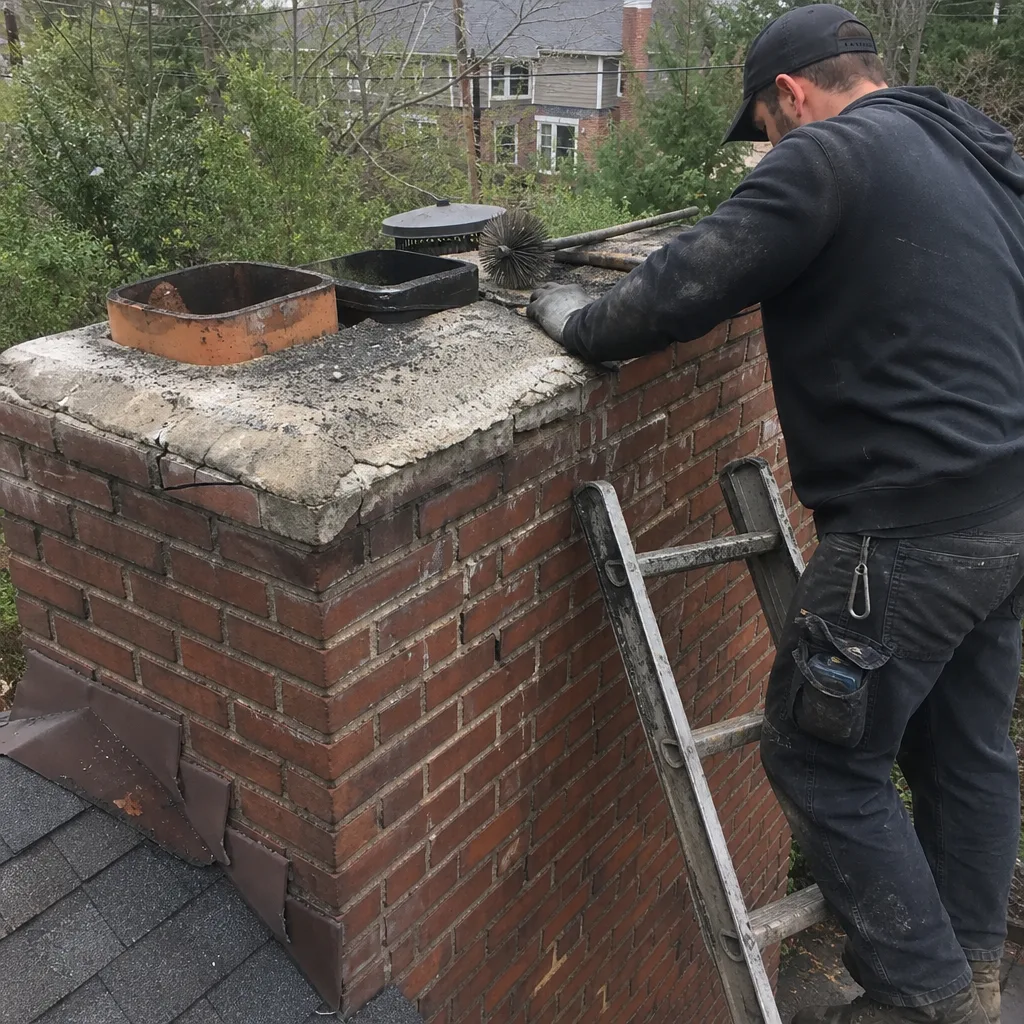 Before
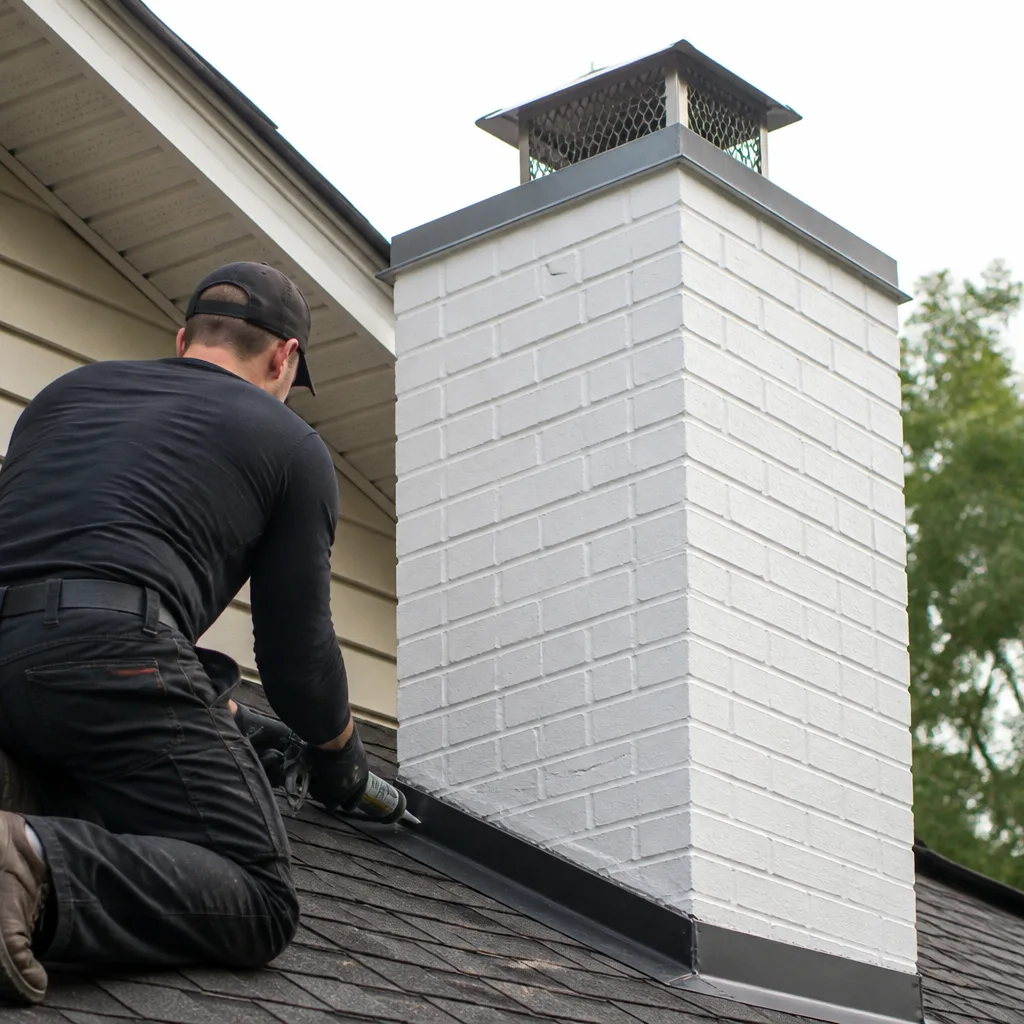 After
After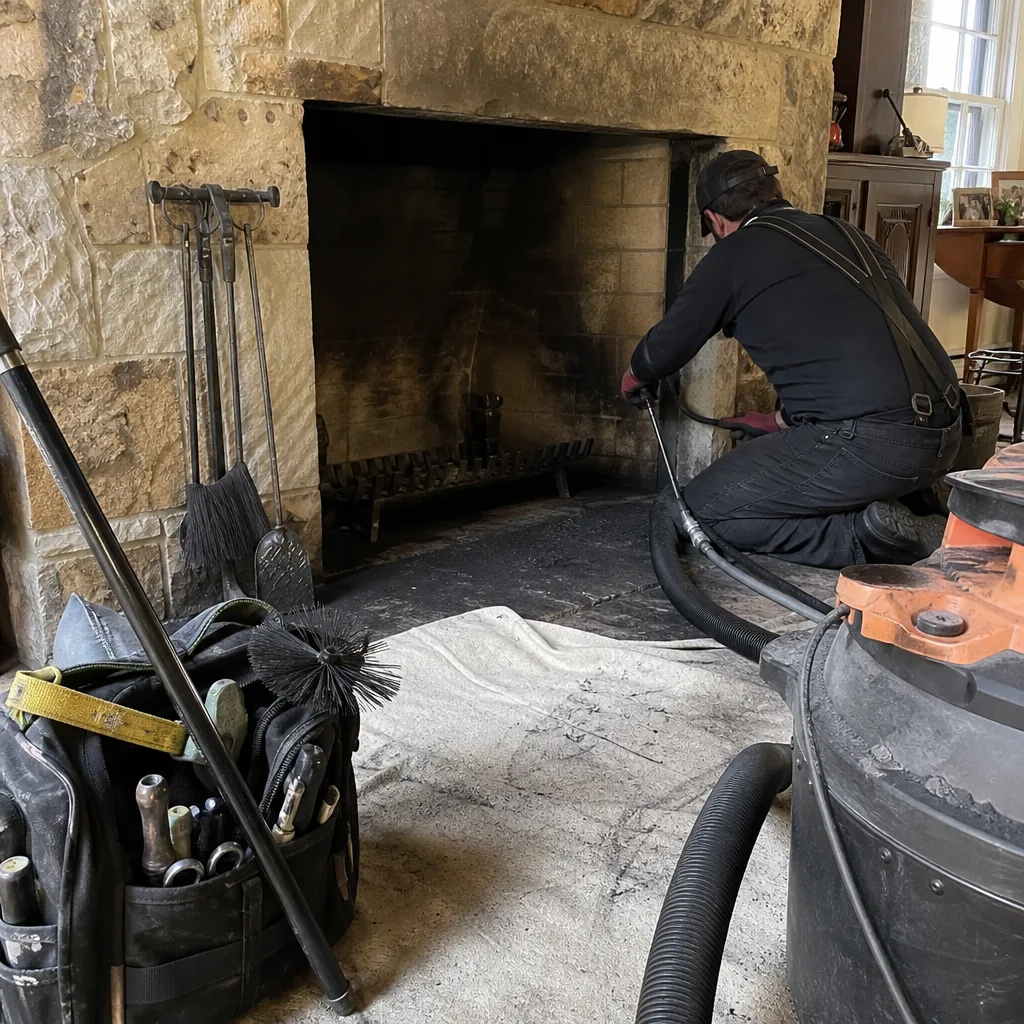 Before
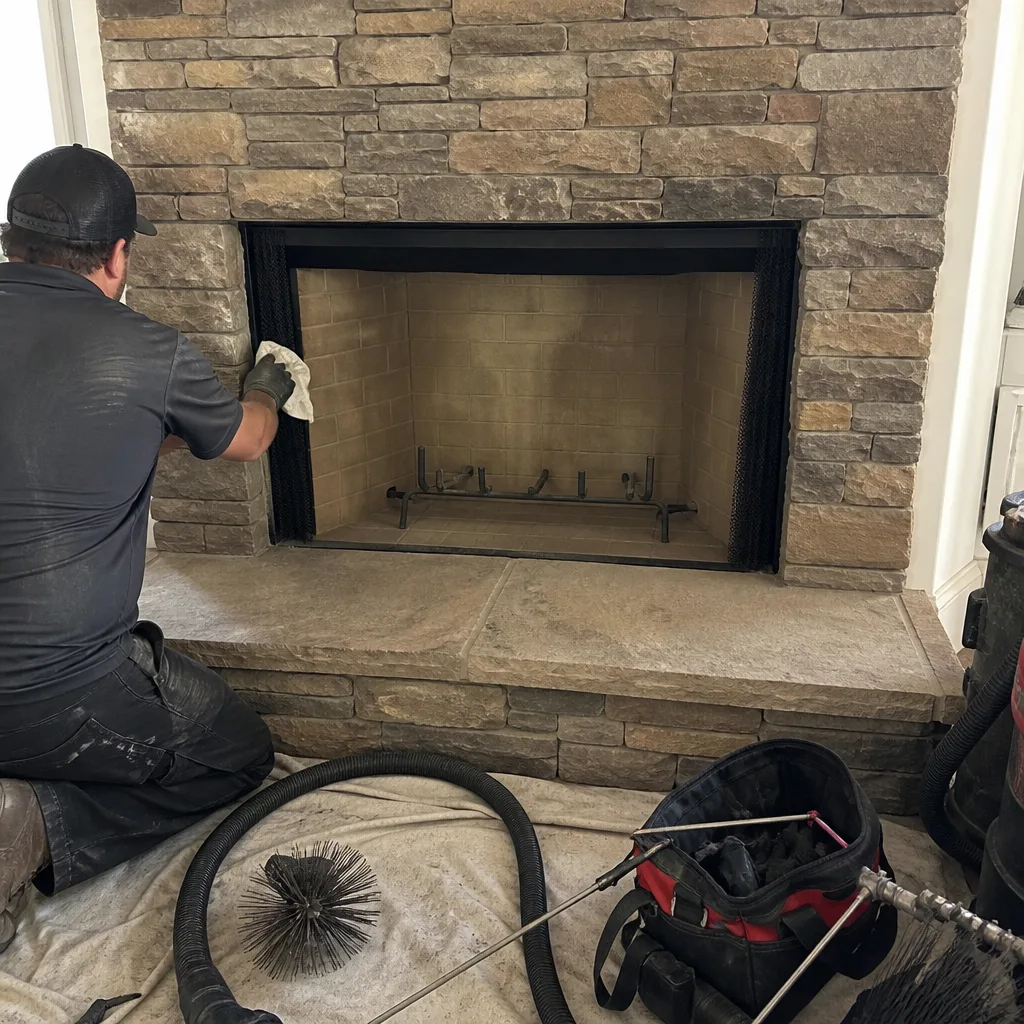 After
AfterFrequently Asked Questions
A standard chimney sweep with camera inspection in Atlanta typically runs $180 to $340, with most single-story homes falling between $200 and $280. Heavy creosote removal runs $350 to $600. These are market ranges; your exact price depends on your flue’s condition and height. Call (678) 263-7908 for a written quote specific to your chimney.
You can remove loose soot from your firebox and wipe down your damper, but a brush kit cannot remove glazed or stage-three creosote, cannot assess your liner, and cannot check your cap properly. Disturbing stage-two creosote with a brush without removing it actually makes your chimney more flammable, not less. If you decide to do simple maintenance yourself, get a professional camera inspection first so you know what you’re working with.
At least once per burning season, and more often if you burn more than two cords of wood annually or burn pine, which is common in Georgia and produces more creosote than hardwoods. Atlanta’s humidity causes creosote to condense on flue walls faster than in drier climates, so annual is the floor, not the ceiling. A professional can tell you your actual cadence after a camera inspection.
Creosote accumulates and hardens. Stage-two creosote ignites at roughly 1,000 to 2,000 degrees Fahrenheit, and a chimney fire can crack clay liners, warp steel liners, and spread to the framing around your chimney. Even without a fire, a dirty chimney drafts poorly, smokes into your home, and forces combustion gases, including carbon monoxide, back into your living space. The real risk isn’t theoretical. It’s cumulative, and it’s invisible from your firebox.
This is the most common question Atlanta homeowners ask us. The answer comes down to what the camera shows. A cracked or spalled clay liner is a fire hazard, full stop. But not every damaged liner needs full replacement. Stainless steel liners and HeatShield resurfacing can repair specific damage without replacing the entire system. At Ashby Chimney Atlanta, we show you the camera footage and explain exactly what we’re seeing before recommending any repair, and every repair comes with a written guarantee. If a repair fails inside the guarantee period, we return at no charge.
Atlanta’s high summer humidity causes creosote and soot inside your flue to absorb moisture and release odor, which then pushes down into your home. This is a common complaint in Atlanta from June through September. The fix is a thorough cleaning followed by a chimney cap to reduce moisture intrusion. A cap also keeps out chimney swifts, which is a separate Atlanta problem you should solve at the same time.
The Bottom Line
DIY chimney cleaning in Atlanta has a legitimate but narrow place: removing cold ash from your firebox, wiping down your damper, and keeping an eye on your spark arrestor from the ground. Everything beyond that requires equipment you don’t own and information you can’t get without a camera. The most expensive mistake isn’t paying for professional cleaning. It’s the false confidence that comes from a DIY job that left the real danger untouched. In Atlanta, that danger includes creosote that ignites at 2,000 degrees, federally protected chimney swifts, and brick chimneys that rot from the inside in our humid climate. Get a professional baseline, maintain it sensibly, and never skip the camera inspection. That’s the decision guide, and it’s the same advice we’d give our own neighbors.
Written by Nathan Corliss, Owner at Ashby Chimney Atlanta, serving Atlanta since 2002.