
Last updated October 15, 2026
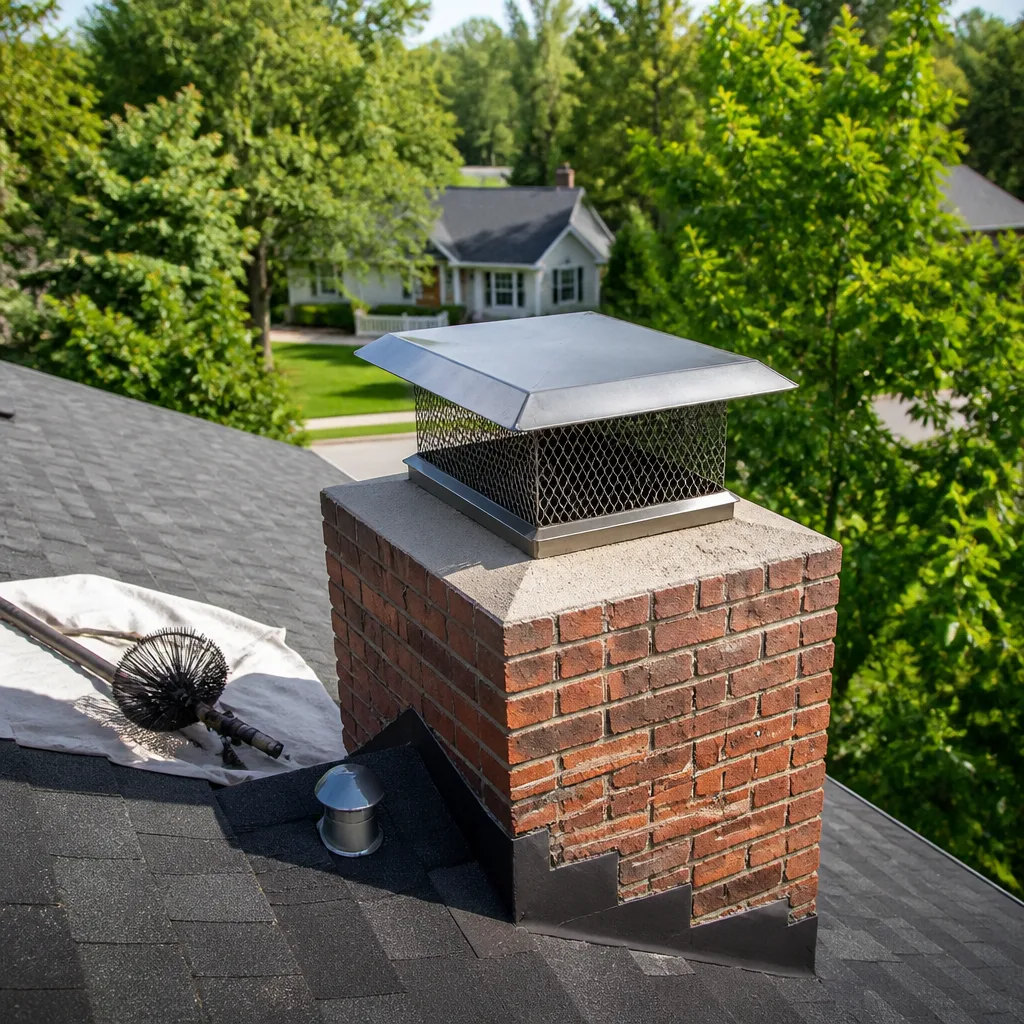 Sweep & inspection
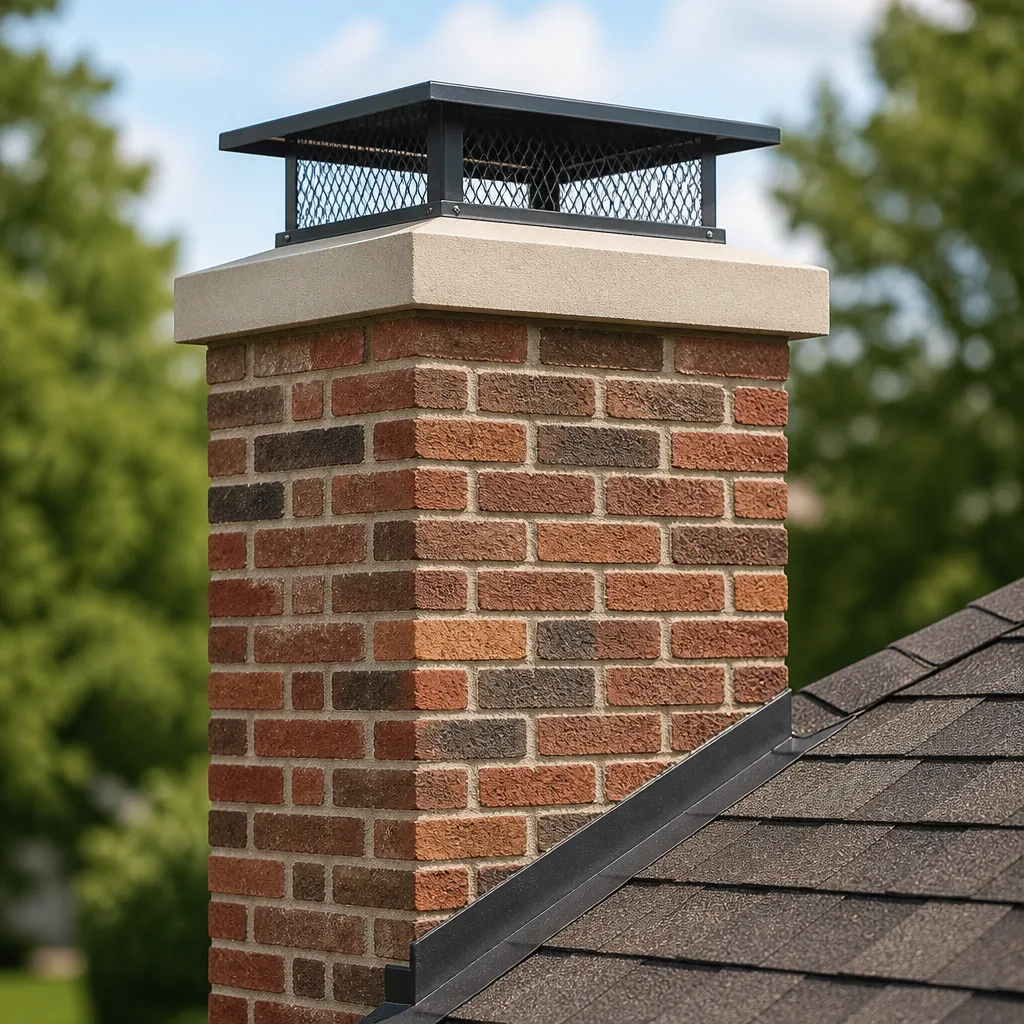 Caps & crowns
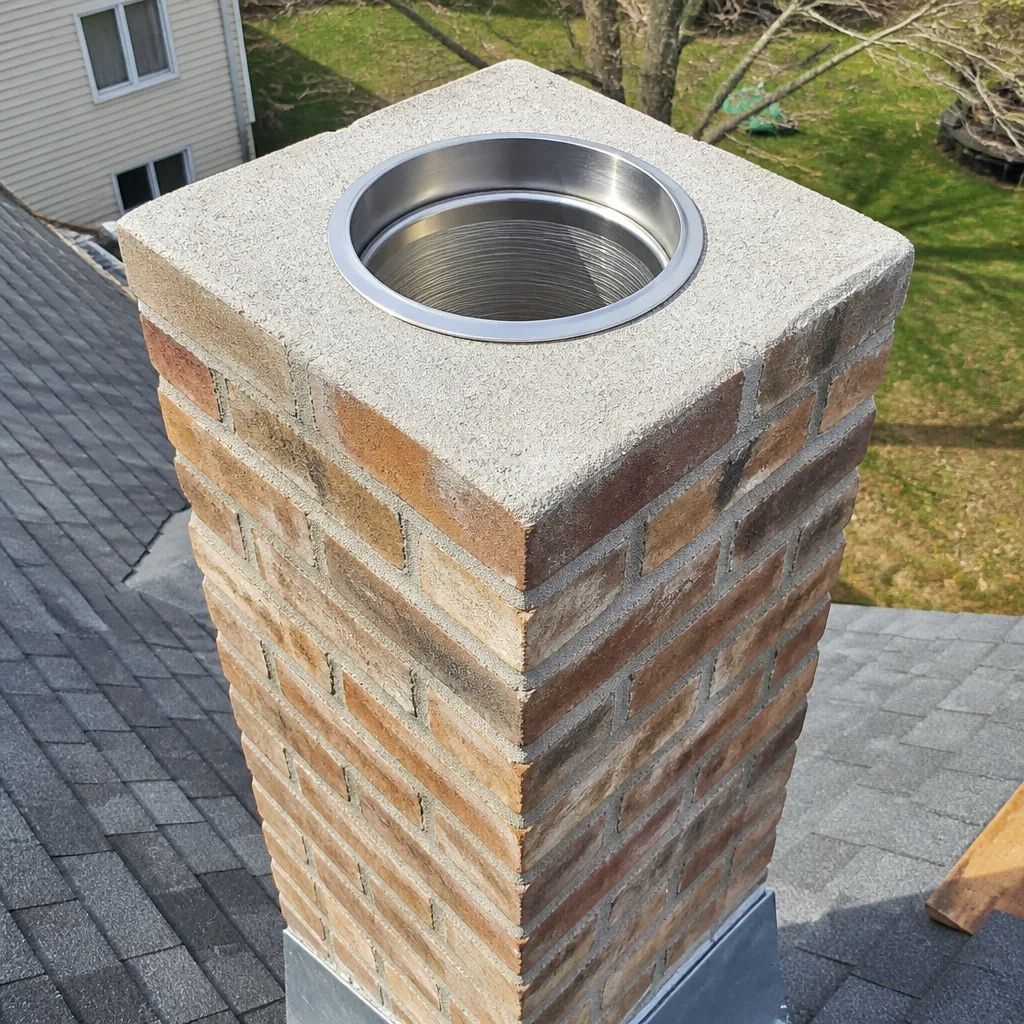 Flue relining
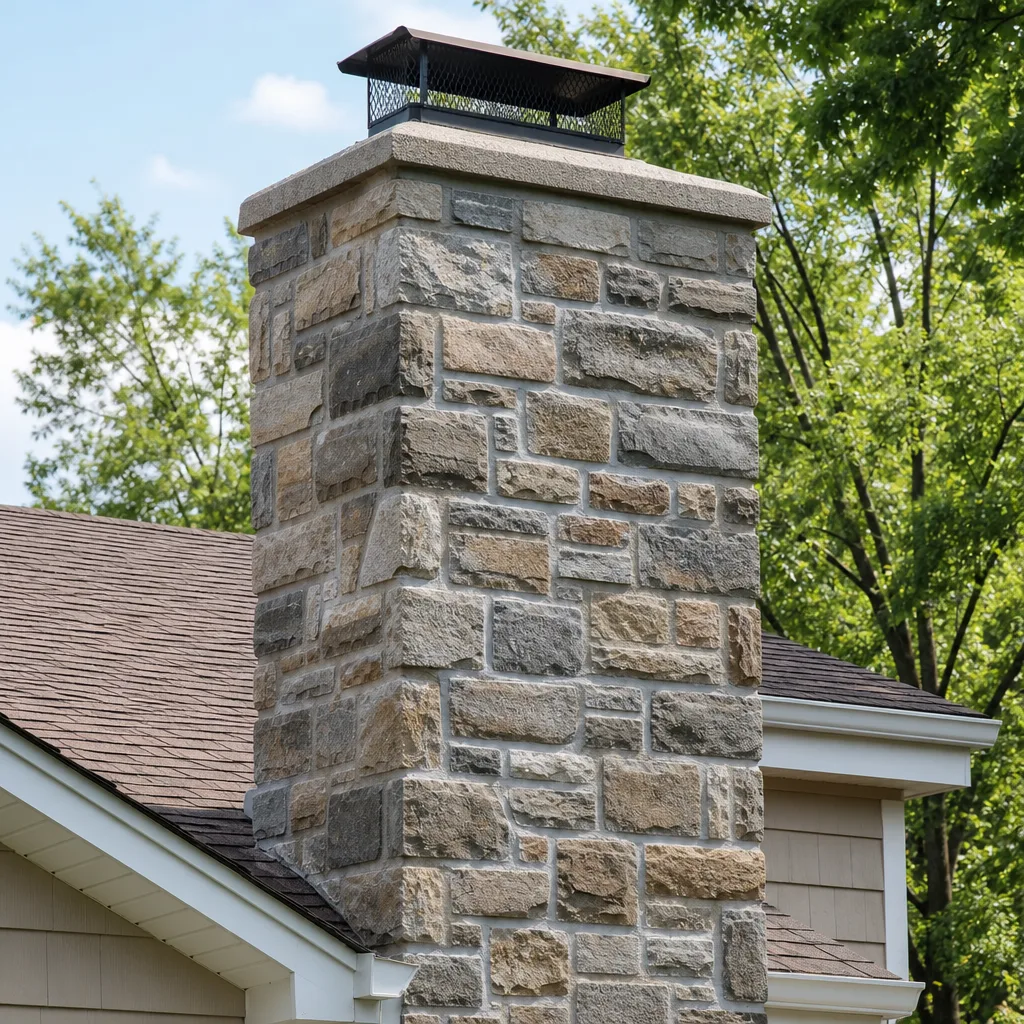 Masonry repair
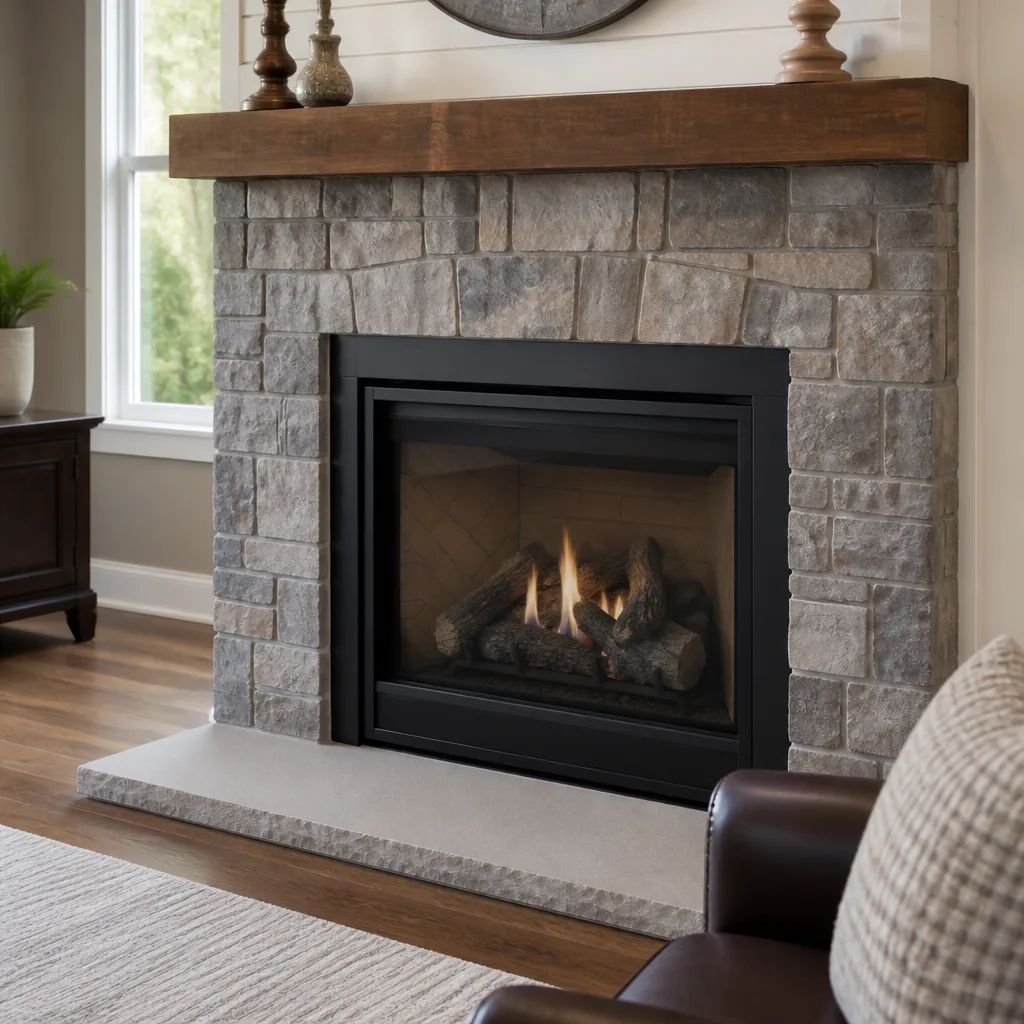 Gas fireplace service
Level 1 sweep and inspection to the NFPA 211 annual standard - flue, crown, cap, and flashing checked and photographed
Chimney sweep logs do not sweep chimneys. They loosen some creosote - which then falls where a brush and vacuum still have to collect it.
Chimney Cleaning Permits, Codes & Inspections in GA: What You Need to Know
Most Atlanta homeowners never think about chimney permits until a real estate transaction forces the issue. A standard sweep? No permit needed. But the moment a technician recommends a new flue liner or rebuilds the top few feet of masonry, you’ve crossed an invisible line. Cross it without paperwork and you’re not just risking a code violation, you’re creating a deferred negotiation with whoever eventually buys your house. This guide maps exactly where that line sits in Georgia, how local counties interpret the rules differently, and which questions to ask before you sign off on any work. For related reading, see our Complete Guide to Chimney Cleaning in Atlanta.
Styles & brands we work with
Quick Answer
Routine chimney sweeping and Level I inspections in Georgia require no permit or municipal approval. Repair, alteration, relining, or rebuilding generally requires a residential building permit from your city or county. A permit is not a tax, it’s a paper trail proving the work was reviewed and inspected, and it matters most when you sell.
Table of Contents
- The Legal Line: Maintenance vs. Construction
- NFPA 211: The Standard Georgia Courts Recognize
- How Fulton, DeKalb, and Cobb Counties Handle Chimney Work
- Level II Inspections: When Georgia Requires Them
- Five Questions to Ask Any Chimney Contractor in Georgia
- What Chimney Permits Cost in Metro Atlanta
- What Happens When Unpermitted Work Is Discovered
- Common Mistakes to Avoid
- When to Call a Professional
- Frequently Asked Questions
- The Bottom Line
The Legal Line: Maintenance vs. Construction
Georgia building codes draw a clean line between what they call maintenance and what they call alteration. Sweep a chimney, inspect a flue, brush out creosote, replace a damper plate, even patch a small mortar joint, and you’re maintaining an existing system. No permit. No inspection. No paperwork filed with anyone.
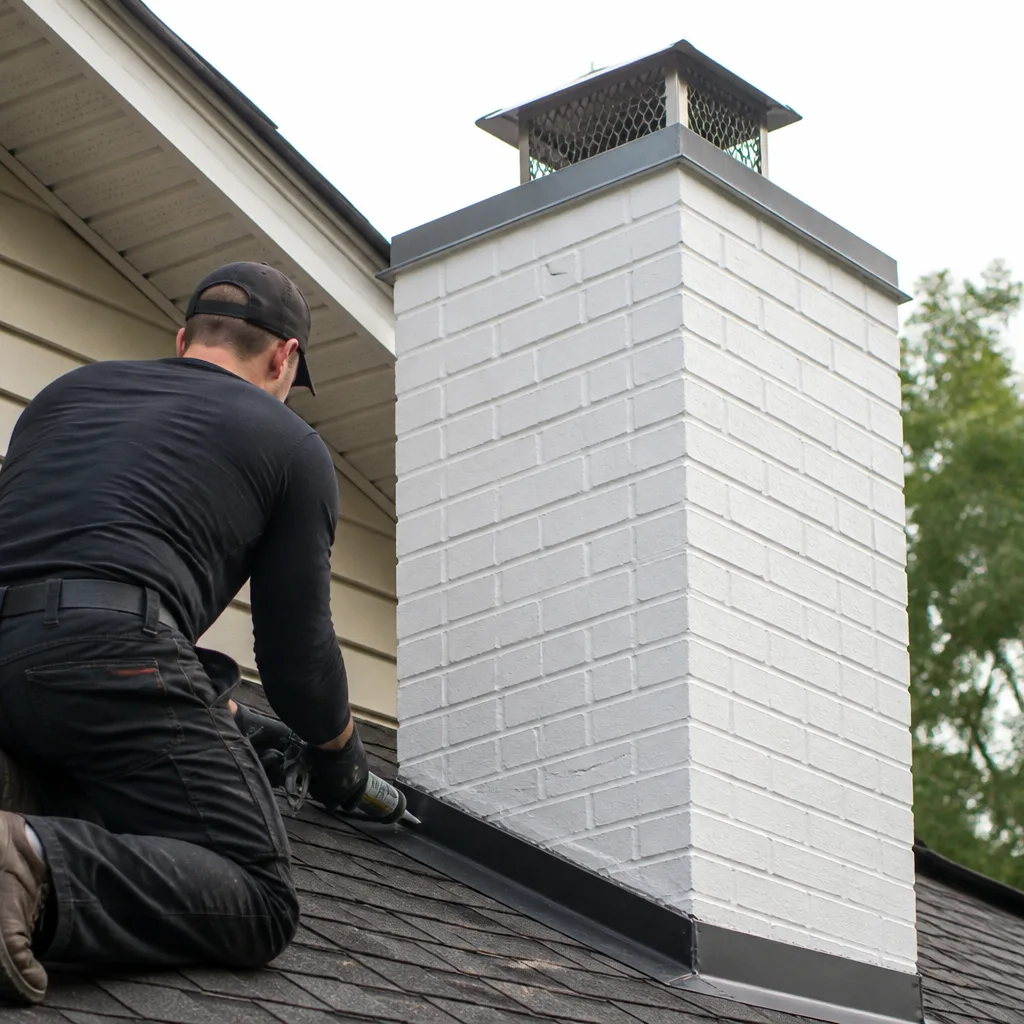
Now pull out the existing flue liner and drop in a stainless steel one. That’s an alteration. You’ve changed the combustion system’s core component. The International Residential Code (IRC), which Georgia adopts statewide with local amendments, treats chimney liner replacement as work that requires a building permit and a follow-up inspection. The same goes for rebuilding a firebox, repointing more than a small section of brick, adding or replacing a chimney cap when it involves structural modification, or converting a wood-burning fireplace to gas logs.
Why does the code care so much? Because a chimney is part of your home’s structural envelope and its fire safety system at the same time. A liner that isn’t sized correctly or an improperly sealed crown doesn’t just reduce draft, it can channel combustion gases into wall cavities or allow creosote ignition to reach combustible framing. The permit process forces a second set of eyes on that work. In our experience across the Atlanta market, the homeowners who get hurt aren’t the ones avoiding permits to save $150, they’re the ones whose contractor never mentioned the requirement at all. If you’re unsure whether your situation calls for professional evaluation, review our Chimney Cleaning Warning Signs: A Atlanta Homeowner’s Reference Guide.
Maintenance and cleaning work that typically requires no permit in Georgia:
- Chimney sweeping and creosote removal
- Level I visual inspections
- Chimney cap replacement using the existing mounting
- Damper repair or replacement
- Minor mortar joint repointing
- Fireplace cleaning and log grate replacement
Work that generally requires a residential building permit in Georgia:
- Flue liner installation or replacement
- Firebox rebuilding
- Chimney crown reconstruction
- Structural masonry repair beyond spot pointing
- Chimney height extension or reduction
- Vent system changes for gas appliances
NFPA 211: The Standard Georgia Courts Recognize
Georgia’s permit rules reference the IRC, but the inspection standards chimney professionals actually follow come from NFPA 211. That’s the National Fire Protection Association’s Standard for Chimneys, Fireplaces, Vents, and Solid Fuel-Burning Appliances. Think of it as the operating manual for anything that carries flame exhaust out of a building.
NFPA 211 establishes three inspection levels, and knowing the difference will save you from paying for more than you need or less than the situation demands. A Level I inspection is what you get with a routine sweep: a visual check of all readily accessible parts of the chimney, fireplace, and connecting flue. No ladders on the roof, no camera. Level II adds accessible attic and crawl space inspection, roof-top examination, and internal flue video scanning. It’s triggered by a real estate transaction, a change to the heating system, a weather event, or a chimney fire. Level III is invasive and reserved for serious structural concern after a fire or hidden damage.
Here’s what surprises most Atlanta homeowners: Georgia insurance companies and home inspectors routinely default to Level II language after any fire event, and real estate contracts increasingly specify that wood-burning chimneys receive a Level II inspection before closing. This is where the code conversation stops being theoretical. A buyer’s inspector flags a Level I finding or, worse, calls for a Level II scan, and suddenly the chimney becomes a negotiating lever.
What does NFPA 211 say about creosote? It treats accumulation beyond one-eighth of an inch as a fire hazard requiring removal. That number matters because it’s measurable, not an opinion. A technician who tells you that your flue needs cleaning should be able to reference that thickness standard. One who says it’s “pretty dirty in there” without numbers is selling you a feeling.
When a fire occurs in a chimney, NFPA 211 also sets the standard for what must happen next. The flue must be inspected at Level II before the fireplace is used again. Not a sweep, not a visual glance, a genuine camera scan. The reason is simple: chimney fires commonly crack older clay tiles and separate mortar joints, creating pathways for the next fire to reach wood framing. Every legitimate chimney company in the Atlanta area knows this. The ones who skip it are gambling with your house.
How Fulton, DeKalb, and Cobb Counties Handle Chimney Work
The permit line is statewide, but the interpretation gets local fast. If you live in Atlanta proper, Fulton County issues your permits. If you’re in Brookhaven or Stone Mountain, that’s DeKalb. Marietta, Smyrna, Kennesaw, that’s Cobb. Each jurisdiction has its own permit office, its own fee schedule, and its own inspectors with their own priorities.
Fulton County, for example, has historically taken a stricter posture toward flue liner replacements. Permits are routinely required, the work must be performed by a licensed contractor, and the final inspection gets scheduled through the county portal. Homeowners in neighborhoods like Virginia-Highland, Grant Park, and Buckhead who put off a liner replacement until the week before closing often find the permit process takes longer than the repair itself. That’s not a code problem, that’s a calendar problem.
DeKalb County has evolved since its building department reorganized several years ago. Today, the expectation is the same: if you’re replacing a liner or rebuilding masonry, you pull a permit. But enforcement tends to be complaint-driven rather than proactive. A standalone chimney company doing twenty liner replacements a year in Decatur and Dunwoody might operate for a while without close county scrutiny. When it surfaces, it surfaces during a sale. The seller’s disclosure form asks whether renovations were permitted, and the buyer’s inspector checks county records. A 2019 unpermitted relining job in a North Decatur bungalow becomes a 2024 price reduction conversation.
Cobb County takes a pragmatic view in our experience. The permit process is streamlined compared to some neighboring jurisdictions, often running through an online portal, and inspectors are reasonable about chimney work when the contractor can explain the scope clearly. What Cobb will not accept is a homeowner pulling a permit for what is actually contractor work. If the work requires a licensed contractor, the permit must name that contractor.
Local interpretation also applies to chimney caps. In Fulton and DeKalb, a simple cap swap with no modification to the crown or flue tile typically stays on the no-permit side. In some smaller municipalities with stricter heritage districts, a visible chimney change could require design review board sign-off even if no building permit is technically required, especially in historic neighborhoods near Adair Park or Inman Park in Atlanta. When in doubt, call your county permit office before the work is scheduled and ask a direct question: “Does replacing a chimney cap on a single-family home require a permit in my jurisdiction?” Write down the answer, the name of the person who gave it, and the date. That note won’t override a legal requirement, but it will tell you what kind of contractor you’re dealing with if their answer contradicts the county’s.
Level II Inspections: When Georgia Requires Them
A Level II inspection is a specific procedure, not a general term for “inspecting more carefully.” Under NFPA 211, it includes everything in a Level I plus accessible attics, basements, and crawl spaces, and most importantly, internal evaluation of the flue with a video camera or similar tool. In Georgia, you’ll encounter Level II requirements in four common situations.
First, any real estate transfer where the buyer’s inspection process flags the chimney. Buyers and sellers in Atlanta’s competitive market often assume a standard home inspection covers the chimney. It doesn’t. A general inspector looks at the visible firebox and maybe glances up the flue with a flashlight. If they see anything questionable, which they often do on older homes, the recommendation is a Level II chimney inspection. This is now standard practice in Atlanta neighborhoods with older housing stock, from Morningside and Avondale Estates to East Point and College Park.
Second, after any chimney fire, whether you knew it happened or not. Chimney fires are often small and unnoticed from inside the home. The telltale signs show up later: warped damper, hairline cracks in the flue tiles, a visible creosote pattern resembling honeycomb. Georgia fire investigators and insurance adjusters now routinely require a Level II inspection before a claim is settled or the fireplace is returned to service. If your contractor doesn’t recommend one after you describe a roaring noise in the chimney or smoke backing into the room, find another contractor.
Third, when the heating system changes. Replacing an open-hearth fireplace with a wood stove insert? Changing the fuel type from wood to gas? These changes alter draft characteristics and exhaust temperatures. The code expects you to know what’s actually inside the flue before you push different combustion through it.
Fourth, when severe weather has hit the structure. A tornado that missed your house but tore the cap off your chimney, or a lightning strike that cracked the crown, qualifies as a significant event under NFPA 211 language. North Georgia gets this more often than most homeowners realize, and inspections after high-wind events are a smart insurance move even when not strictly required.
A practical note on cost: in the Atlanta market, a Level II inspection typically runs $225 to $400 on its own. When bundled with a sweep, which is often logical since you’re already there, you might pay $375 to $550 all-in. This is the moment to remember that Chimney Inspection in Atlanta should include a written report. Demand one. The report is your documentation if you ever sell, file insurance, or need to prove you did the right thing.
Five Questions to Ask Any Chimney Contractor in Georgia
Before you sign a contract for chimney work that goes beyond cleaning, ask these five questions directly. Listen to the answer, but also listen to the hesitation before it. A contractor who can answer immediately and specifically is the contractor you want.
- “Is a permit required for this work in my city or county?” If the answer is a quick “no,” ask them to explain why not. A contractor who understands the code can cite the maintenance-versus-alteration distinction. One who waves it off with “we don’t bother with permits for this” is telling you something important about how they handle everything else.
- “If a permit is required, will you pull it under your license or do I pull it as homeowner?” Georgia law matters here. When a licensed contractor does permitted work, the permit names the contractor. If a contractor suggests you pull the homeowner permit while they do the work that clearly requires a license, that’s an arrangement worth scrutinizing carefully.
- “What standard are you inspecting and repairing to?” The correct answer is NFPA 211 and the current Georgia-adopted IRC. If they say “code” without specifics or “whatever the manufacturer says,” you’re talking to a generalist, not a chimney company.
- “Will there be a permit inspection after the work is complete?” Pulling a permit without closing it is almost worse than never pulling one. In Georgia, a permit that isn’t signed off remains open in the county system and will eventually be flagged during any future transaction. You need the final inspection.
- “What documentation will you leave with me?” Expect a written scope of work, the permit number if one is required, and a final report that includes pictures. At Ashby Chimney Atlanta, every repair receives a written guarantee, every inspection produces a written report, and the price on the quotation is the price on the invoice before any work begins.
You’re not auditing the contractor for the county. You’re protecting a six-figure asset from a five-figure surprise. The homeowners we meet after a bad experience usually tell the same story: the contractor was nice, the price seemed fair, and nobody mentioned a permit until the buyer asked. A five-minute conversation on the front end would have changed everything. Browse our more guides & resources to stay informed before you hire.
What Chimney Permits Cost in Metro Atlanta
Residential building permit fees for chimney work are generally modest in Georgia, typically $75 to $250 depending on the county and the declared value of the work. That number is a fraction of what the repair itself costs. A stainless liner replacement in metro Atlanta commonly lands between $3,500 and $7,500, sometimes more for complex two-story access. The permit is 2 to 4 percent of that. Homeowners rarely balk at the fee. What they balk at is the time, the scheduling, and the inspection appointment on the back end.
Here’s a realistic breakdown of what the full permitted liner replacement looks like in the Atlanta market:
- Permit filing fee: $75 to $250 (varies by county)
- Liner materials: $1,500 to $3,000 depending on length and diameter
- Labor including removal of old liner: $1,800 to $3,800
- Miscellaneous hardware, cap, flashing: $200 to $600
- Final county inspection: often included in permit fee, sometimes a small separate charge
When you call for a sweep instead, the conversation is simpler. A standard Chimney Sweep in Atlanta runs $150 to $300, takes under an hour, and doesn’t involve the permit office at all. That’s the maintenance side of the line, and it’s what most homes need most of the time.
Some homeowners in Atlanta ask us whether lining materials brand matters for code compliance. The short answer is that any properly listed and sized liner can pass inspection, but quality differences emerge quickly. We install liners from HeatShield and Olympia Chimney because we’ve seen their performance over years of Georgia humidity and temperature swings. Gelco products appear in some of our repair work. The brand isn’t a permit requirement. Longevity and fit are the reasons to care.
What Happens When Unpermitted Work Is Discovered
Unpermitted chimney work most commonly surfaces during a real estate transaction. The buyer’s inspector does their job, checks county permit records for recent renovation work, and discovers that the liner replacement done three years ago never had a permit. From there, the conversation shifts from purchase price to remediation cost and risk.
In Georgia, there is no automatic requirement to tear out unpermitted work. The county does not automatically issue a stop-work order years after the fact. But the practical consequences are real. The buyer now has leverage in negotiation. They may demand a price reduction, ask the seller to retrofit the permit retroactively, or walk away entirely. Retroactive permitting in most Georgia counties is possible but rarely simple. It typically requires opening the work for inspection, hiring a licensed contractor to review and correct anything non-compliant, and paying penalty fees. The seller who thought they saved $150 on a permit may now write a check for $1,500 or agree to a larger price adjustment.
Insurance is the second domino. If a chimney fire occurs in a home with documented unpermitted liner work, the insurer will investigate. Georgia policies generally include language about unpermitted or non-compliant construction, and claims involving the fireplace can be denied or reduced. We have watched this happen. The homeowner is left holding repair costs that would have been covered had the work been permitted and inspected.
There’s also a quieter consequence. Unpermitted work often corresponds to substandard work. The contractor who skips the permit is also more likely to skip the proper sizing calculation, use a mismatched liner diameter, or forego the insulation wrap on a stainless liner. These shortcuts are exactly what the permit inspection exists to catch. In that sense, the permit isn’t a tax. It’s the cheapest quality audit you’ll ever buy.
Common Mistakes to Avoid
- Assuming all chimney work is the same legal category. Sweeping is maintenance, relining is construction, and Georgia treats them differently. Your permit obligation changes the moment the scope moves from cleaning to change.
- Trusting a contractor who says permits aren’t needed without checking. Every Georgia county has a permit office with a phone number. It takes ten minutes to verify whether a flue liner replacement requires a permit in your jurisdiction.
- Pulling a homeowner permit for contractor work. If a licensed contractor suggests this, it usually means they want to avoid having their license associated with the work. That raises questions worth asking out loud.
- Leaving a permit open after the work is complete. Unclosed permits linger in county records and complicate any future sale. If a permit is pulled, the final inspection must be scheduled and passed.
- Confusing a general home inspection with a chimney inspection. A home inspector is not a chimney specialist. If the home inspector flags the fireplace or the home has a wood-burning system, a Level II inspection should follow.
- Skipping a Level II inspection after a chimney fire. Chimney fires can leave hidden damage that makes the next fire catastrophic. The inspection is not optional under NFPA 211 and any competent Georgia contractor will insist on it.
- Not keeping paperwork. File the sweep reports, the inspection reports, the permit, and the final inspection sign-off. The buyer’s agent will ask for them. You want to have them.
When to Call a Professional
Call a professional when the work involves anything beyond a visual glance and a brush. That means any recommendation for liner work, firebox repair, crown rebuild, or significant masonry repointing. Call when you see evidence of water entry, when the fireplace has produced smoke into the room, when you’ve had a chimney fire, or when you’re buying or selling a home with a wood-burning fireplace. Atlanta’s older housing stock, concentrated in neighborhoods like Candler Park, Oakhurst, and West End, makes these situations common.
Call when the contractor you’re considering can’t answer the permit question directly. If your search has left you uncertain about what’s happening inside your flue, Ashby Chimney Atlanta home is a solid starting point. Ashby Chimney Atlanta offers free estimates in Atlanta. Call (678) 263-7908 and a real person answers, day or night.
Frequently Asked Questions
No. Routine chimney cleaning, sweeping, and Level I inspection are classified as maintenance under Georgia building codes and require no permit. The permit question only arises when the scope moves into repair, relining, or structural modification.
A standard chimney sweep in Atlanta runs between $150 and $300 for most single-story homes, with larger or more complex systems falling outside that range. The exact price depends on access, build-up level, and whether you bundle an inspection.
Yes. Fulton County treats flue liner replacement as an alteration requiring a residential building permit, and the work must be completed by a licensed contractor. The permit must be closed with a final inspection.
A Level II inspection is a comprehensive evaluation that includes everything in a Level I plus attic, basement, and crawl space access, roof-top examination, and internal video scanning of the flue. It is required after a chimney fire, before a real estate closing when the inspector flags the chimney, and when the heating system changes.
You need to see the evidence. A legitimate contractor will show you camera footage of the existing liner showing cracks, gaps, spalling, or moisture damage. If the recommendation comes without any camera evidence, get a second opinion. A written report with photos should accompany any liner recommendation.
The work may perform fine in the short term, but the lack of a permit becomes a negotiating issue during any future home sale and can affect insurance claims if a fire occurs. Retroactive permitting is possible but typically more expensive and intrusive than pulling the permit up front.
In most cases, no, provided the cap replacement uses the existing mounting and doesn’t modify the crown or flue tile. If the crown requires reconstruction or the cap installation involves structural change, that crosses into permit territory. Confirm with Cobb County’s permit office for your specific project.
The Bottom Line
Georgia’s chimney rules are simpler than they first appear. Cleaning and inspection: no permit. Repair and alteration: permit. The companies worth hiring know the difference and can explain it in plain language. The ones who can’t answer the question are telling you something important without saying it directly. Call (678) 263-7908 to reach Ashby Chimney Atlanta for a free estimate, and you’ll get a written price, a written guarantee, and straight answers about what your chimney actually needs. If you need a repair, we offer genuine Fireplace Repair in Atlanta with the paperwork done right.
Written by Nathan Corliss, Owner at Ashby Chimney Atlanta, serving Atlanta since 2002.
See the difference
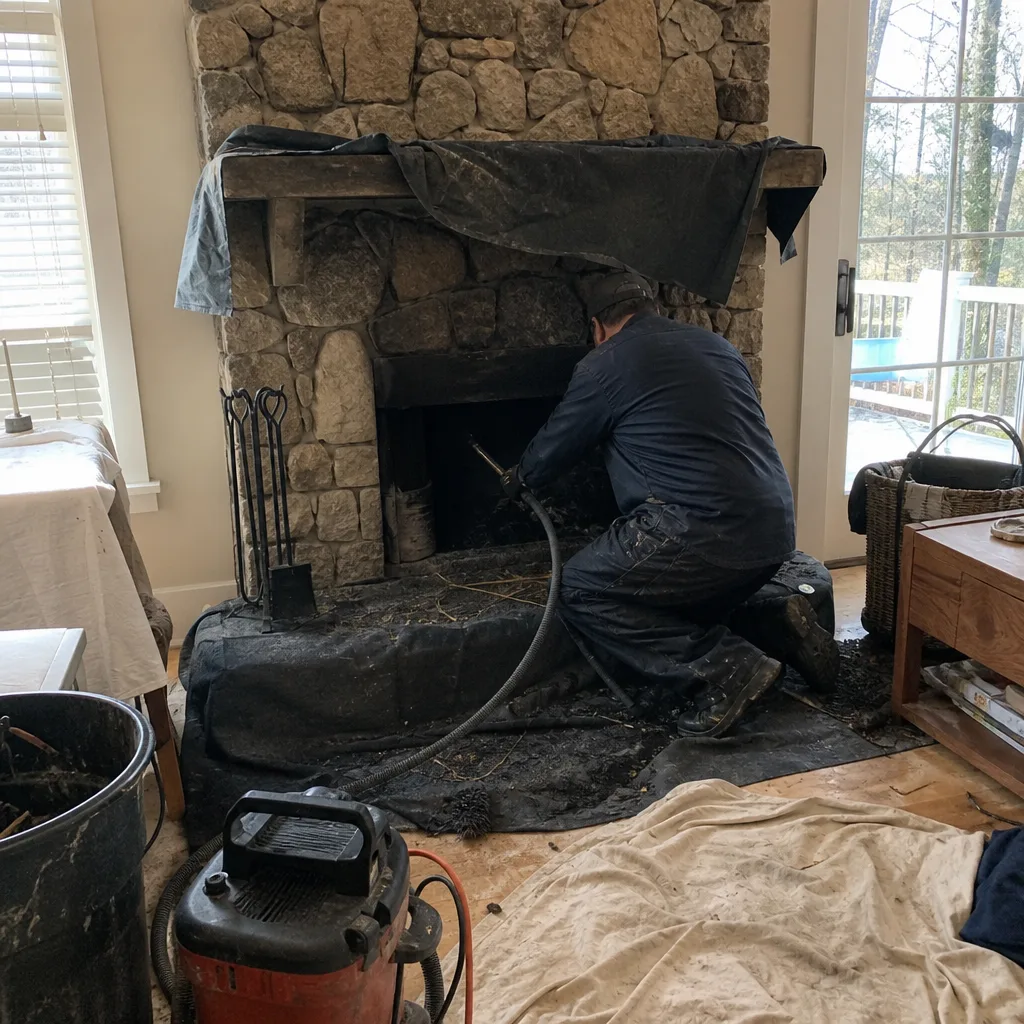 Before
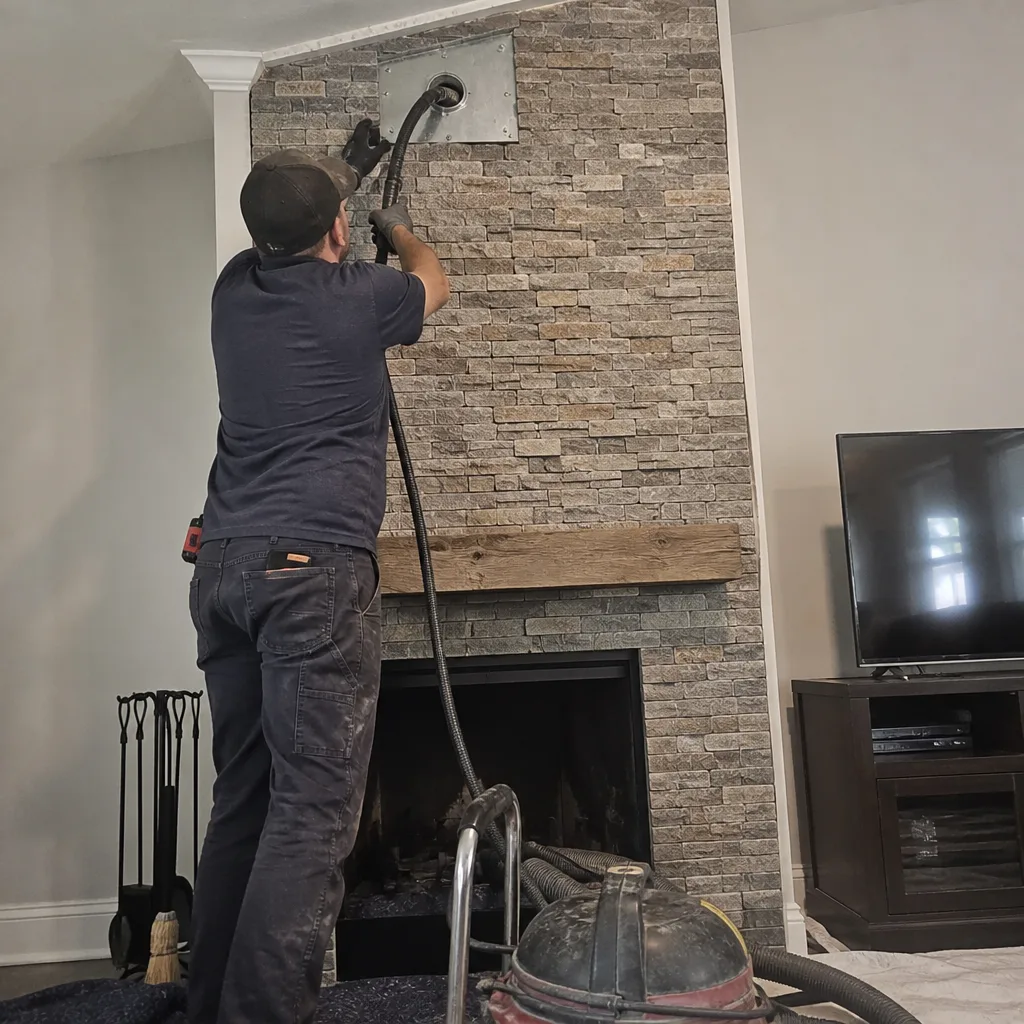 After
After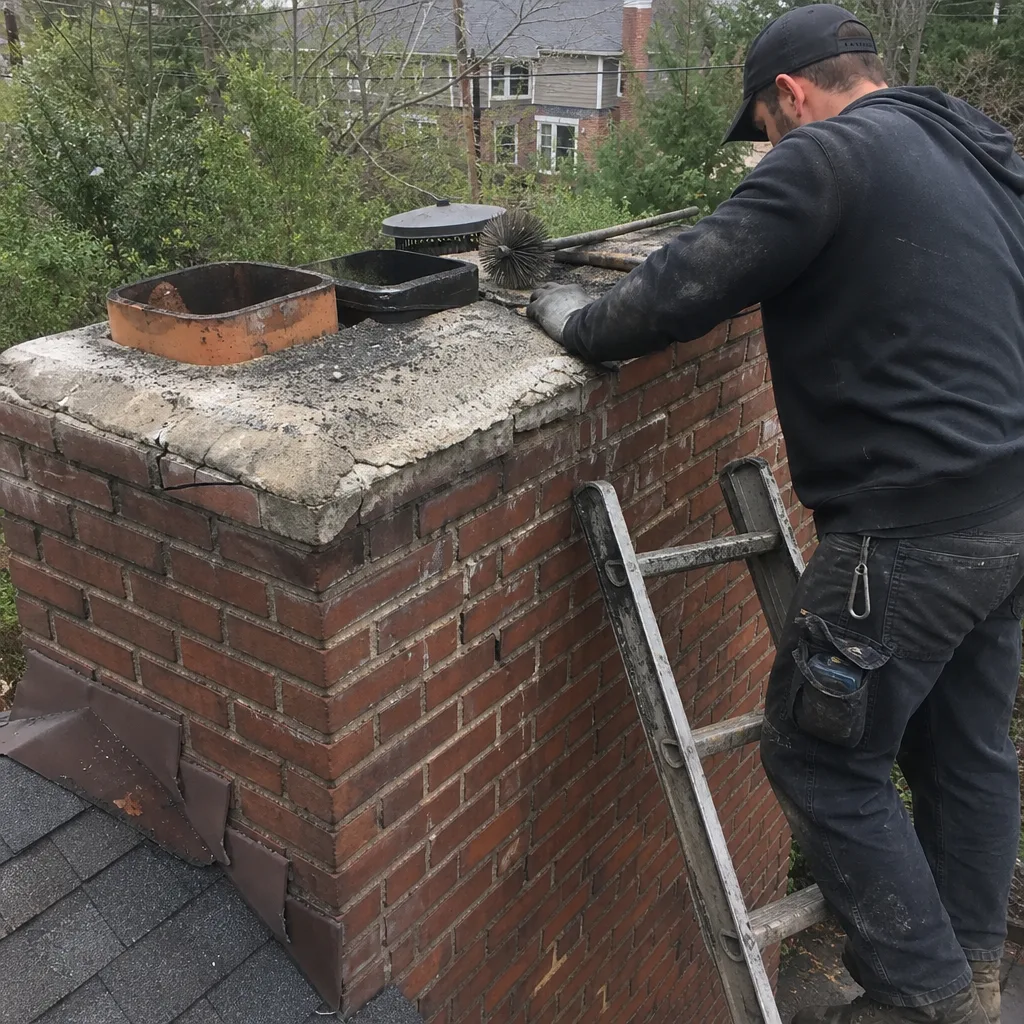 Before
 After
After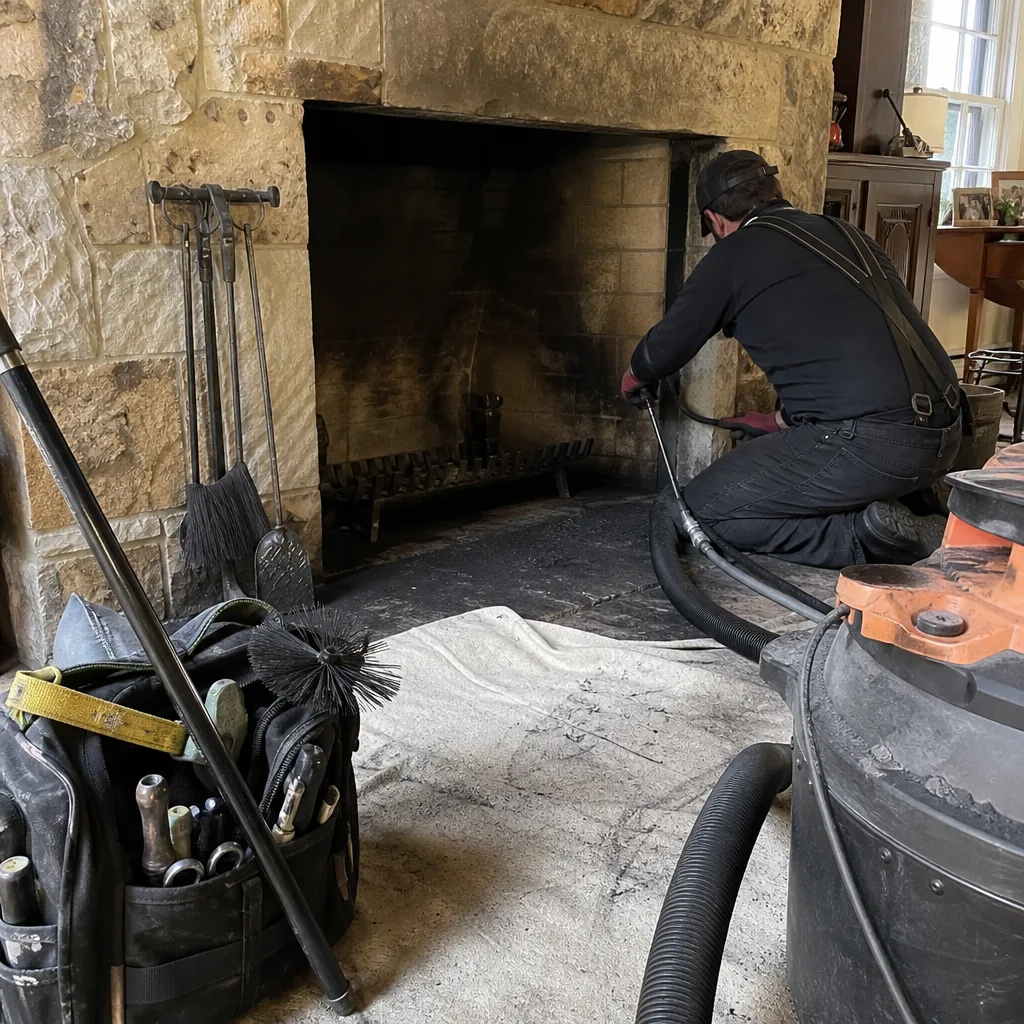 Before
 After
After