
Last updated October 15, 2026
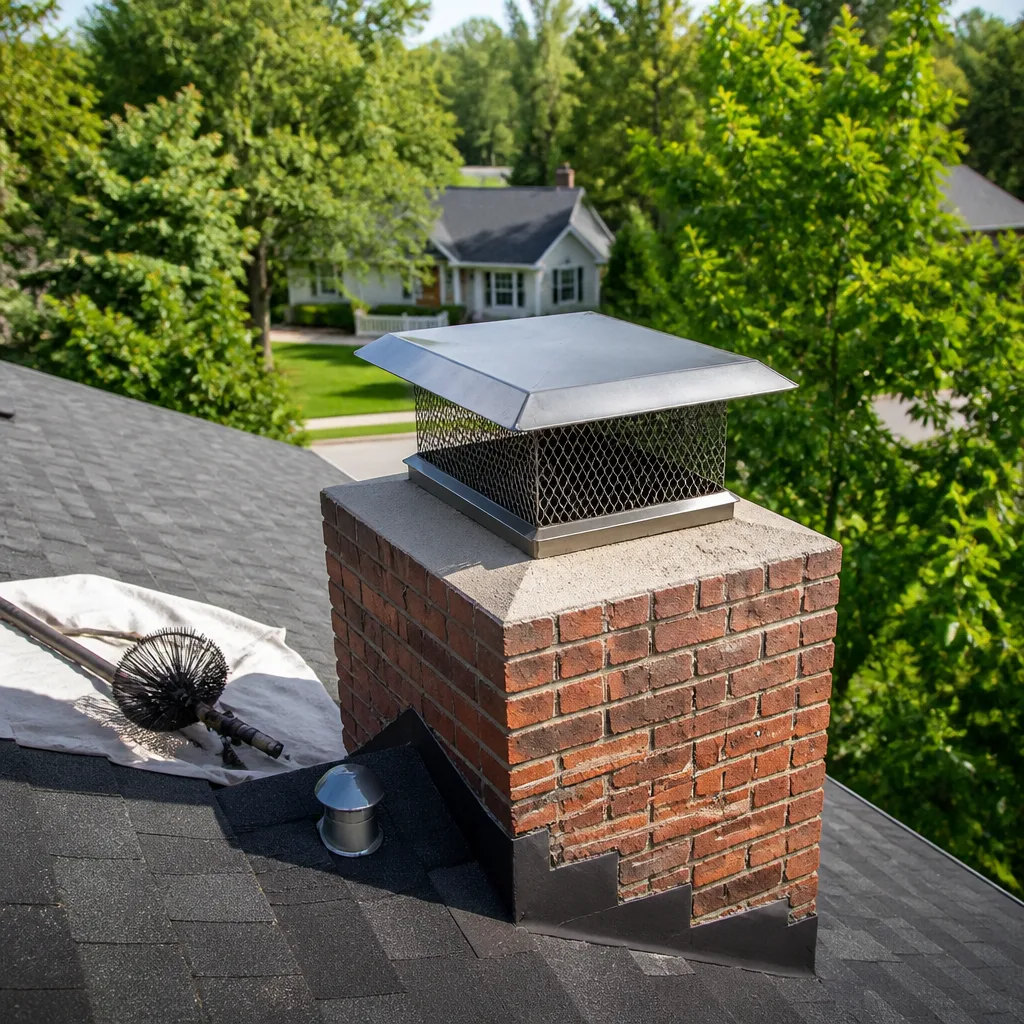 Sweep & inspection
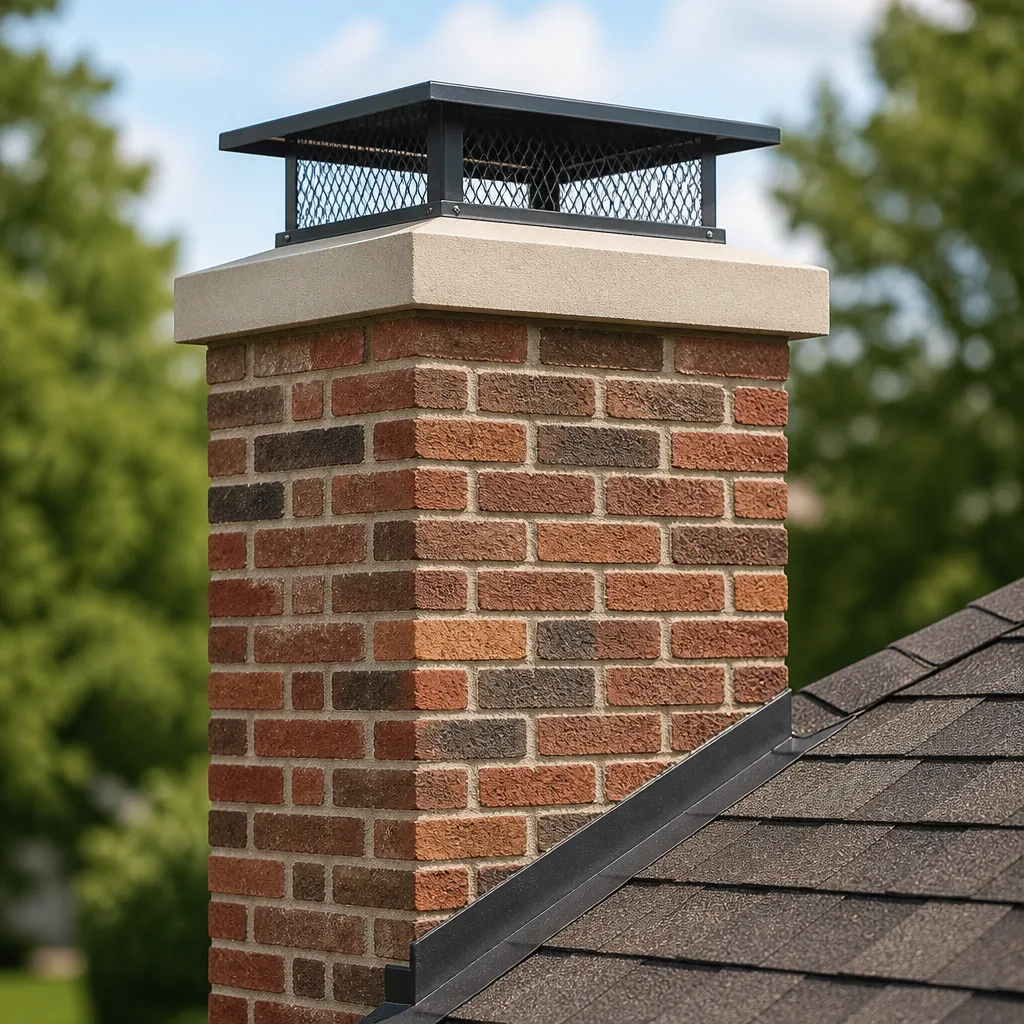 Caps & crowns
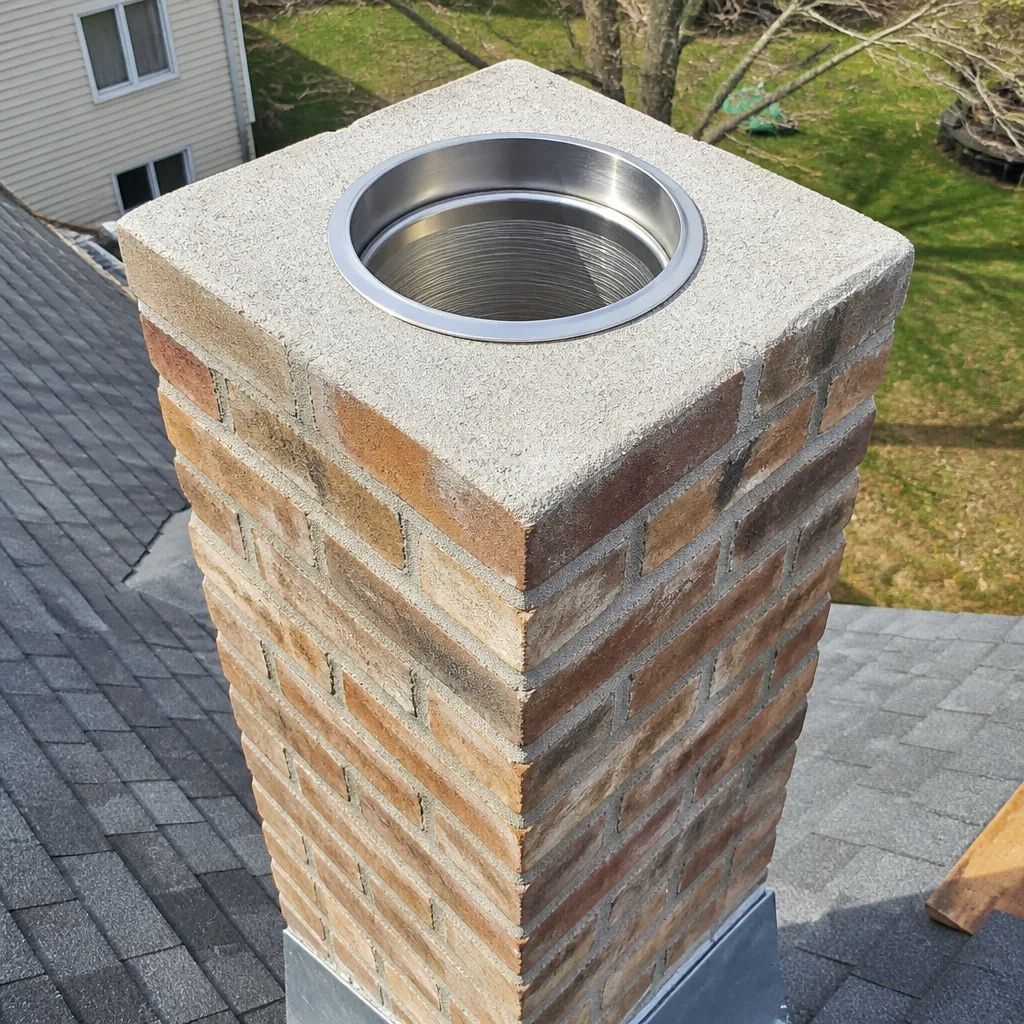 Flue relining
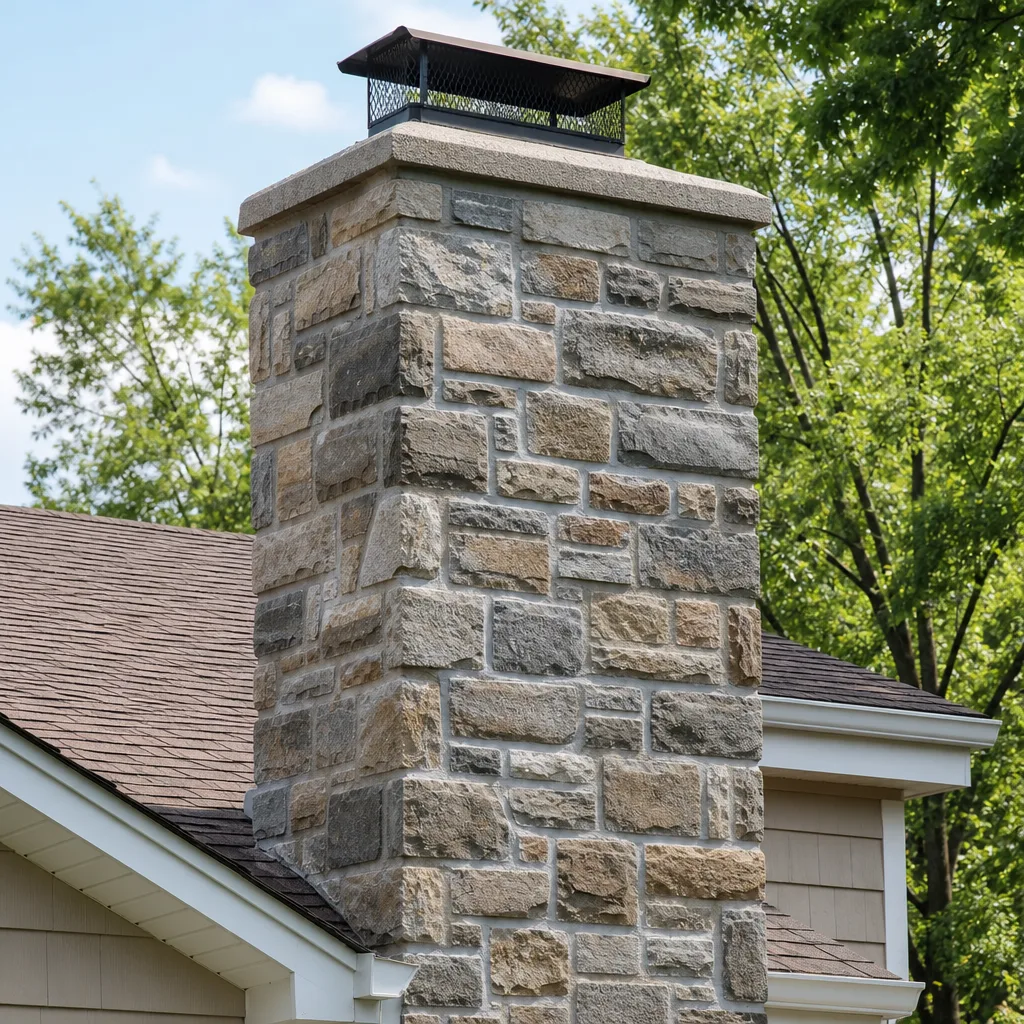 Masonry repair
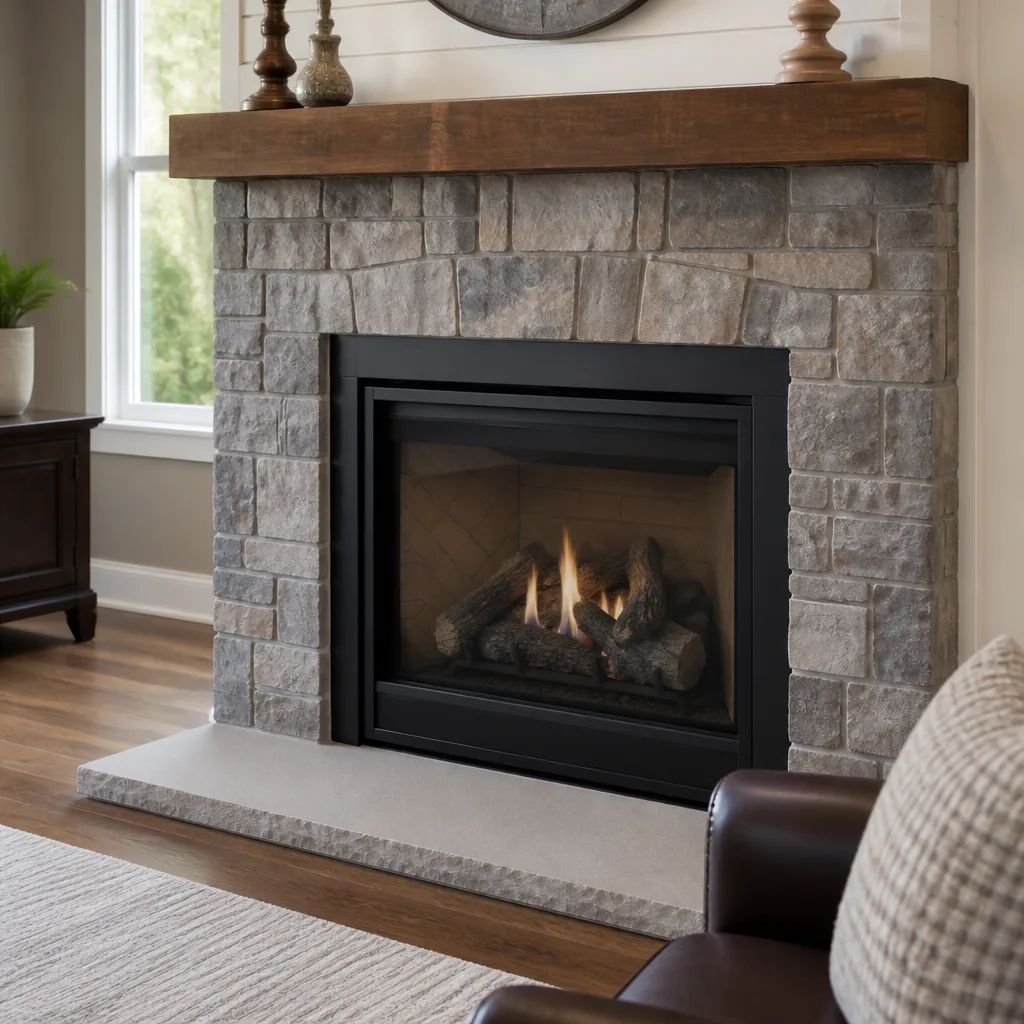 Gas fireplace service
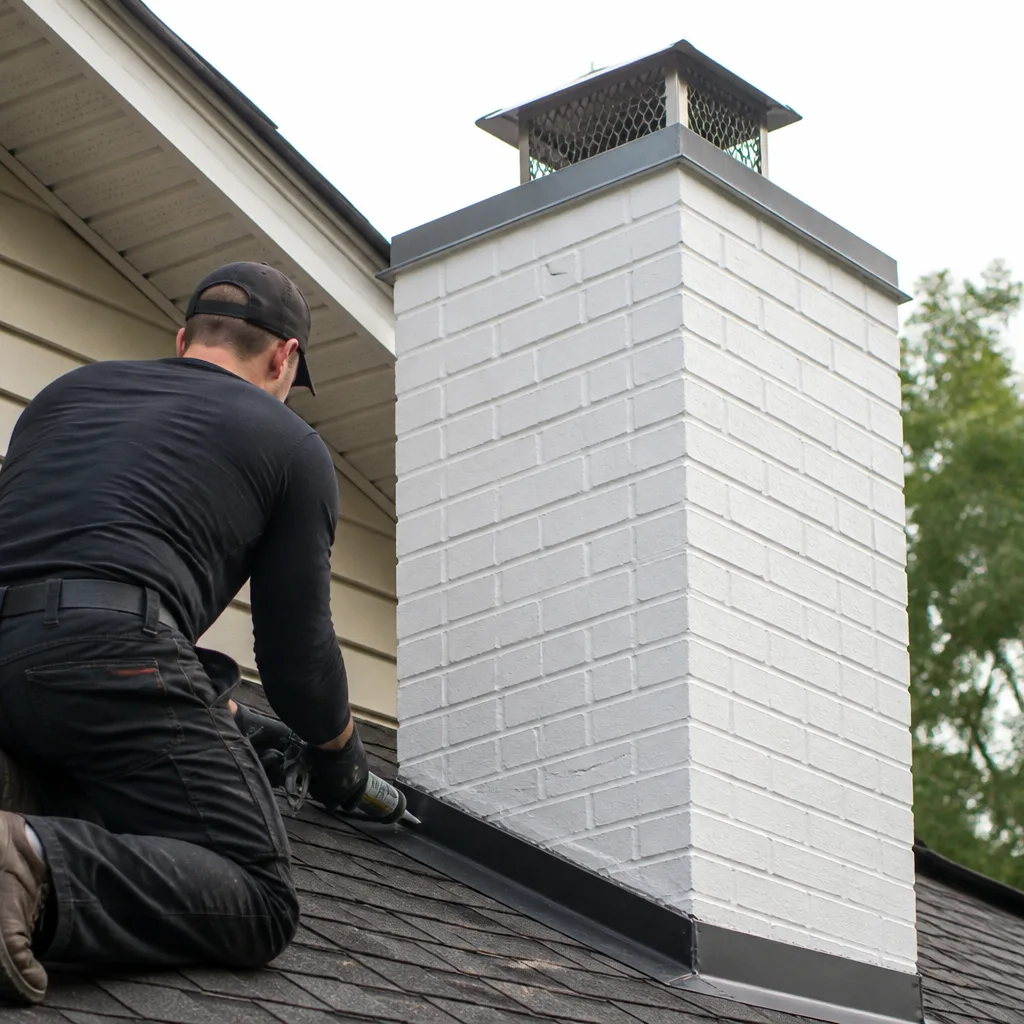
Level 1 sweep and inspection to the NFPA 211 annual standard - flue, crown, cap, and flashing checked and photographed
Chimney sweep logs do not sweep chimneys. They loosen some creosote - which then falls where a brush and vacuum still have to collect it.
The Complete Guide to Chimney Cleaning in Atlanta
Atlanta averages only about 37 nights a year cold enough to justify a fire, yet homeowners here face creosote problems that would surprise someone in Minneapolis. The reason is simple: short burning seasons mean cold flues and low, smoldering fires, and that combination deposits creosote faster than a roaring fire ever would. This guide explains what Atlanta chimneys actually contend with, season by season, why generic advice written for northern climates fails here, and what a legitimate chimney cleaning should include from the moment the technician arrives to the written summary you receive at the end. For seasonal chimney cleaning care for Atlanta, see our year-round homeowner’s guide.
Styles & brands we work with
Quick Answer
Chimney cleaning in Atlanta typically costs between $189 and $320 for a standard sweep and visual inspection. Because of Atlanta’s high humidity and short, intermittent burn season, most homes need a cleaning every 1 to 2 years, even if you only burn a dozen fires each winter. A proper cleaning removes creosote, soot, and debris from the flue interior and includes a visual check of the liner, damper, and chimney cap.
Table of Contents
- Why Atlanta’s Short Burn Season Causes More Creosote, Not Less
- What a Real Atlanta Chimney Cleaning Actually Includes
- How Often Should You Clean a Chimney in Atlanta?
- What Does Chimney Cleaning Cost in Atlanta?
- How Atlanta Humidity Damages Chimneys Between Burn Seasons
- Older Masonry Chimneys in Atlanta: What Changes
- When Cleaning Isn’t Enough: Sweep vs. Repair
- Common Mistakes to Avoid
- When to Call a Professional
- Frequently Asked Questions
- The Bottom Line
Why Atlanta’s Short Burn Season Causes More Creosote, Not Less
Creosote forms when wood smoke cools and condenses on the inside of your flue. The colder the flue, the faster the condensation. In Minneapolis or Chicago, homeowners burn fires for months straight, which keeps the flue warm for hours at a time. The firebox gets hot, the flue gets hot, and much of the creosote that forms early in the burn gets cooked off during the sustained heat.
Atlanta burns differently. Homeowners here light fires on those rare December nights when the temperature dips below 40, or for a few hours on a January Saturday. The chimney is cold when the fire starts. The fire is often kept low, since it’s not exactly a deep-freeze outside. The result is a warm firebox feeding smoke into a flue that never quite reaches the temperature needed to prevent condensation. Creosote deposits in layers, and because the fires are short, the later stages of burning that would normally remove some of that creosote never happen.
We’ve swept chimneys in Buckhead, Decatur, and Sandy Springs that had three years of occasional use and showed creosote buildup comparable to what you’d expect from a single hard winter of daily burning in a colder climate. The math of fire temperature and flue temperature doesn’t change just because the weather outside is milder. If anything, the milder weather makes the buildup worse, because the fire never gets big enough to do the job hot.
What a Real Atlanta Chimney Cleaning Actually Includes
A legitimate chimney cleaning is more than running a brush up and down the flue. Here’s what a thorough appointment should cover, step by step, or read our full DIY vs Professional Chimney Cleaning: The Atlanta Homeowner’s Decision Guide.
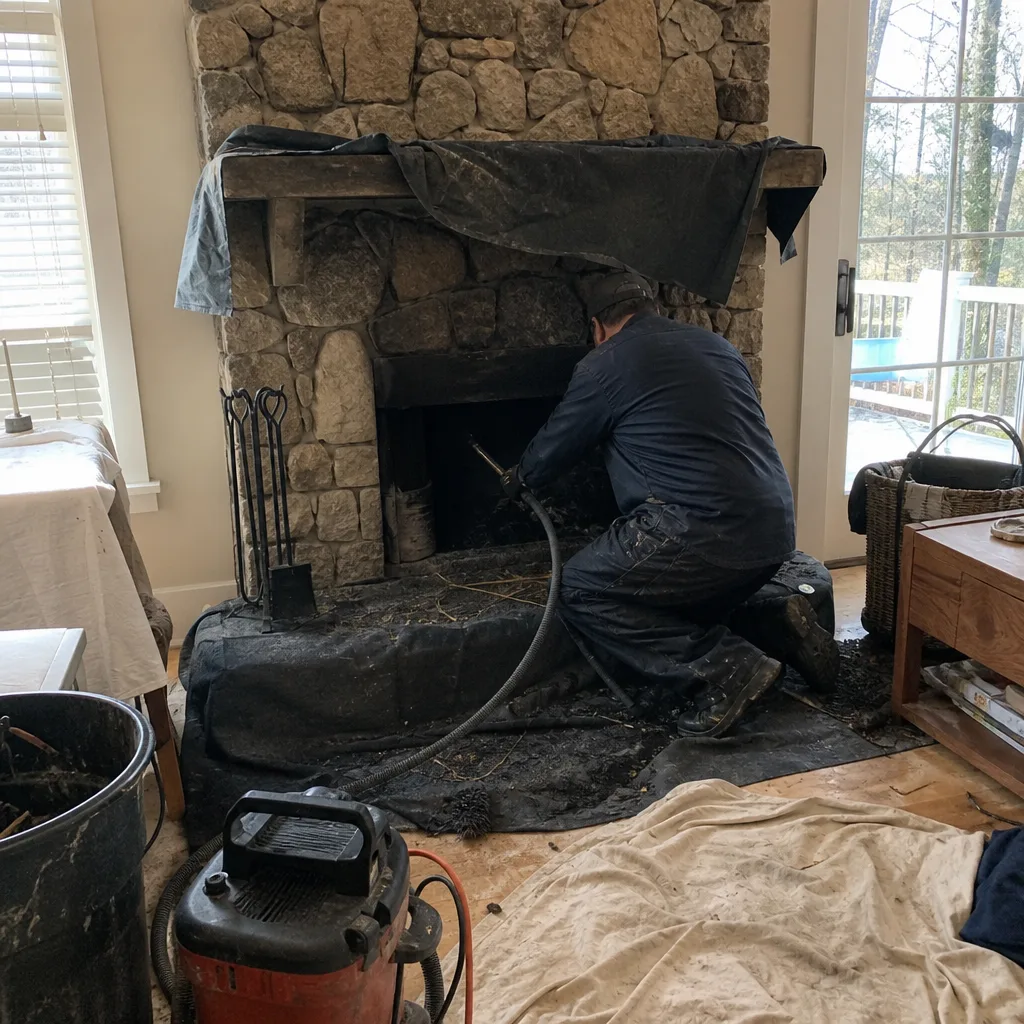
- Arrival and setup: The technician arrives in a clearly marked vehicle, wearing a uniform and identifiable credentials. Floors and surrounding furniture get covered with drop cloths before any work starts. A high-powered vacuum designed for fine soot runs throughout the process, so the living room doesn’t end up dusted in ash.
- Initial assessment: Before any sweeping begins, the technician checks the firebox, damper, and visible sections of the flue from inside. This identifies what kind of buildup is present and whether the chimney has any obvious damage that affects how the cleaning should proceed.
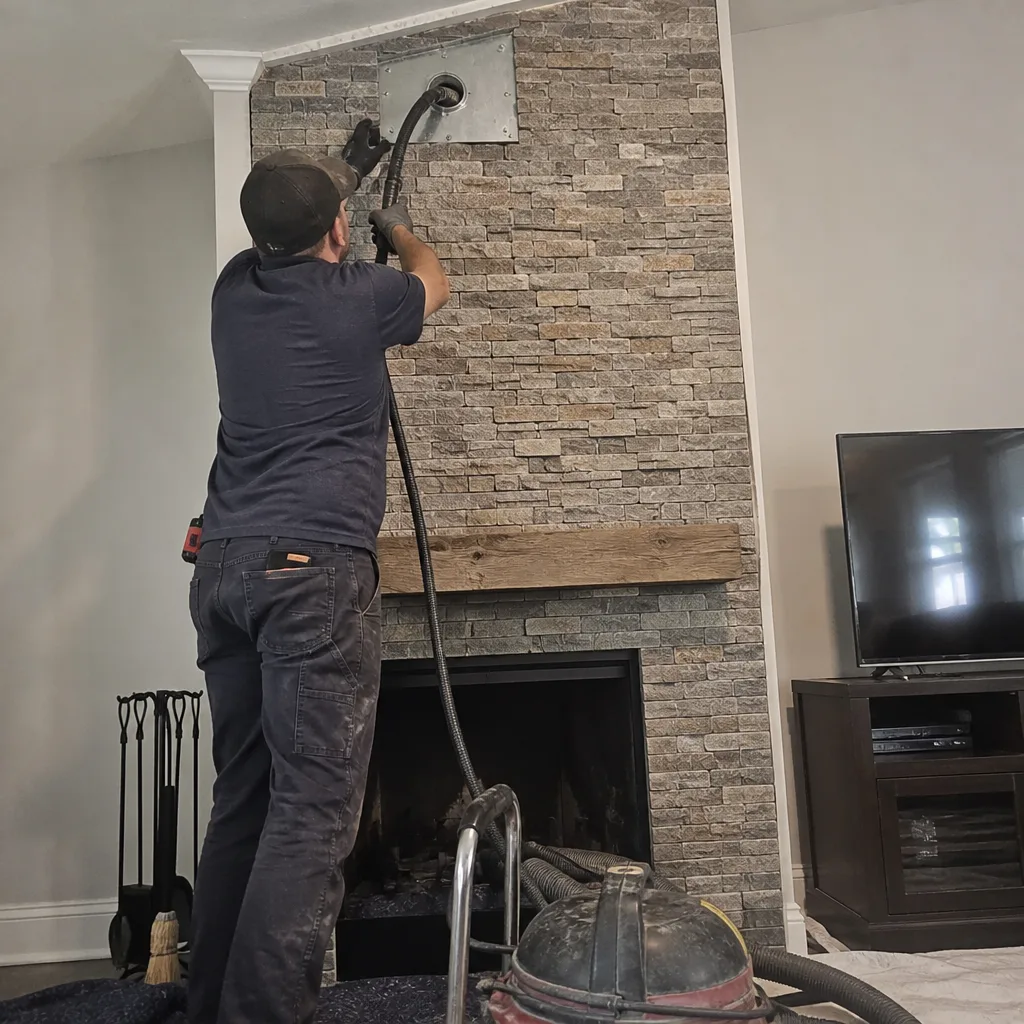
- Mechanical sweeping: The flue gets cleaned with brushes sized to your specific flue dimensions. The goal is to remove creosote from the flue walls, not just knock the loose stuff free. Depending on the chimney’s condition, this can take 45 minutes to two hours.
- Smoke chamber and damper cleaning: The area above the firebox where smoke gathers before entering the flue collects creosote and debris too. A proper cleaning addresses this space, which many cut-rate sweeps skip entirely.
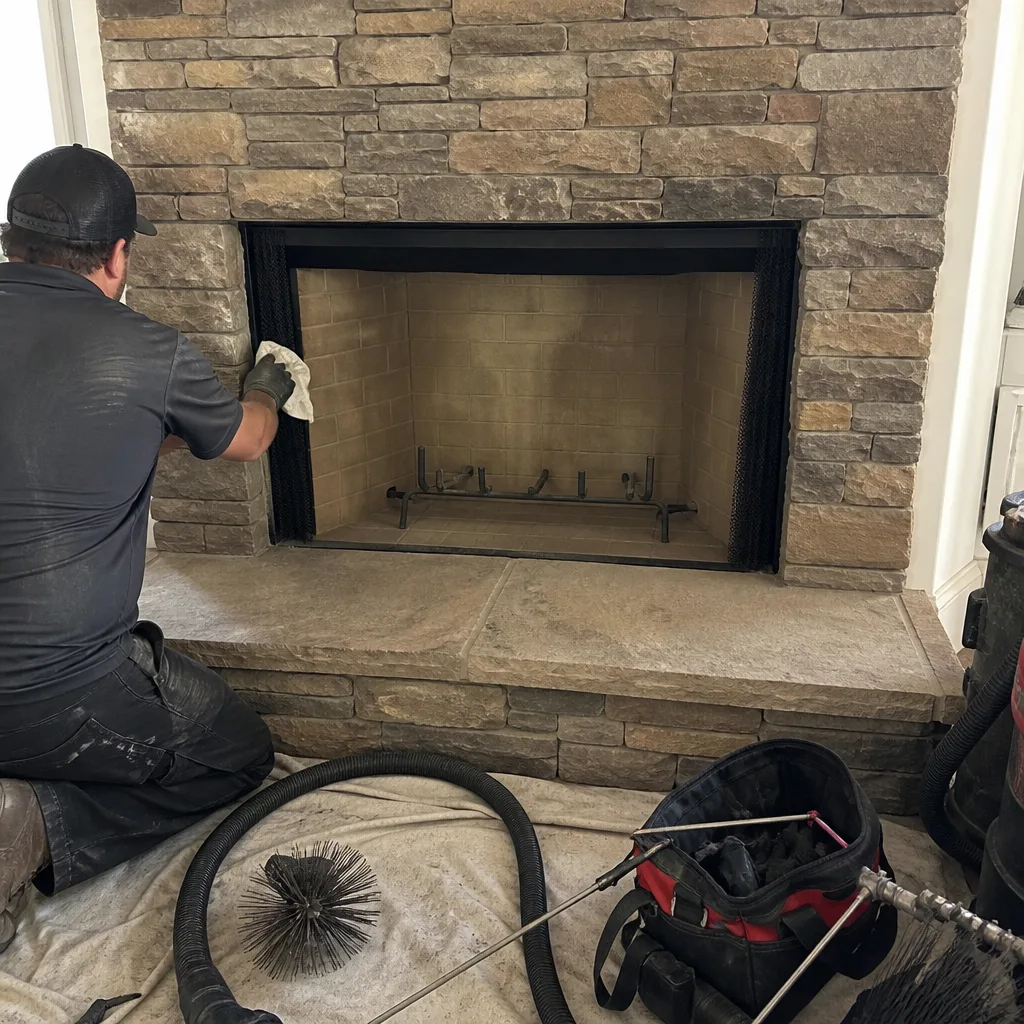
- Debris removal from firebox: Everything that falls during the sweep gets vacuumed out. The firebox should be left clean, not full of whatever came down the flue.
- Visual inspection of accessible components: The technician checks the liner, damper assembly, chimney cap, and exposed masonry for cracks, rust, or blockages. This is a visual check only – a full inspection with a camera is a separate service, and we’ll explain the difference in a moment.
- Written summary: You receive a written report describing what was found, what was removed, and whether the technician saw anything that needs attention. At Ashby Chimney Atlanta, this summary comes with a written price for any recommended follow-up work, so you know the number before you decide anything.
For more detail on the sweeping process specifically, see our Chimney Sweep in Atlanta page.
How Often Should You Clean a Chimney in Atlanta?
The National Fire Protection Association standard says chimneys should be cleaned when creosote buildup reaches 1/8 inch or more. For most Atlanta homeowners, that translates to every 1 to 2 years of regular use. Here’s the catch: “regular use” in Atlanta might mean 10 to 20 fires per year, not the 80 to 100 a family in New England burns. The frequency depends less on how many fires you light and more on how those fires burn.
Here’s a practical schedule based on what we see in homes across metro Atlanta:
- Burn 20+ fires per season: Clean annually, ideally in late summer or early fall before the burn season starts.
- Burn 5 to 20 fires per season: Clean every 1 to 2 years. If you notice any of the warning signs below, don’t wait.
- Burn rarely or never, but use gas logs: Have the chimney inspected and cleaned every 2 to 3 years. Gas logs still produce byproducts and can attract nesting animals in the off-season.
- Never use the fireplace: An annual visual check is still wise. Chimneys that sit unused develop their own problems, especially in Atlanta’s climate.
Signs you should clean sooner rather than later: a strong smoky smell in the room even when there’s no fire, visible black buildup you can scrape off the firebox walls with a poker, smoke drifting into the room during a fire instead of going up the flue, or a fire that seems to struggle for air. Any one of these is worth a call.
What Does Chimney Cleaning Cost in Atlanta?
Most chimney cleanings in metro Atlanta run between $189 and $320. The range reflects differences in chimney height, flue type, accessibility, and the amount of creosote that needs to be removed. A prefab metal chimney in a single-story Cobb County home sits at the lower end. A two-story masonry chimney in an older Virginia-Highland house, especially one that hasn’t been cleaned in several years, runs higher.
| Service | Typical Atlanta Price Range | What’s Included |
|---|---|---|
| Standard chimney sweep | $189 – $269 | Flue brushing, smoke chamber cleaning, firebox cleanup, visual check of accessible components |
| Chimney sweep with visual inspection | $249 – $320 | Everything above plus a more detailed condition report on liner, damper, cap, and masonry |
| Video scan (camera inspection) | $149 – $249 add-on | Camera run through the full flue length, with recorded footage and photo documentation |
| Chimney cap replacement | $180 – $450 | New cap installed, including removal of the old one and resealing |
| Glazed creosote removal | $400 – $900+ | Chemical treatment plus mechanical removal for hard, tar-like creosote that standard brushes can’t remove |
Glazed creosote deserves a note because it changes the job completely. It’s a hard, shiny, tar-like deposit that forms when creosote goes through repeated heating and cooling cycles. Standard brushes won’t remove it. It requires chemical treatments that break down the glaze, followed by mechanical removal. If a technician tells you glazed creosote is present and the company you called only quotes a basic sweep price, that’s a red flag. The job has changed, and the price should change with it.
At Ashby Chimney Atlanta, you get the written price before any work begins. The number on the invoice at the end matches the number quoted at the door. If the technician discovers something mid-job that changes the scope, the work pauses and you get a new written number before anything proceeds. That’s the Kingswell Way: say the price, show up in the window, leave it cleaner, put the guarantee in writing, come back if it fails.
How Atlanta Humidity Damages Chimneys Between Burn Seasons
Atlanta’s summer humidity averages 70% to 80%, and it does real work on chimneys even when no fire has been lit in months. Two problems dominate.
First, moisture accelerates creosote’s transformation. The fluffy, brushable creosote that forms during the burn season absorbs moisture from humid air. As the humidity cycles up and down through spring and summer, that creosote becomes denser and more adhesive. By the time fall arrives, what was once a light powder has become a sticky coating that clings to the flue walls and resists standard brushing. Cleaning in the fall, after a full Atlanta summer of humidity, is almost always a bigger job than cleaning right after burn season in March.
Second, brick and mortar chimneys absorb moisture. Brick is porous. When rainwater and humid air penetrate the masonry, and then winter’s occasional freezing nights arrive, the trapped moisture freezes and expands. This is the freeze-thaw cycle, and it’s the leading cause of spalling brick and cracked mortar joints in Atlanta chimneys. The damage accumulates slowly, but over a decade it’s enough to require tuckpointing or partial rebuilding of the chimney crown.
A chimney cap and a water-repellent treatment designed for masonry can slow this down considerably. Both are far cheaper than structural masonry repair. If your chimney has no cap, or if the cap is rusted through, that’s a problem worth addressing before next summer.
Older Masonry Chimneys in Atlanta: What Changes
Homes built before 1990 in Atlanta were constructed before current flue liner standards became universal. In Fulton, DeKalb, Cobb, and Gwinnett counties, large numbers of pre-1990 homes still have their original clay tile liners. Clay tile was the standard for decades, and it worked reasonably well when paired with consistent, professional maintenance. But four decades of Atlanta humidity, freeze-thaw cycles, and intermittent use have taken their toll.
Clay tile liners crack. The cracks start small, often at the mortar joints between tile sections. Humidity gets in, creosote gets in, and the gap widens. By the time a crack is visible to the naked eye during a routine sweep, the liner may already be compromised enough that combustion gases are reaching the masonry structure behind it. That’s the point where a cleaning alone isn’t enough, and repair or relining becomes the conversation.
Older chimneys in neighborhoods like Candler Park, East Atlanta, and Avondale Estates often have no chimney cap either, which means open flues through Atlanta’s rainy springs. Birds nest in uncapped flues. Raccoons have been known to raise young inside a warm chimney in May. Feces, nesting material, and debris all become flammable obstructions that a cleaning must address before the next burn season.
The cleaning approach for a pre-1990 masonry chimney differs in one important way: the technician is looking not just for creosote, but for evidence that the liner has already begun to fail. That evidence changes the recommendation. A cleaning is still the right first step, but if the flue is compromised, further cleaning won’t fix it. The honest conversation at that point is about repair, and that conversation should always include camera evidence. See our Chimney Inspection in Atlanta page for what a full video scan involves.
When Cleaning Isn’t Enough: Sweep vs. Repair
A chimney cleaning removes creosote and debris. It does not repair cracks, replace liners, rebuild crowns, or fix leaking flashing. Those are repair issues, and they require different tools, different materials, and different prices. The confusion between the two creates most of the frustration homeowners feel about chimney work.
Here’s how to tell the difference when a technician gives you a recommendation:
- If the recommendation is based on what the technician saw during the sweep: That’s a visual inspection finding. It’s legitimate, but it should be confirmed with a camera before you spend real money on repairs.
- If the recommendation includes video footage or photographs: You’re dealing with a company that shows its work. You can see the crack, the failed joint, the deteriorated flue tile. If you can’t see it, don’t approve the repair.
- If the recommendation is urgent without evidence: That’s a red flag. A cracked liner is serious, but it doesn’t become catastrophic overnight. There is almost always time to get a second opinion, and any company that refuses to let you get one is not acting in your interest.
At Ashby Chimney Atlanta, repairs use materials from established chimney-trade suppliers: DuraFlex for stainless steel relining, HeatShield for ceramic repair systems, and Olympia Chimney for caps and masonry components. These aren’t whatever happened to be in the van. They’re selected because they perform in Atlanta’s climate specifically, standing up to the humidity and temperature swings that cheap materials fail against.
For more on what repair actually involves, see our Fireplace Repair in Atlanta page.
Common Mistakes to Avoid
- Skipping the cleaning because you barely use the fireplace: Creosote doesn’t require daily fires to accumulate. A dozen low, cool fires over an Atlanta winter can deposit enough creosote to be a fire hazard. And a chimney that sits unused for years becomes a home for birds, squirrels, and insects that block the flue before the next fire is ever lit.
- Assuming the previous owner maintained the chimney: Home inspections rarely include a full chimney video scan. Unless you have documentation showing a recent cleaning and inspection, assume none has been done. The previous owner of your 1980s DeKalb County home probably wasn’t thinking about the chimney any more than you are.
- Burning pine or other softwoods because they’re cheap in Georgia: Pine burns fine, but it’s resinous and burns cooler and faster than oak or hickory. Cooler fires mean more creosote. Burn seasoned hardwood when you can, and let the fire burn hot once established rather than smolder.
- Closing the damper while the fire is still smoldering: Doing this traps smoke and unburned particles in the flue, where they condense immediately as creosote. The fire should be completely out before the damper closes.
- Ignoring a rusted or missing chimney cap: In Atlanta’s climate, an open flue means water intrusion for nine months of the year. Water accelerates every type of chimney deterioration and makes future cleanings more difficult. A cap is a $200 to $400 fix that prevents thousands in liner and masonry damage.
- Using chimney cleaning logs and skipping the professional sweep: Chemical cleaning logs can soften creosote, but they don’t remove it. The loosened creosote falls into the smoke chamber and firebox, where it remains until physically removed. They’re a supplement, not a substitute.
- Choosing a sweep on price alone: A $79 sweep advertised online often becomes a $900 “emergency repair” once the technician is standing in your living room. The written price before any work begins is the single most important difference between a legitimate company and the alternatives.
When to Call a Professional
Chimney sweeping is not a DIY project for most homeowners. The tools are specialized, the access is awkward, and the stakes are real. A creosote fire inside a flue burns at over 2,000 degrees Fahrenheit and can crack the liner and spread to the roof structure. If you’ve noticed smoke entering the room during fires, a burning smell that won’t go away, visible black buildup in the firebox, or if it’s simply been more than two years since anyone looked at the chimney, it’s time to bring in a professional. Ashby Chimney Atlanta offers free estimates across metro Atlanta. Call (678) 263-7908 to schedule or to ask questions about what a cleaning involves. A live person answers, 24 hours a day, 7 days a week.
Frequently Asked Questions
A standard chimney sweep in Atlanta typically runs between $189 and $320 depending on chimney height, flue type, and creosote volume. If glazed creosote is present, expect to pay more because chemical treatment becomes necessary. Always confirm the written price before work begins.
Yes. Atlanta’s intermittent burn pattern, with cold flues and low fires, creates disproportionately heavy creosote deposits even from light use. A few fires per season, repeated over two or three years, is enough to create a fire hazard. Clean every 1 to 2 years regardless of how often you burn.
Creosote builds up inside the flue and becomes a fuel source for a chimney fire. A chimney fire can burn hot enough to crack the flue liner and spread to surrounding wood framing. Even without a fire, accumulated creosote and debris can block the flue and force carbon monoxide back into the house. Call (678) 263-7908 if it’s been more than two years since your last cleaning.
Most standard cleanings take 45 to 90 minutes. Heavily soiled chimneys or those with glazed creosote can take two hours or more. The technician should arrive with a written quote and leave with a written summary of what was found and removed.
A basic visual inspection of accessible components is typically included. A full video scan of the entire flue length is a separate service and costs extra, but it’s the only way to see hidden liner damage. If a repair is recommended based on what was seen during a video scan, ask for the recorded footage.
Yes, in practical terms. Atlanta’s high humidity and short, intermittent burn season mean creosote forms faster per fire than in colder climates with longer burns. The same chimney used the same number of times in Boston and Buckhead will be dirtier in Buckhead. Local experience matters when assessing what a chimney actually needs.
The Bottom Line
Chimney cleaning in Atlanta is a $189 to $320 job that most homes need every one to two years, even with modest fireplace use. The city’s humidity and short burn seasons create creosote conditions that generic northern advice doesn’t account for, and pre-1990 masonry chimneys add a layer of liner and moisture concerns that routine sweeps must address. The key to avoiding bad outcomes is simple: get a written price before any work starts, a written summary after it’s done, and camera evidence before any repair conversation begins. For a free estimate in metro Atlanta, call (678) 263-7908 or visit our Ashby Chimney Atlanta home page to learn more about how we work.
Written by Nathan Corliss, Owner at Ashby Chimney Atlanta, serving Atlanta since 2002. Browse more guides & resources.
See the difference
 Before
 After
After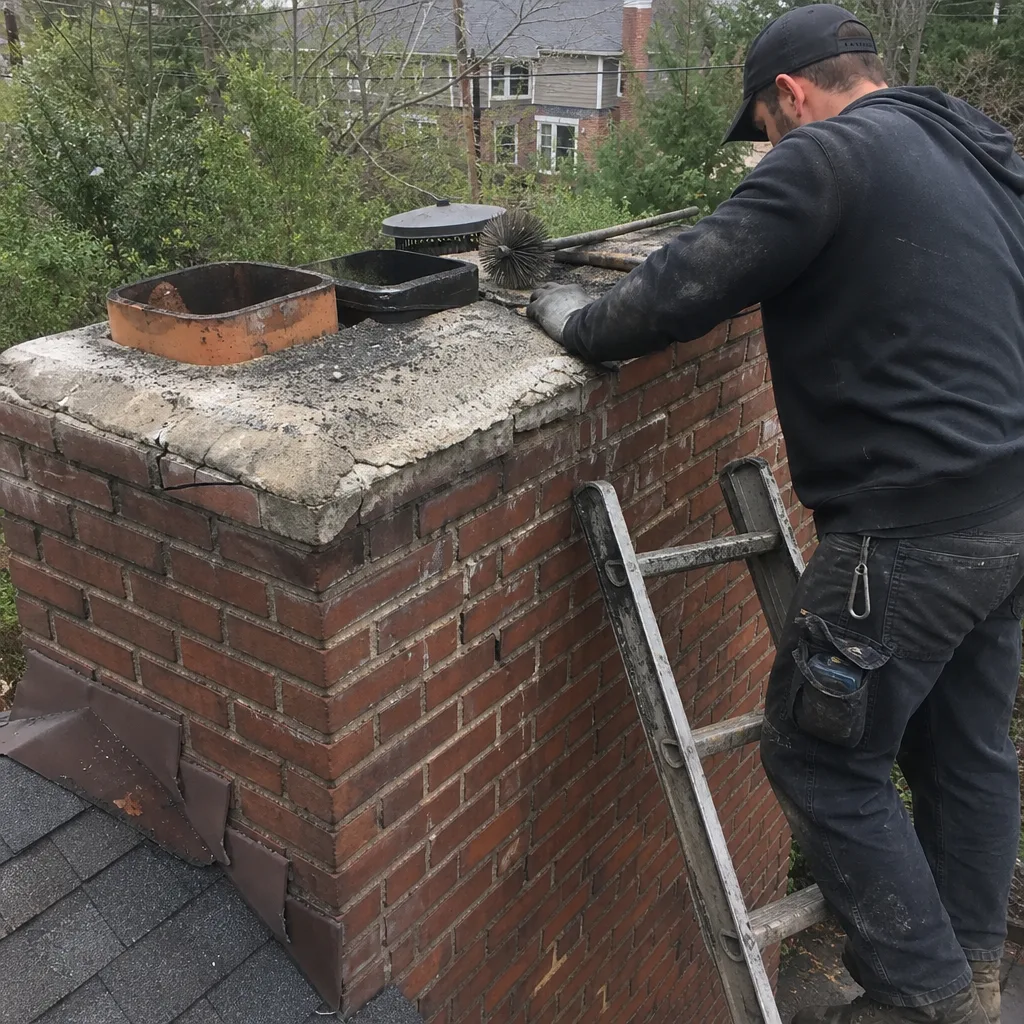 Before
 After
After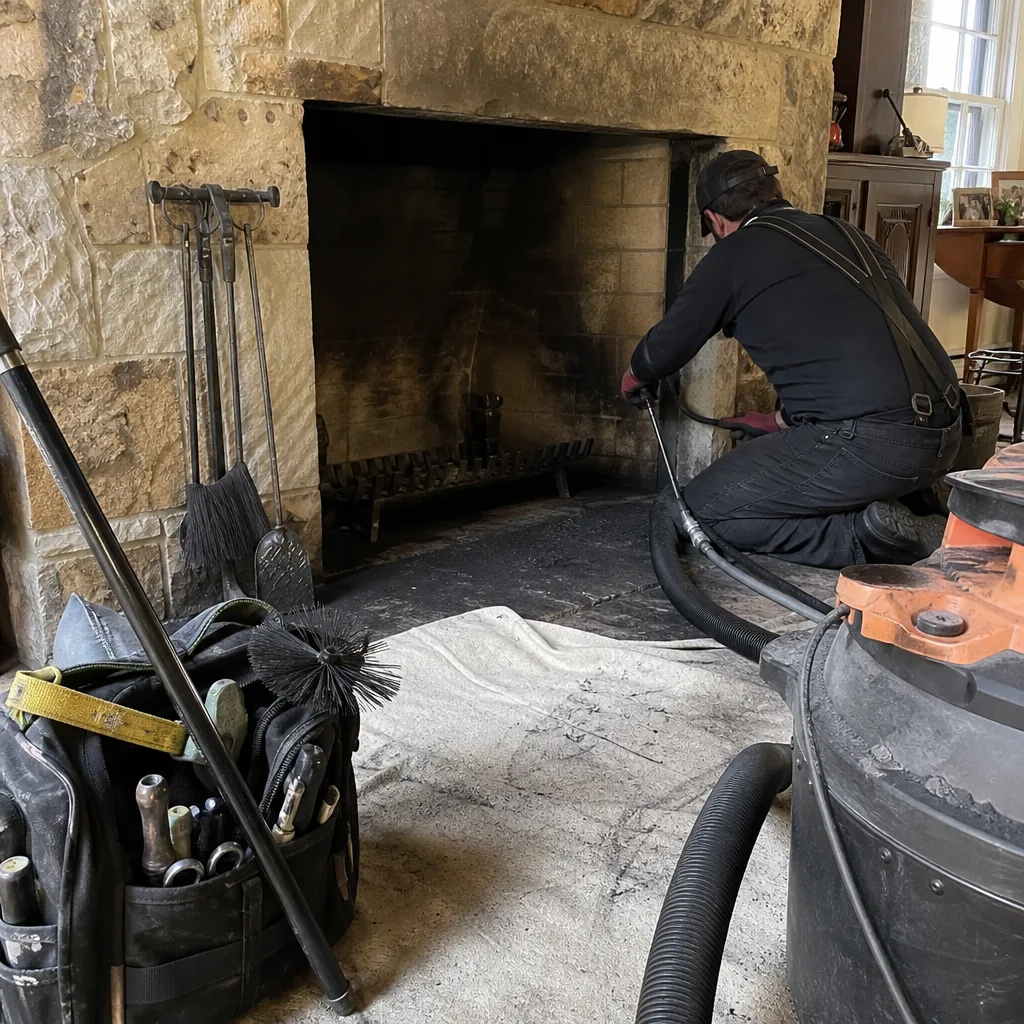 Before
 After
After