
Last updated October 15, 2026
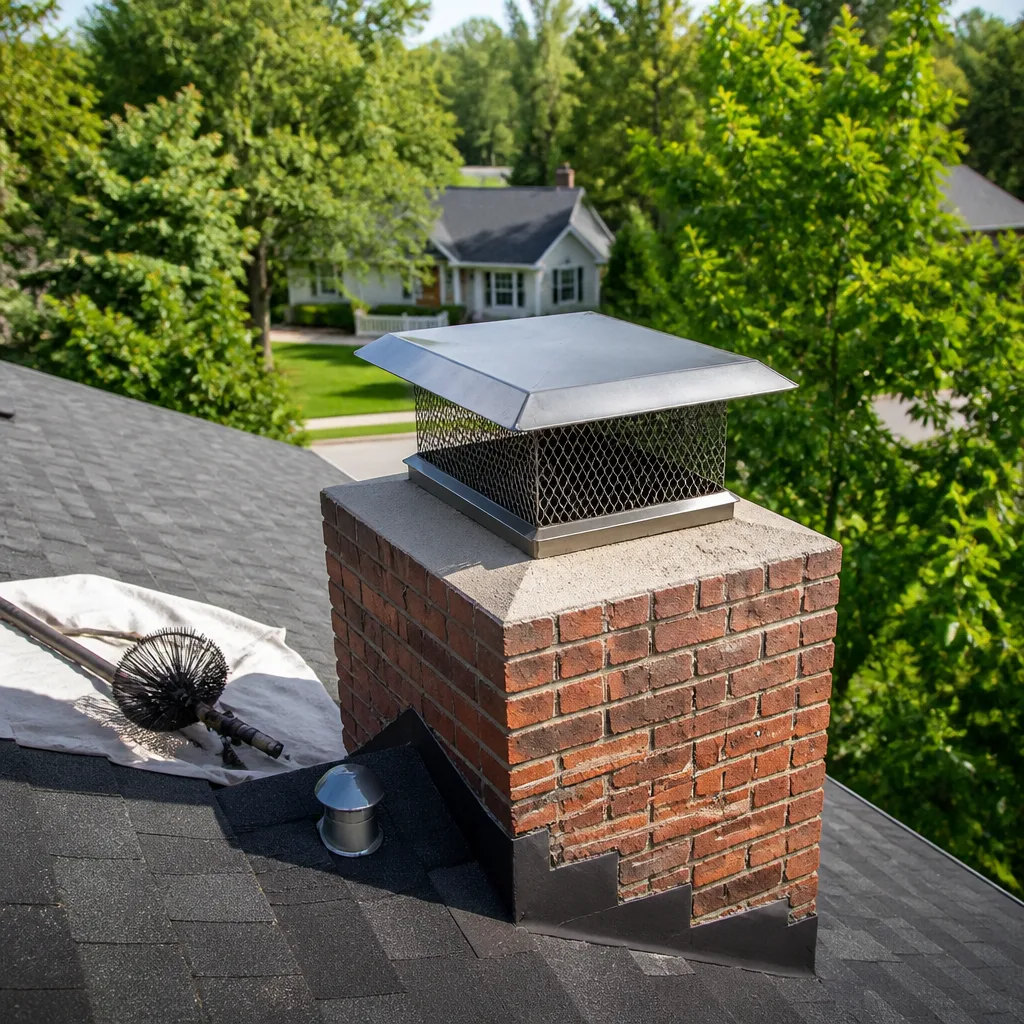 Sweep & inspection
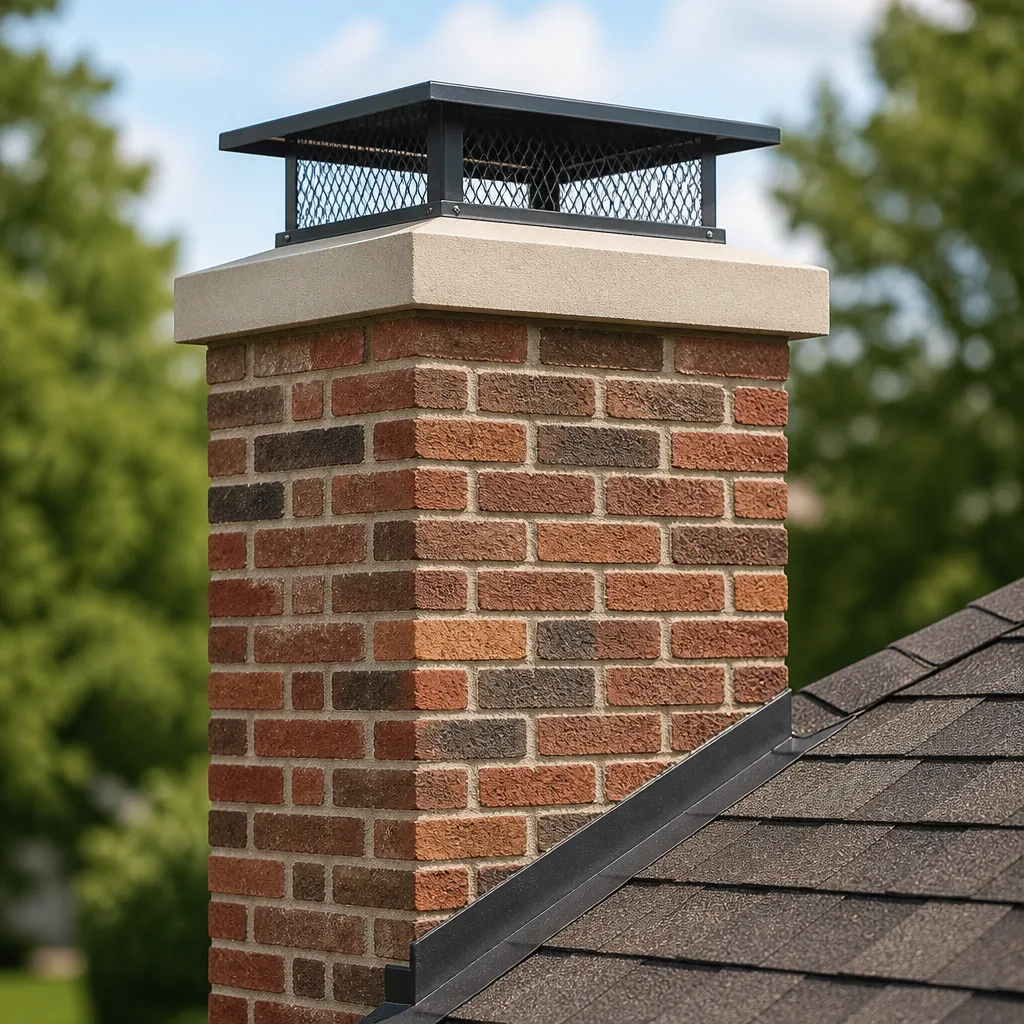 Caps & crowns
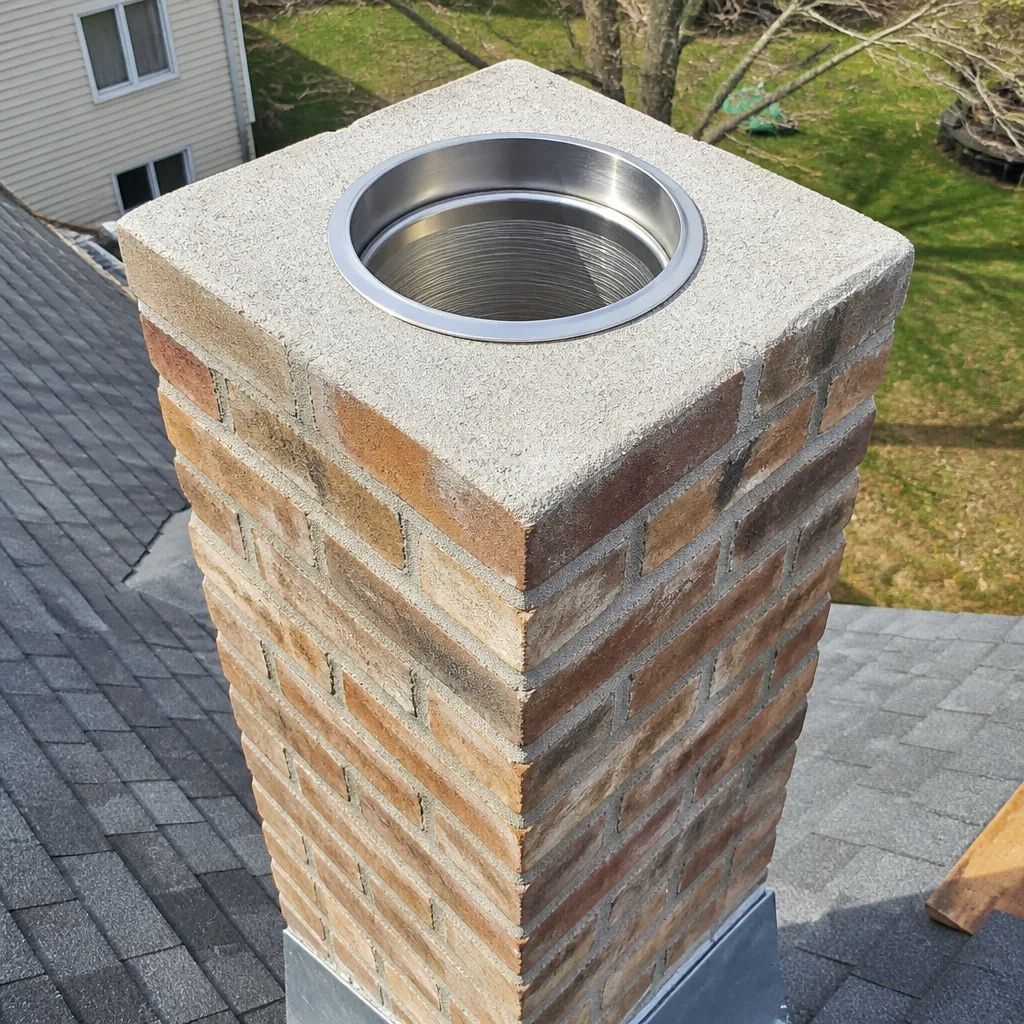 Flue relining
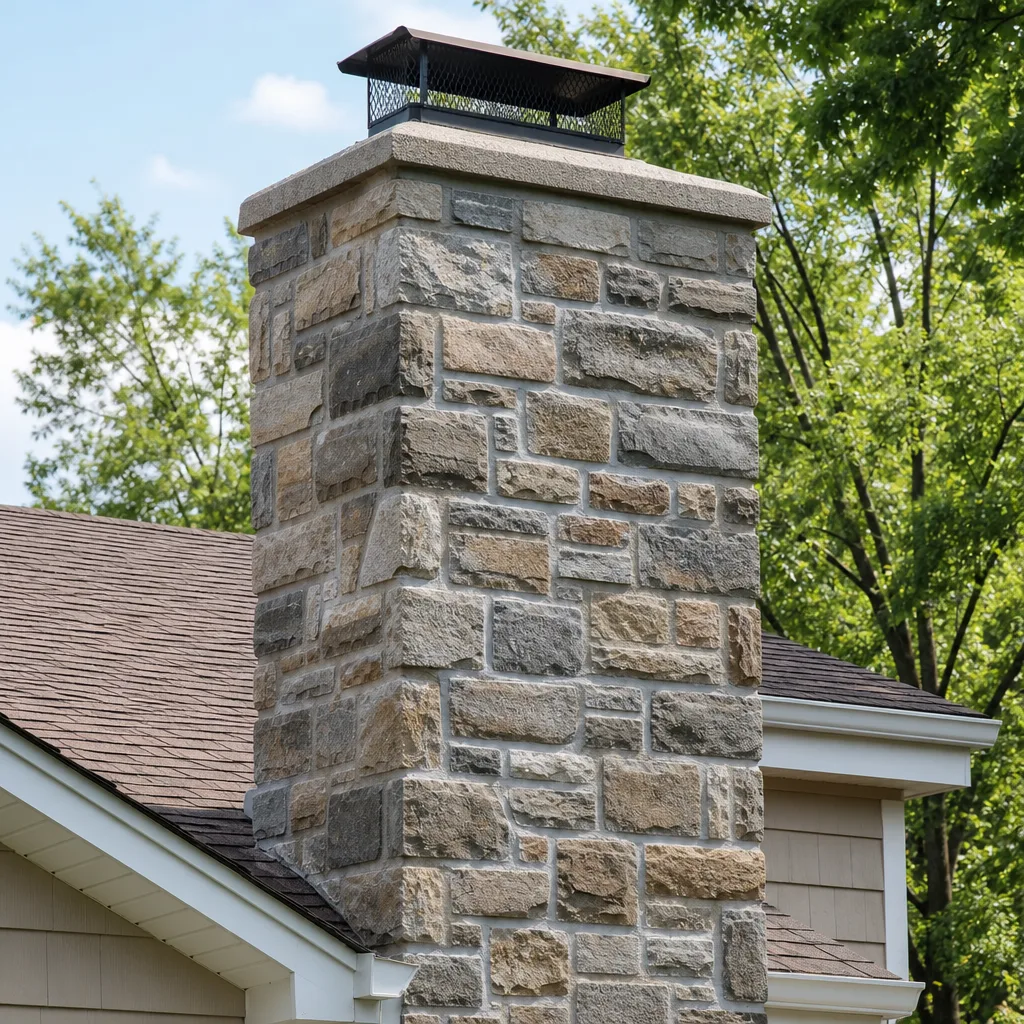 Masonry repair
 Gas fireplace service
Level 1 sweep and inspection to the NFPA 211 annual standard - flue, crown, cap, and flashing checked and photographed
Chimney sweep logs do not sweep chimneys. They loosen some creosote - which then falls where a brush and vacuum still have to collect it.
Chimney Cleaning Warning Signs: A Atlanta Homeowner’s Reference Guide
Most chimney warning sign guides do a fine job describing disasters already in progress: smoke pouring into the living room, bricks crumbling onto the roof, water streaming down the damper. This guide is different. It starts earlier, with the quiet signals Atlanta homeowners can catch themselves before a $300 cleaning becomes a $3,000 repair. A faint campfire smell in July with no fire burning. A chalky white residue on the firebox floor that wasn’t there last winter. A damper that whistles when the wind blows. These are the signs worth knowing, because by the time the serious ones show up, you’re already paying for the serious fix. Here’s what to look for in your Atlanta home, and what each sign actually means.
Quick Answer
The earliest chimney warning signs in Atlanta are odor-based (a campfire or barbecue smell with no fire burning), visual (white efflorescence, rust staining, or flaking brick inside the firebox), and behavioral (smoke that rolls into the room on windy days, or a damper that won’t open and close cleanly). Any one of these means it’s time for a chimney inspection in Atlanta before the next burn season. If you can’t remember the last time your chimney was cleaned, that’s also a warning sign, and the safest response is to book a sweep and inspection together-see our Chimney Sweep Maintenance Checklist for Atlanta Homeowners for what to expect.
Styles & brands we work with
Table of Contents
- Odor Warnings: What Your Nose Is Telling You Before Your Eyes See It
- Visual Checks You Can Do From the Firebox
- Draft and Smoke Behavior as Diagnostic Signals
- Animal Sounds, Debris, and Nesting Materials
- The Two-Question Test: Cleaning History and Documentation
- Why Atlanta’s Climate Makes Early Detection Matter More
- Moisture Warning Signs Most Guides Miss
- Understanding Creosote: The One Term Worth Learning
Odor Warnings: What Your Nose Is Telling You Before Your Eyes See It
A campfire smell in your living room on a warm Atlanta afternoon with no fire burning is not a quirk. It’s creosote off-gassing through a gap in your liner or damper seal. We see this pattern constantly in Atlanta homes: the smell is faint during winter when the fire is active, then intensifies in spring and summer when humidity rises and the air pressure inside the house drops. The creosote coating the flue absorbs moisture from the humid air, swells, and releases volatile compounds right back into the house.
Most homeowners ignore it for two seasons before something forces them to act. We know because we get the call after the second summer of that smell, and by then the liner has usually deteriorated enough that we’re talking about a fireplace repair in Atlanta instead of a simple cleaning.
Here’s what specific odors tend to mean:
- Campfire or barbecue smell with no fire burning: Creosote buildup off-gassing, almost always through a compromised liner or failed damper seal.
- Damp, musty, or “wet ash” smell after rain: Water intrusion through a cracked crown, missing chimney cap, or deteriorated flashing. The water soaks the creosote and mortar and creates that smell.
- Sharp, acrid, chemical smell: Third-stage glazed creosote. This is the most concentrated form and it releases a chemical odor under heat and humidity. It’s also the most likely to ignite.
- Dead animal smell: Something died in the flue or smoke shelf. In Atlanta this is most often a squirrel, bird, or raccoon that got in through a missing cap. The smell will not go away on its own and the carcass must be removed before the chimney is safe to use.
The humidity connection matters in Atlanta specifically. Our summer humidity routinely sits above 70 percent, and that water vapor gets pulled into the chimney. Creosote is hygroscopic: it pulls moisture from the air. The more moisture, the more expansion, and the more smell. If you notice the odor is worse on humid days, that’s not coincidence. That’s chemistry telling you the interior of your flue is coated with a substance that doesn’t belong there.
Visual Checks You Can Do From the Firebox
You don’t need to climb on your roof to spot trouble. From inside your home, kneeling at the firebox with a flashlight, you can see more than most people realize. We recommend doing this twice a year in Atlanta: once in early fall before burn season starts, and once in spring after it ends.
Here’s a step-by-step check any Atlanta homeowner can do safely:
- Shine a flashlight up the throat of the chimney (the area just above your damper). Look for black, shiny deposits on the flue walls. A thin layer of dark dust is normal. Thick, crusty, or glossy black material is creosote buildup that needs removal.
- Inspect the firebox walls and floor for white or gray chalky residue. This is efflorescence, and it means water is moving through the masonry and depositing mineral salts. Efflorescence inside the firebox points to a problem above: a failed crown, cracked cap, or damaged flashing.
- Look for rust stains. Rust on the damper, firebox, or metal firebox components means water has been sitting where it shouldn’t. In Atlanta’s climate, rust forms quickly once the water path is established.
- Check for flaking, crumbling, or spalling brick and mortar. Spalling means the brick faces are popping off, usually from water freezing and expanding inside the brick. Atlanta gets enough freeze-thaw cycles each winter to cause this, especially on chimneys with structural moisture problems.
- Look for debris at the base of the firebox. Small pieces of flue tile, mortar crumbs, or brick fragments on the firebox floor are never good news. Something is deteriorating above you and falling down.
Each of these visual signs points to a different underlying issue, and none of them resolve on their own. Efflorescence tells you about water. Spalling tells you about structural weakening. Rust tells you about prolonged water exposure on metal components. All of them are visible from the floor of your living room, and all of them are cheaper to address early than late.
Draft and Smoke Behavior as Diagnostic Signals
Your chimney drafts well or it doesn’t. When it does, the smoke goes up. When it doesn’t, the smoke comes back into the room. But between those two extremes is a range of behavior worth paying attention to, because mild draft problems in Atlanta are often the earliest warning of a structural issue building inside the flue.
The key distinction is this: occasional smoke rollout is normal under certain conditions. Chronic backdrafting is a problem that points to the chimney itself. Here’s how to tell the difference:
- Occasional smoke rollout on cold starts: A cold flue on a cold Atlanta winter morning won’t draft well until the air column warms up. A small puff of smoke on ignition is common and self-corrects within a minute or two.
- Smoke rollout on windy days: Wind direction and nearby trees, neighboring houses, or roof geometry can create a downdraft that overpowers the chimney’s natural draft. If this happens on calm days too, the problem is more likely inside the flue.
- Chronic smoke rollout regardless of weather: This points to creosote narrowing the flue opening, a damper that’s partially closed, or a flue that’s too cold to establish draft. In Atlanta homes with chimneys on exterior walls, the flue is surrounded by outdoor air and takes much longer to warm up.
- Smoke entering adjacent rooms or the attic: This is a structural problem, not a draft problem. It means there’s a gap or crack in the flue somewhere between the firebox and the chimney top. Smoke is finding a path into the house that isn’t the chimney opening.
One thing we hear from Atlanta homeowners in older intown neighborhoods like Grant Park, Candler Park, and Virginia-Highland is that their chimneys “never drafted right.” Many of those homes were built in the 1920s through 1950s, and the flues are sized for open fireplaces built before modern expectations for indoor air quality. In those cases the draft issue may be original, but the creosote buildup from decades of marginal fires is not. Both things are true, and both deserve attention.
Animal Sounds, Debris, and Nesting Materials
Hearing scratching, chirping, or fluttering from your chimney is a sign that an animal has moved in. In Atlanta, the usual suspects are squirrels in early spring, raccoons in late spring, and chimney swifts in summer. These call for completely different responses, and one of them is not up to you.
Chimney swifts are protected by federal law under the Migratory Bird Treaty Act. They nest in chimneys from roughly May through August, and once they’re inside, you cannot legally remove them, disturb the nest, or block the chimney. The right move is to wait them out and have a chimney cap with proper screening installed afterward so they don’t return next year.
Squirrels and raccoons are a different matter. They enter through a missing or damaged cap, and they bring nesting material: leaves, twigs, fabric, insulation. All of it is combustible. All of it sits on top of your smoke shelf or inside your flue, waiting for the first fire of fall.
Here’s what to do if you suspect animal activity:
- Listen and identify. High-pitched chirping during the day in summer is almost always chimney swifts. Rustling or scratching at dawn or dusk is usually squirrels or raccoons. Swifts leave on their own in late summer. Mammals will not.
- Do not light a fire. A fire under a nest or with an animal trapped in the flue produces smoke that has nowhere to go, carbon monoxide in the house, and in the worst case, a chimney fire.
- Do not close the damper and “smoke it out.” With swifts, this is illegal. With mammals, it’s dangerous and often produces a dead animal behind a wall in your home.
- Call a professional for removal and chimney evaluation. After the animal is gone, the chimney needs a thorough inspection: nests removed, damage assessed, and a proper cap with animal screening installed. This is part of what we look for in every chimney inspection in Atlanta.
The presence of any animal in your chimney is also proof that your chimney cap is missing or damaged. A properly capped chimney with intact screening doesn’t let animals in. It’s that simple.
The Two-Question Test: Cleaning History and Documentation
Here’s a test that takes five seconds and requires no tools. Ask yourself two questions:
- When was this chimney last cleaned?
- Do I have any documentation of that cleaning?
If you can’t answer the first question, or you can answer it but the answer is “before we bought the house,” that’s a warning sign in itself. If you can’t answer the second, you’re flying blind. Here’s why this matters.
For a deeper look at what professional service involves, read The Complete Guide to Chimney Cleaning in Atlanta; chimney sweeps here and everywhere else recommend annual inspection and cleaning as needed, based on usage. The National Fire Protection Association standard, NFPA 211, says chimneys should be inspected at least once a year and cleaned when soot and creosote buildup reaches 1/8 inch or more. If you burn fires regularly through an Atlanta winter, that threshold arrives faster than most homeowners expect.
Without documentation, you don’t know:
- What was found last time. Was there moderate creosote? A cracked flue tile that was noted but not yet addressed? An animal that came and went? That information is recorded in a good chimney sweep’s report.
- What was done. A “cleaning” is not the same thing as an inspection. A cleaning removes buildup. An inspection evaluates structure. If the last person only cleaned and never inspected, you don’t know what condition the flue was in.
- When it happened. If the seller told you “we just had it cleaned,” and that was three years ago, the relevant fact is not that it was cleaned. The relevant fact is that it was cleaned three years ago and you’ve been burning fires since.
- White chalky residue on interior brick (efflorescence). Mentioned above, but worth emphasizing: this is the single most common early moisture sign in Atlanta chimneys. It means water is penetrating the masonry and leaving mineral deposits. Where there’s efflorescence, there’s water. Where there’s water, there’s freeze-thaw damage coming.
- Damp, dark staining on the ceiling or walls near the chimney. Water from the chimney is finding its way into the house structure, not just the flue. This often shows up in Atlanta during heavy spring rain and hides during dry stretches.
- Staining on the exterior of the brick chimney above the roofline. Dark patches on the chimney exterior from the ground, especially on the side that faces prevailing weather, point to saturated masonry and poor water shedding at the crown or cap.
- A damper that sticks or no longer closes cleanly. Dampers rust, warping and sticking in the open or closed position. If your damper used to move smoothly and now doesn’t, moisture has been at work.
- Water pooling in the firebox after heavy rain. The most obvious sign, and the one that means the problem has been brewing for a while. Water entering the firebox directly means a failed crown or cap is allowing rain straight down the flue.
- Stage One: Dusty soot. A thin, flaky, dark coating that brushes off easily. This forms in any wood-burning chimney and is removed with a standard cleaning. This is what an annual sweep is designed for.
- Stage Two: Crusty tar flakes. Thicker, harder, with a texture like crunchy peanut brittle. Some of this can still be removed with standard brushes and rods, but it takes more work. This stage means the chimney has been burning at less-than-ideal temperatures, or the flue isn’t drafting well.
- Stage Three: Glazed creosote. A hard, shiny, glass-like coating that’s baked onto the flue walls. Standard brushing won’t remove it. This stage is highly concentrated fuel and requires professional treatment, often with chemical removal agents or specialized tools like a rotary whip system.
At Ashby Chimney Atlanta, every chimney sweep in Atlanta we perform comes with a written report of what was found and what was done. That documentation is the difference between knowing and guessing. If you buy a home in Atlanta and no one can produce a chimney report from the last few years, schedule an inspection before you burn. It’s the cheapest way to find out what you don’t know.
Why Atlanta’s Climate Makes Early Detection Matter More
Atlanta’s climate works against chimneys in specific ways, and understanding those patterns helps you catch problems before they become expensive. This isn’t true of every market, but it’s true of ours.
First, the humidity. Atlanta’s average relative humidity sits well above 60 percent for most of the year, and summer months regularly exceed 70 percent. That humidity penetrates masonry chimneys from the outside and condenses inside the flue. Creosote absorbs it. Mortar absorbs it. Steel dampers and metal firebox components corrode in it. The result is that a chimney in Atlanta deteriorates faster when it has buildup than a chimney in a dry climate with the same amount of buildup. Humidity is an accelerant, not a neutral factor.
Second, the freeze-thaw cycle. Atlanta winters are not severe by Northern standards, but they are severe enough. We get plenty of nights below freezing followed by days in the 40s and 50s. When water sits in cracked mortar or porous brick and freezes, it expands by about 9 percent. Repeated cycles over the course of an Atlanta winter create spalling: brick faces popping off, mortar crumbling, and new entry points for more water. Every freeze-thaw cycle does more damage than the last one, because old damage lets in more water.
Third, the burn season pattern. Atlanta burn seasons are short and irregular. Homeowners might burn heavily in December and January, then not at all in February and March when the weather warms up. That stop-start pattern means creosote sits in the flue through a long, humid spring and summer, soaking up moisture and off-gassing. By the time fall arrives, the buildup is stickier, smellier, and in some cases more concentrated than it was when the fire went out.
All three factors point to the same conclusion: catching warning signs early in Atlanta matters more than it does in drier, more stable climates. The city’s weather conditions actively work against chimneys between burning seasons, and every month a problem goes unaddressed, it compounds.
Moisture Warning Signs Most Guides Miss
Water is the great enemy of masonry chimneys, and it leaves a trail of evidence long before structural failure occurs. The problem is that most chimney warning sign guides focus on fire-related risks: creosote, blockages, chimney fires. Moisture signs are quieter and slower, and in Atlanta’s humid climate, they’re just as important.
Here are the moisture-related signs to look for that most homeowners and most guides pass over:
None of these signs indicate an emergency in the fire-safety sense, but they all indicate a problem that gets more expensive the longer it waits. In our experience, most Atlanta homeowners who address moisture warning signs early are looking at cosmetic repairs or a new cap. Most who wait are looking at a partial rebuild or a new liner. The gap between those two outcomes is measured in years of deferral, and it’s real money.
Understanding Creosote: The One Term Worth Learning
If you learn one chimney term as an Atlanta homeowner, learn this one. Creosote is the black, tarry, or crusty substance that forms when wood smoke condenses on the cooler walls of the flue. It’s the primary fuel for chimney fires, and it’s present in some amount in every wood-burning chimney in the world. The question is never whether creosote exists. The question is how much, and what stage.
Creosote forms in three stages, and the stages matter because they determine what a cleaning involves and what risk you’re carrying:
Why this matters for early detection: Stage One creosote does not smell strongly in the off-season. Stage Two and Stage Three do. If you’re smelling that campfire or chemical odor in your Atlanta home during the summer, you’re past Stage One. You’re dealing with a level of buildup that’s not only more dangerous but more expensive to remove. This is exactly why the early warning signs, before the smell appears, are worth recognizing and acting on.
For chimney repair work here in Atlanta, we use materials from recognized trade suppliers like HeatShield and Olympia Chimney when liner restoration is needed, and we pay close attention to the condition of the existing creosote when deciding between a straightforward sweep and a more comprehensive repair approach. The product selection depends on what the chimney actually needs, not on what happens to be in the van.
Common Mistakes to Avoid
- Burning fires despite a known odor or visual problem. The smell is the smoke. If the chimney can’t vent properly enough to keep smells out in summer, it can’t vent safely during a fire in winter.
- Assuming a chimney was clean when you bought the house. In Atlanta’s active real estate market, home inspections vary widely in how deeply they cover chimneys. Unless you have a written chimney inspection report from a qualified sweep, you don’t know what condition the flue is in.
- Using a chimney cleaning log as a substitute for a sweep. Creosote sweeping logs can change the chemical structure of some creosote, but they don’t remove it. The buildup is still there, and a fire is still burning below it.
- Ignoring animal sounds until they stop. When chimney swifts depart in August, the nest stays behind. When a raccoon leaves, the damage it did to the cap and flue stays behind. The absence of sound is not the absence of the problem.
- Waiting for “the big one” before calling. The chimney will not send you a calendar invite before the chimney fire or the water damage shows up. Every sign in this guide is the early warning. That’s what the early signs are for.
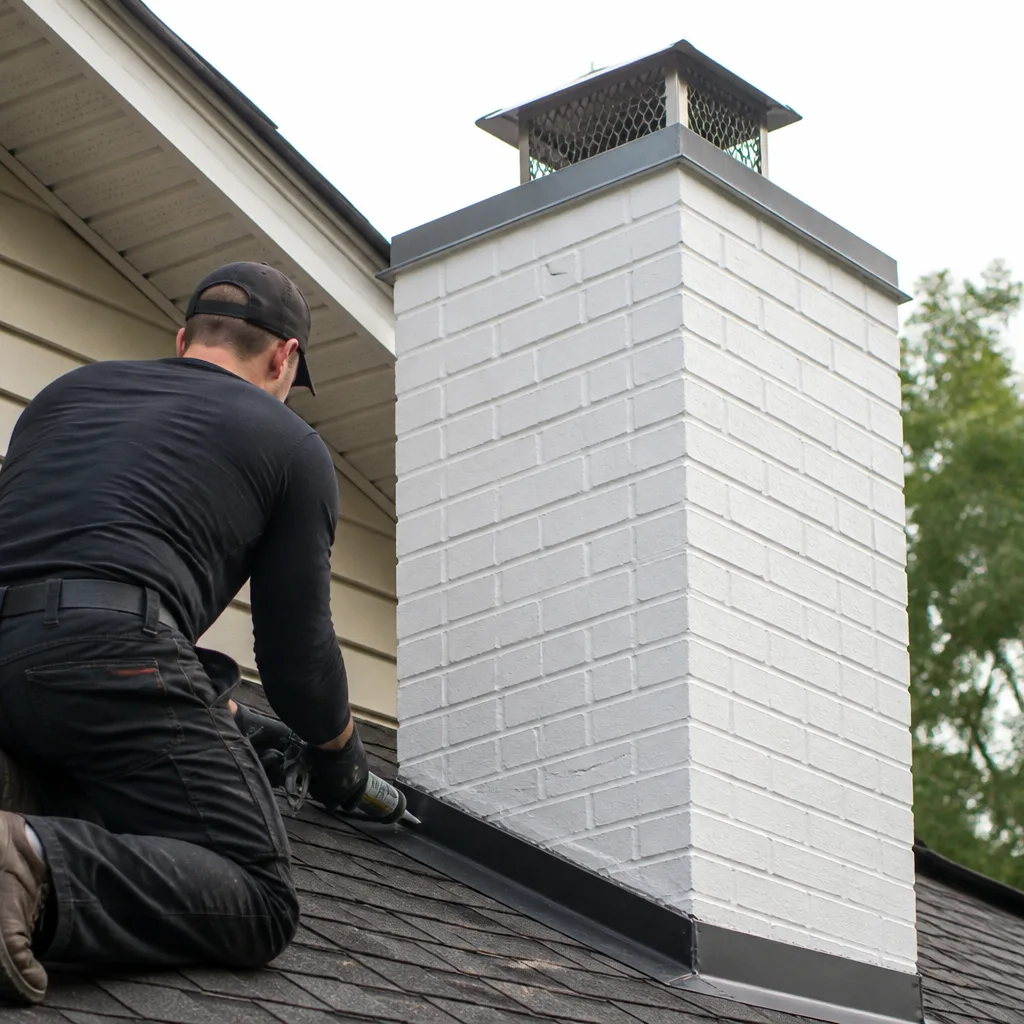
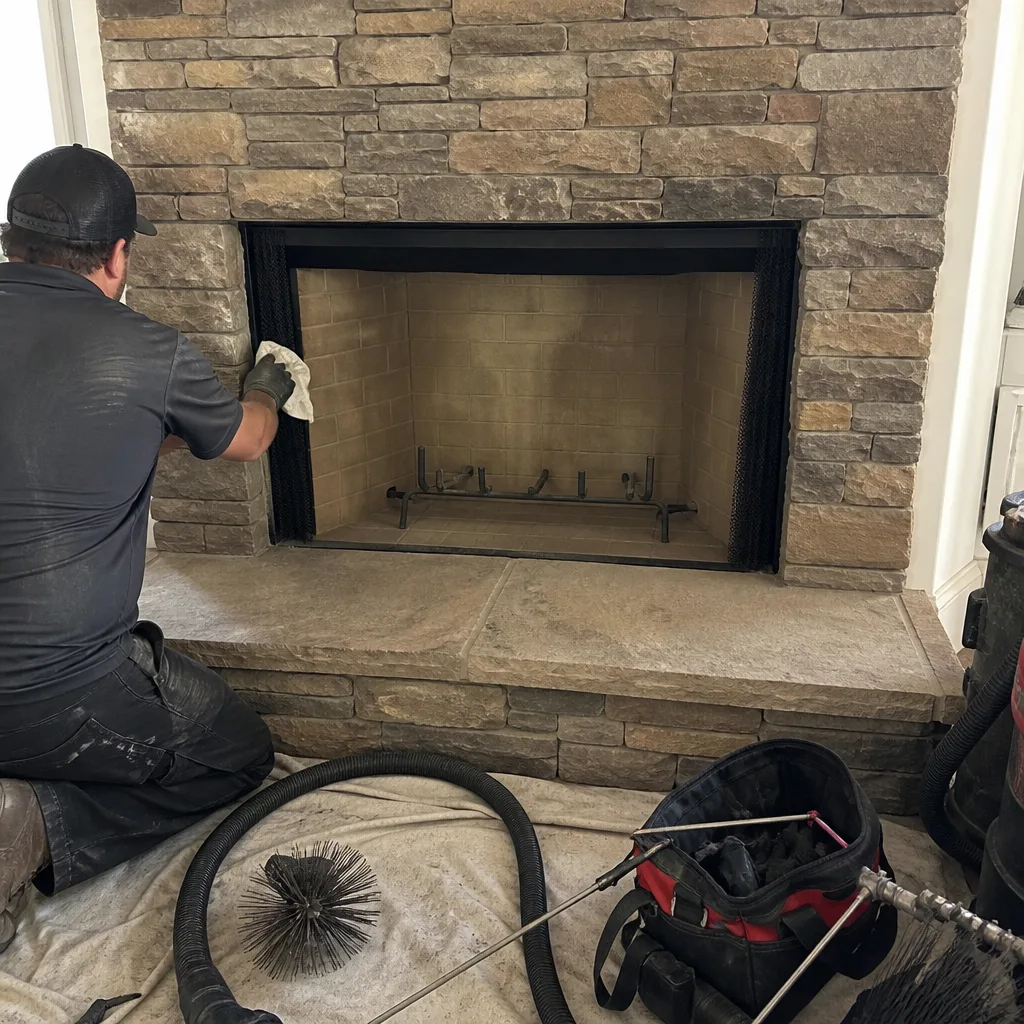
See the difference
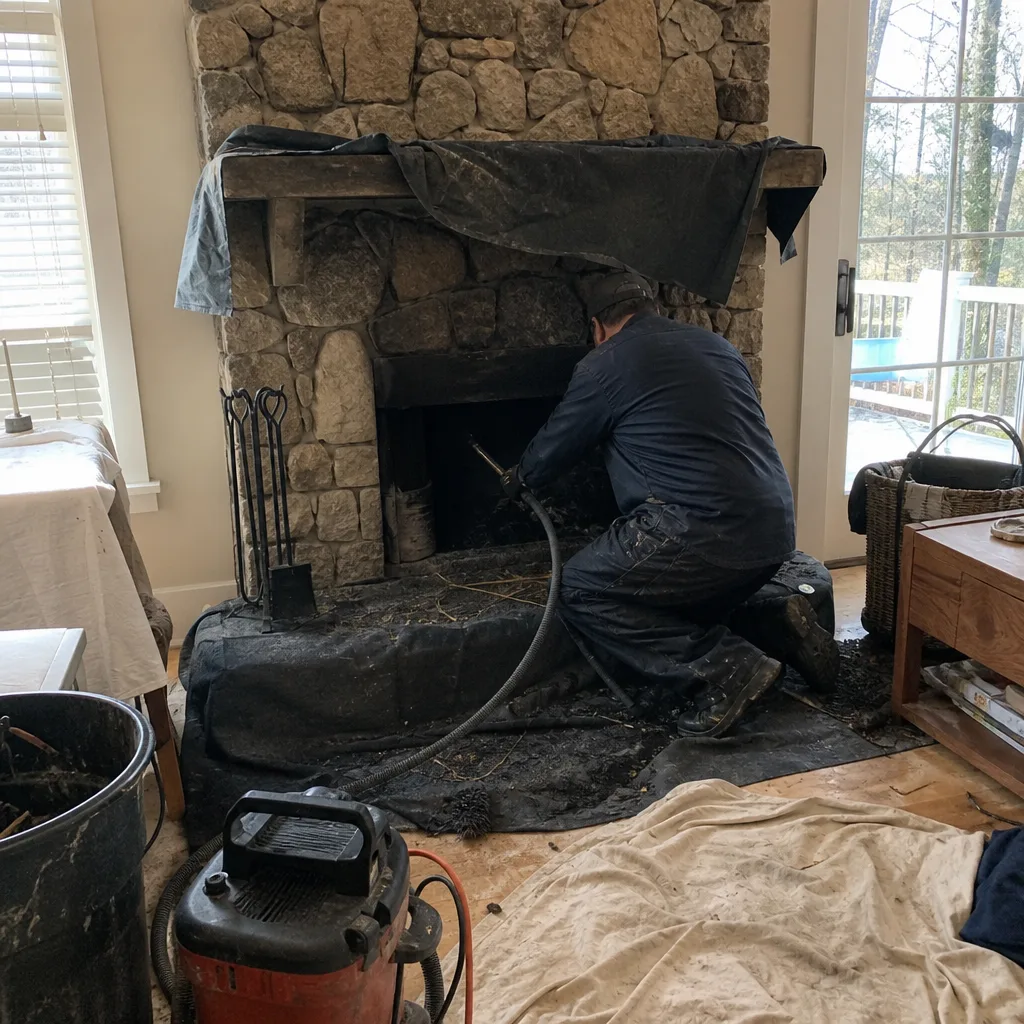 Before
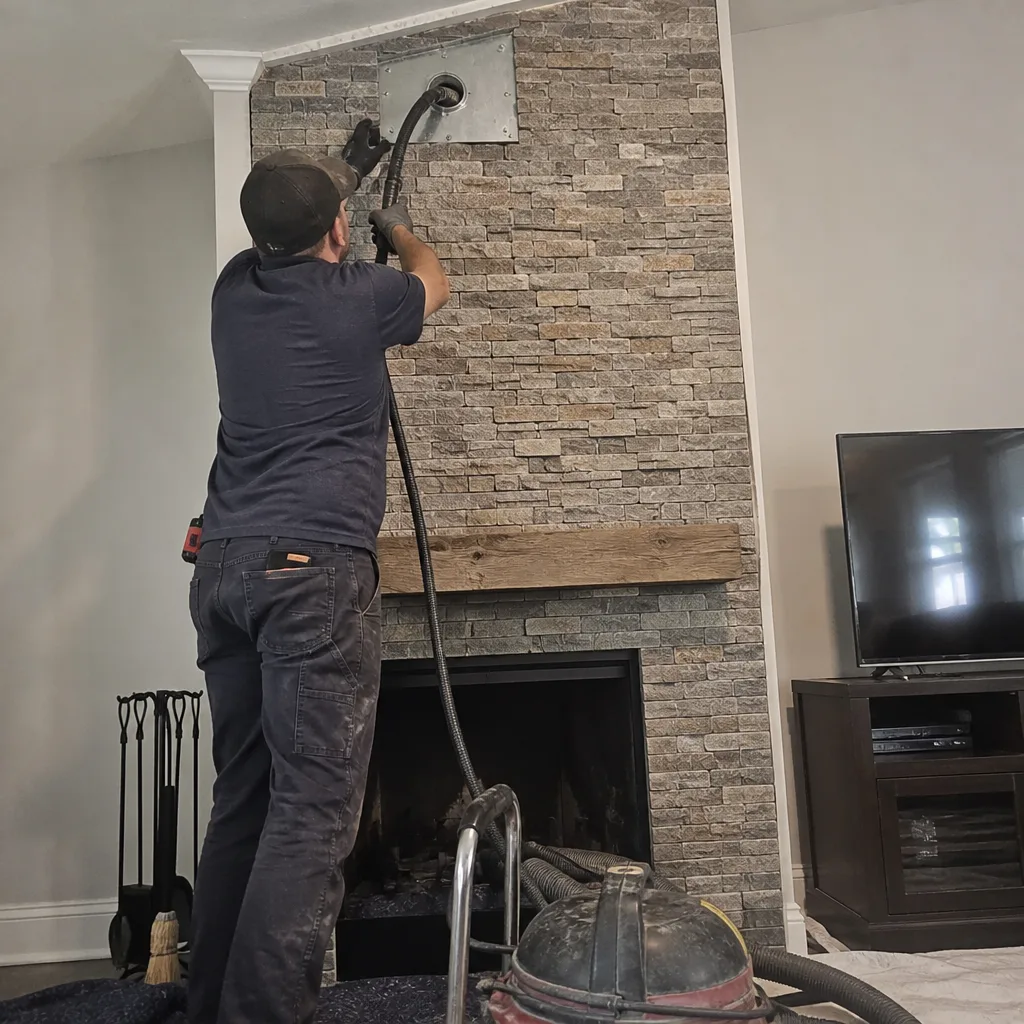 After
After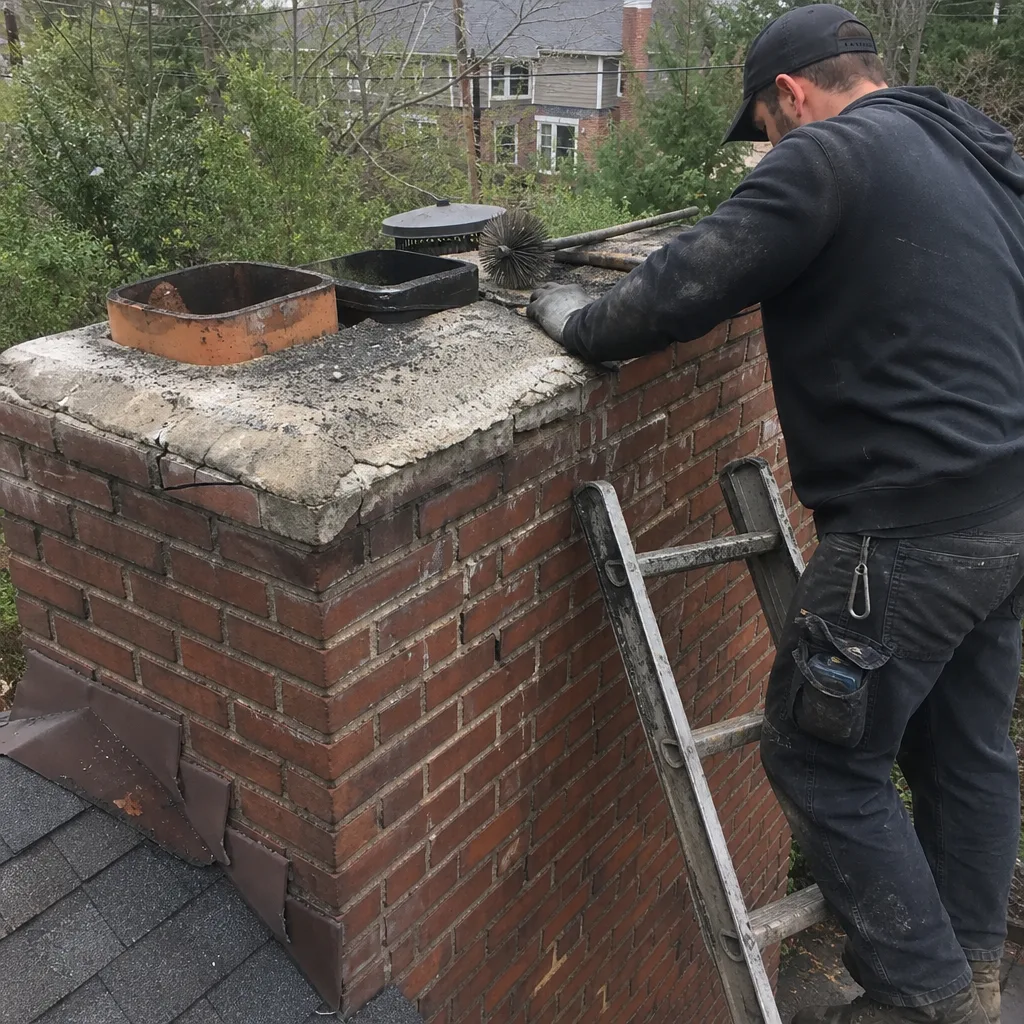 Before
 After
After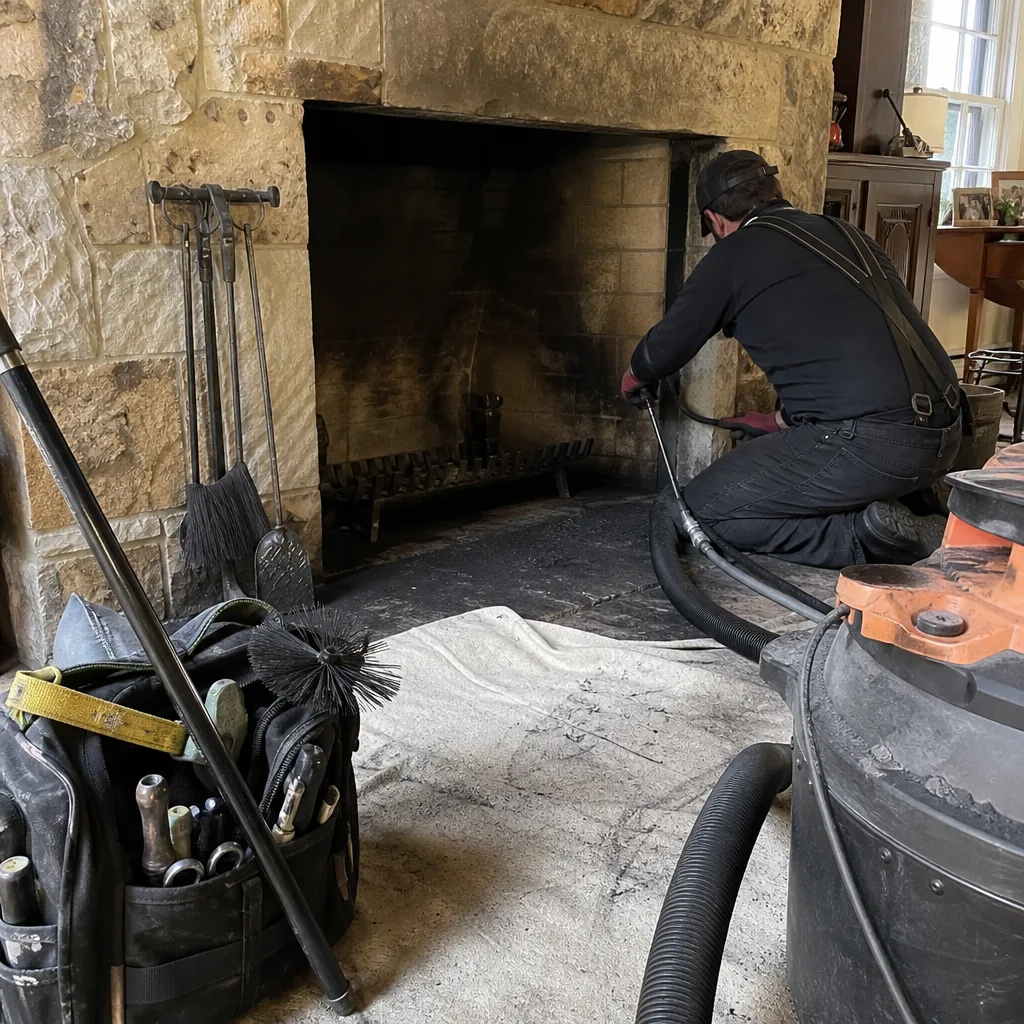 Before
 After
AfterWhen to Call a Professional
Some warning signs you can identify yourself and make a note of. Others need a trained eye and the right tools. Call a professional chimney sweep in Atlanta if you notice any of the following: a persistent campfire or chemical smell with no fire, visible creosote buildup thicker than a dusting, smoke entering the room under normal burning conditions, water in the firebox or staining near the chimney after rain, flaking or crumbling brick, or any evidence of animal nesting. If more than one sign is present, don’t wait for the burn season to end. Ashby Chimney Atlanta offers free estimates throughout the Atlanta area. Call (678) 263-7908 to get your chimney looked at before the warning signs turn into repair bills.
Frequently Asked Questions
You’ll usually notice one of three things: an odor from the firebox when no fire is burning, visible dark buildup you can see with a flashlight from inside the firebox, or smoke that doesn’t draft cleanly up and out during a fire. If you notice any one of these in your Atlanta home, a cleaning and inspection is the right next step.
A standard chimney sweep in Atlanta typically runs between $180 and $350, depending on the size of the flue, the amount of buildup, and whether it’s combined with an inspection. If significant Stage Three creosote is present or animal nesting needs removal, costs go up. Every job at Ashby Chimney Atlanta gets a written price before any work starts, so the number you’re quoted at the door is the number on the invoice.
Every chimney should be inspected at least once a year, and swept whenever creosote reaches 1/8 inch thick, according to NFPA 211. For a typical Atlanta homeowner who burns fires occasionally through winter, an annual sweep is the safest cadence. If you burn every weekend, you might need two sweeps per season. Call (678) 263-7908 for a free estimate on a sweep and inspection together.
Skipping a chimney cleaning means creosote keeps accumulating, and every layer makes the subsequent cleaning harder and more expensive. Stage One buildup moves to Stage Two, then Stage Three, which requires chemical treatment or specialized tools to remove. The risk of a chimney fire climbs, and so does the price of the eventual fix. Moisture and animal damage don’t pause while you wait, either, and in Atlanta’s humidity, off-season deterioration is faster than most people assume.
The smell itself isn’t dangerous, but what it signals can be. That odor means creosote is present in enough quantity to off-gas, and it’s finding a path into your living space, which means the chimney is not sealed the way it should be. If the seal fails because a liner is cracked or a damper is warped, smoke and carbon monoxide have the same path available during a fire. Smell in the summer is a warning to address before winter.
Yes. Even a fireplace that never gets used sits exposed to Atlanta weather, and the chimney above it is still degrading. Water intrusion, animal entry, and structural movement all happen whether or not you burn fires. An unused chimney can become a liability just like a used one, and the inspection is the only way to know what’s happening inside it. Ashby Chimney Atlanta performs inspections on flues of all kinds, used or dormant. Call (678) 263-7908 to schedule one.
The Bottom Line
The warning signs that matter most are not the dramatic ones. They’re the small, quiet signals that show up months or years before the failure: a smell in July, a stain in the firebox, a damper that sticks, a chimney that never drafts quite the way it should. Atlanta’s humidity and freeze-thaw cycles make early detection worth more here than in almost any other climate in the country, because the off-season here is when the damage compounds. If you remember nothing else from this guide, remember the two-question test: when was the last cleaning, and do you have documentation? If either answer is uncertain, the next step is simple. Call a qualified chimney sweep in Atlanta, get the inspection, and get it in writing. The earlier you catch the signs, the smaller the bill.
Written by Nathan Corliss, Owner at Ashby Chimney Atlanta, serving Atlanta since 2002.
For chimney cleaning, inspection, or repair in the Atlanta area, visit our Ashby Chimney Atlanta home page or call (678) 263-7908 for a free estimate. We answer the phone live, 24 hours a day.